

Complete Beginner’s Guide to Wine: Types, Choosing, Storing, and Enjoying



📖 Table of Contents ▼
Wine is an alcoholic beverage made from the fermentation of fresh grape juice, with flavors and character that vary by grape variety, regional terroir, and winemaking technique. For beginners in Indonesia, understanding six core pillars is enough to pick the right bottle with confidence: wine types, grape varieties, producing regions, how to choose your first bottle, tropical storage, and serving at the table. This guide is written from a sommelier’s perspective with real bottle recommendations officially available in Indonesia.
What Is Wine?
Wine is made by fermenting grape juice (*Vitis vinifera*). Yeast converts the natural sugars in grape juice into alcohol and carbon dioxide. Because of this natural process, most wines range between 9% and 15% ABV (Alcohol by Volume). The color, acidity, tannins, and fruit profile you taste in the glass all come from the grape pulp, skins, local climate, and the winemaker’s choices during aging in oak barrels.
What sets wine apart from other alcoholic drinks is its living dimension. A single bottle can present a spectrum of fresh red fruit, vanilla, tobacco, and warm spice that continues to evolve as the wine meets air in the glass. That is why wine has a rich global culture of tasting, decanting, and food pairing.
Essential Types of Wine to Know
In the wine world, there are six main categories. Knowing the difference helps you pick the right bottle for any dish or occasion.
| Type | Character and Key Traits | Popular Examples |
|---|---|---|
| Red Wine | Red grape skins ferment with the juice, producing deep color and tannins that give weight on the palate. | Cabernet Sauvignon, Shiraz, Merlot, Pinot Noir |
| White Wine | Skins are separated before fermentation; crisp, refreshing, clean acidity, and served chilled. | Sauvignon Blanc, Chardonnay, Riesling |
| Rose Wine | Brief maceration of red grape skins produces a charming pink hue; learn more in our complete guide to rosé wine. | Provence Rose, Grenache Rose, White Zinfandel |
| Sparkling Wine | Delivers natural carbon dioxide bubbles from a second fermentation; refreshing and associated with celebrations. | Champagne, Prosecco, Cava, Spumante |
| Fortified Wine | Wine fortified with grape spirit (brandy), raising alcohol to 18% to 20% ABV and extending shelf life. | Port Wine, Sherry, Madeira |
| Dessert Wine | Naturally sweet from residual grape sugar; smooth and rich texture, ideal as an after-dinner pour. | Moscato d’Asti, Sauternes, Late Harvest |
If you are stepping into wine for the first time, medium-bodied red wine and crisp white wine are the two safest entry points. Sparkling wine is also great for keeping casual celebrations lively.
Most Common Grape Varieties and Bottle Recommendations
Grape variety is the number one factor that shapes what you taste. Understanding varietal character lets you predict a bottle’s flavor profile before you pull the cork.
1. Popular Red Grapes
Red grapes span from full-bodied and concentrated to soft and approachable.
- Cabernet Sauvignon: Often called the king of red grapes. Full-bodied with firm tannins and aromas of blackcurrant, clove, and oak vanilla. Learn more in our Cabernet Sauvignon flavor profile guide .
- Shiraz and Syrah: Bold in character with ripe blackberries and warm black pepper notes typical of New World Australia.
- Merlot: A beginner-friendly red wine alternative with much softer tannins, featuring plum and sweet red cherry aromas.
- Pinot Noir: An elegant, noble grape with light body, brisk acidity, and aromas of wild strawberry and forest floor.
- Malbec: A deep black grape from Argentina with velvety tannins and cocoa notes, the classic partner for steak. Learn more in our
Lindemans Bin 45 is the benchmark for value-driven Cabernet Sauvignon from South Eastern Australia. Its ripe tannins integrate cleanly with dark fruit and pair naturally with red meat.
Shop This BottleFor drinkers who enjoy bold, warming flavors, Lindemans Bin 50 Shiraz delivers generous blackcurrant and blackberry fruit layered with aromatic spice in every sip.
Shop This Bottle2. Popular White Grapes
White wine offers fresh pear, peach, and bright citrus acidity that quenches thirst.
- Sauvignon Blanc: Fresh citrus, passionfruit, and crisp herbal notes that awaken the appetite. An ideal match for oysters and grilled seafood.
- Chardonnay: The most versatile white grape in the world. Un-oaked versions show crisp green apple, while oak-aged bottles offer a creamy, buttery texture with vanilla notes. Read our in-depth comparison in Sauvignon Blanc vs Chardonnay.
- Moscato (Muscat): The most loved sweet option for beginners. Low in alcohol, fragrant with jasmine and lychee, and refreshing when served well chilled.
Marqués de Riscal Rueda Sauvignon Blanc from Spain brings refined citrus aromatics that cut cleanly through the richness of seafood and grilled fish.
Shop This BottleAlba Luna Moscato Sparkling is the right choice if you dislike bitterness. Its fine bubbles deliver natural grape sweetness that feels light and refreshing.
Shop This BottleRegions: Old World vs New World
The fastest way to understand the global wine map is to divide it into two philosophical camps.
- Old World: Refers to traditional European producers such as France (Bordeaux, Burgundy, Champagne), Italian wine (Tuscany, Piedmont, Veneto), and Spain (Rioja, Cava). Their style prioritizes terroir (soil, minerality, traditional climate), firmer acidity, moderate alcohol, and structured elegance.
- New World: Refers to warmer-climate producers outside Europe such as Australia, Chile, Argentina, California (USA), New Zealand, and South Africa. Their style emphasizes bold, ripe fruit (*fruit-forward*), fuller body, and slightly higher alcohol. Explore Australasia in depth in our Australia and New Zealand wine guide.
Exploring Regions and Terroir Philosophy: Understand the comparison of winemaking styles in our review of Old World vs New World wine differences, and learn about the benchmark of southwestern French wine luxury in our guide to Bordeaux wine and its classification history.

Indonesia also has respected local wine producers based in Bali, such as Sababay and Two Islands. Using locally grown grapes as well as imported frozen must fermented in Bali, these wines are tailored for tropical palates. Read the full review in our best local Indonesian wine brands guide .
How to Choose Wine for Beginners
Choosing your first bottle does not need to feel intimidating. Answer these three practical questions.
- What Is Your Budget? Quality wine does not have to cost millions of rupiah. Between Rp 350,000 and Rp 550,000, you can enjoy solid bottles from Australia, Chile, or Bali. Check full benchmarks in our wine price guide in Indonesia .
- What Is on the Menu? Rich, fatty dishes like beef steak pair well with structured red wine. Chicken and fresh seafood sit better alongside crisp white wine. Read pairing principles in our Indonesian food wine pairing guide .
- What Does Your Palate Prefer? If you prefer fresh sweetness without astringency on the gums, start with sweet white wine or Moscato. If you want to try a soft, classic ruby-red pour, choose a sweet red wine.
Sababay Ludisia Sweet Red is the ideal answer for beginners who want to enjoy red wine without astringency. Its sweet raisin flavor glides smoothly across the palate, and it drinks well chilled in the afternoon.
View Sababay Ludisia Sweet RedLooking to Buy Wine in Person in Bandung? If you live in or are visiting Bandung and want to consult directly with a sommelier or need 30-60 minute instant courier delivery, check out our guide to the 10 nearest wine shops in Bandung offering officially excised bottles and outlets open until midnight WIB.
Explore Eco-Friendly Viticulture Trends: Interested in wines made with minimal synthetic chemicals? Read our in-depth guide on the differences between organic, biodynamic, and natural wine , including sulfite facts, wild yeasts, and the flavor profiles of orange wine and Pet-Nat.
Learn the Fortified Wine Category (17-22% ABV): Want to understand why Port wine tastes richly sweet while Spanish Sherry can be bone-dry and nutty, and how they keep for weeks after opening? Read our complete guide to fortified wine, Port wine, and Sherry along with official bottle recommendations at Peakwine.
How to Store Wine in a Tropical Climate
Wine is a living product vulnerable to extreme heat. In Indonesia’s tropical climate, these four storage rules are essential:
- Keep a Stable Temperature (12-16°C): Wine’s main enemy is not just warmth, but rapid temperature fluctuations. Never place wine near an open window, microwave, or on top of a kitchen refrigerator.
- Store Bottles Horizontally: Bottles sealed with natural cork must be stored on their side so the wine keeps the cork moist. A dried-out cork shrinks and lets air inside, triggering oxidation that spoils the flavor.
- Avoid Bright Light Exposure: Direct sunlight and ultraviolet lighting can break down the wine’s acids and tannins (lightstrike). Store bottles in a dark, cool cabinet.
- Shelf Life of Opened Bottles: Once opened, wine begins reacting with oxygen. Red wine lasts 3 to 5 days, while white wine lasts 2 to 3 days in a 4°C refrigerator. Learn the full details in our article on how long wine lasts after opening .
Proper Serving Temperatures and Glassware
Even the most expensive Grand Cru bottle will taste flat if served at the wrong temperature. Ideal serving temperatures:
- Red Wine: 16 to 18°C. In Indonesia, red wine should be placed in the lower refrigerator compartment for 20-30 minutes before serving to reach cool cellar temperature.
- White and Rosé Wine: 8 to 12°C. Serve chilled to highlight fresh fruit aromas and crisp citrus acidity.
- Champagne and Sparkling: 6 to 8°C. Chill thoroughly in an ice bucket so the effervescent bubbles stay sharp and do not dissipate quickly.
Glass shape also determines how aromas focus toward your nose. A wide-bowled red wine glass gives the wine room to breathe and soften tannins. A narrower white wine glass preserves cold temperatures and directs citrus aromas straight to your palate.
The Art of Decanting and How to Taste Wine
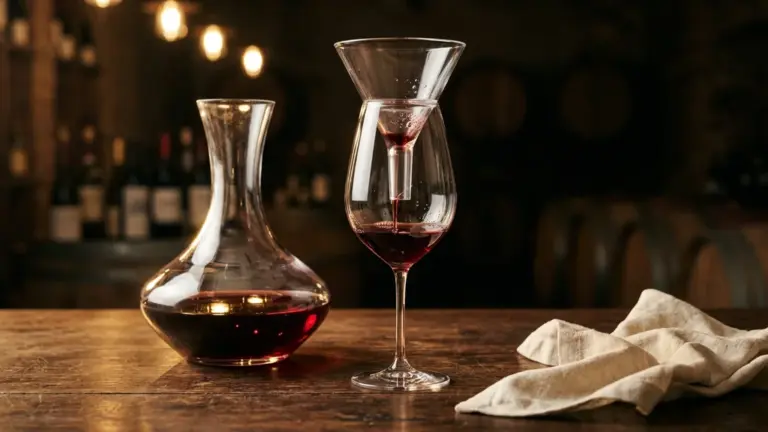
Decanting is the process of pouring wine from its glass bottle into an open-necked crystal vessel. For bold young reds like Cabernet Sauvignon, decanting for 30 to 45 minutes softens sharp tannins and opens up hidden layers of fruit. For older vintages aged for decades, decanting separates clear wine from natural sediment at the bottom of the bottle.
Want a Faster Method? If you want to open up a young red wine for everyday drinking in seconds without waiting on a glass decanter, learn the difference in our guide on wine aerator vs. decanter .
When tasting wine, follow the classic sommelier 4S ritual:
- See: Tilt the glass against a white background to assess clarity and the intensity of its ruby or golden color.
- Swirl: Gently swirl the glass by its stem to aerate the liquid and release volatile aromatic compounds.
- Smell: Bring your nose close to the rim and inhale the aromas of fruit, flowers, spice, or oak.
- Sip: Take a small sip, let it coat your entire palate, and notice the balance of sweetness, acidity, tannin, and alcoholic warmth.
To recognize differences in weight, tannic grip, and acidity in detail, explore our wine flavor glossary (body, tannin, acidity, and sweetness) compiled by our sommelier team.
How to Read a Wine Bottle Label
A bottle label is a wine’s identity certificate. Three key elements to look for:
- Producer and Brand Name: Shows who made the wine (for example: Penfolds, Lindemans, Ruffino).
- Grape Variety vs. Appellation: New World wines usually state the grape variety prominently on the front (for example: Shiraz, Chardonnay). By contrast, Old World European wines often list only the region of origin (for example: Bordeaux, Chianti, Chablis).
- Vintage Year: Indicates the year the grapes were harvested, which reflects the sunlight and rainfall conditions of that growing season.

Frequently Asked Questions About Wine (FAQ)
Is red wine or white wine better for beginners?
If you prefer crisp, light, chilled drinks, start with white wine such as Sauvignon Blanc or Sweet Moscato. If you want to try red wine, choose Merlot or a soft-tannin red like Sababay Ludisia so you are not caught off guard by astringency.
Does wine always need to be stored in the refrigerator?
Unopened bottles should be kept in a cool, dark place at 12-16°C, away from sunlight, and stored on their side. A standard home refrigerator is too cold (2-4°C) and dry for long-term storage, though it works well for chilling wine 1 hour before serving.
Does expensive wine always taste better?
Not necessarily. Higher prices reflect prestigious vineyard land, strict harvest limits, and aging in imported oak barrels. In the IDR 350,000 to IDR 600,000 range, there are many delicious bottles from Australia, Chile, Spain, and Bali that satisfy beginners and seasoned drinkers alike.
What is the standard alcohol content (ABV) of a bottle of wine?
Most table wines range between 11% and 14.5% ABV. Sweet sparkling Moscato typically has the lowest alcohol (5% to 7% ABV), while fortified wines like Port can reach 18% to 20% ABV.
Is wine delivery safe and guaranteed authentic at Peakwine?
Peakwine guarantees 100% bottle authenticity with official Republic of Indonesia excise stamps and BPOM registration. Every order is protected with thick inflatable airbag cushioning, optional wooden crates for intercity shipping, and 30-60 minute express delivery in Bandung and Greater Jakarta.
Explore Curated Selections for Your Cellar
Authentic wines, spirits, and sake personally curated by our sommelier team with verified provenance and climate-controlled delivery.
Wine Guide Collection
Over 1,300+ red, white, and sparkling wines from acclaimed global producers.
Explore Wine Catalog → Premium SpiritsWhisky, Gin, and Vodka
Rare single malts, blended Scotch, artisan gin, and 100% agave tequila.
Explore Spirits Catalog → Cold-Chain GuaranteedSake and Asian Drinks
Authentic Japanese Daiginjo, Ginjo, Junmai sake and chilled Korean soju.
Explore Sake Collection → Instant Delivery22+ Official Outlets
Find the nearest Peakwine cellar outlet in Bandung and Jakarta for direct pickup.
Find Store Locations →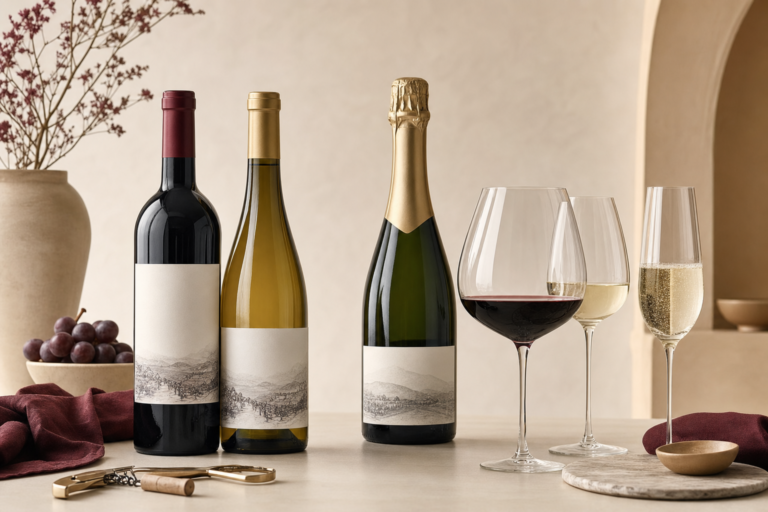

 By Wine Style
 Red Wine
 White Wine
 Sparkling Wine & Champagne
 Rosé Wine
 Dessert & Sweet Wine
 Fortified & Port Wine
 By Grape Variety
 Cabernet Sauvignon
 Shiraz
 Chardonnay
 Merlot
 Sauvignon Blanc
 Pinot Noir
 Tempranillo
 Sangiovese
 Malbec
 Grenache
 Semillon
 Primitivo
 Moscato
 Carmenere
 Riesling
 Pinot Grigio
 By Country & Region
 Australia
 France
 Chile
 Indonesia
 Italy
 Argentina
 Spain
 United States
 Portugal
 South Africa
 New Zealand
 Japan
 Germany
 By Taste & Sweetness
 Full-Bodied Wine
 Medium-Bodied Wine
 Light-Bodied Wine
 Sweet & Fruity Wine
 Dry Wine
 Curated Collections
 Best Sellers
 Everyday Value (< 500k)
 Reserve & Cellar

 Whisky & Whiskey
 Single Malt Scotch
 Blended Scotch
 Bourbon & Tennessee
 Japanese Whisky
 Irish Whiskey
 Gin
 London Dry Gin
 Dry Gin
 Tequila & Mezcal
 Vodka
 Premium & Craft Vodka
 Indonesian Vodka
 Rum
 White Rum
 Dark Rum
 Brandy Cognac
 Armagnac
 Liqueur
 Traditional Spirit


