

Italian Wine Guide: Understanding Chianti, Barolo, Prosecco, and Sangiovese


📖 Table of Contents ▼
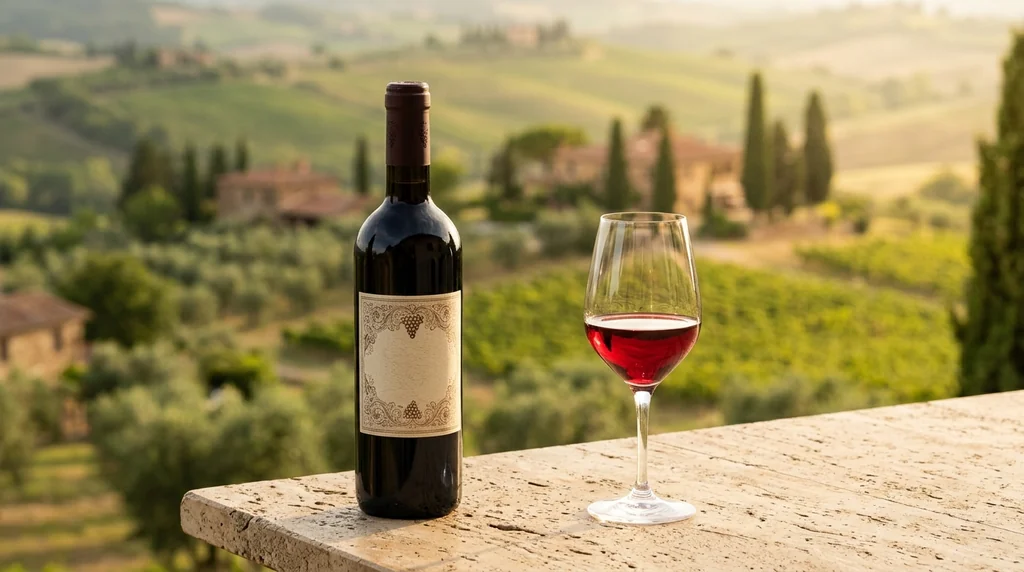
The best Italian wines are defined by bright natural acidity, firm tannin structure, and hundreds of indigenous grape varieties found nowhere else on earth. From the breezy hills of Tuscany that produce Sangiovese in a bottle of Chianti, to the foggy slopes of Piedmont yielding Barolo from Nebbiolo, to the valleys of Veneto behind crisp Prosecco and concentrated Amarone, Italy offers classic Old World wines built for the table.
- DOCG and DOC Legal Pyramid: Italy enforces a strict classification system that places DOCG (Denominazione di Origine Controllata e Garantita) at the top, backed by laboratory testing and an official government hologram seal.
- Sangiovese, the Soul of Tuscany: This thin-skinned grape forms the backbone of Chianti Classico, delivering sour red cherry, roasted tomato, dried herbs, and crisp acidity that cuts through rich food.
- Barolo, the King of Piedmont Wines: Made 100% from Nebbiolo in Piedmont, Barolo presents a visual paradox of pale garnet color paired with formidable tannins, tar, dried rose petals, and decades of aging potential.
- The Dual Contrast of Veneto: The region spans from the fresh pear bubbles of Prosecco (Charmat Method) to the dense raisin and dark chocolate depth of Amarone della Valpolicella (Appassimento Method).
- Indonesian Culinary Pairing: The bright acidity and firm tannins of Italian wine cut cleanly through the coconut milk and fat of Minang beef rendang, sate maranggi, and Balinese bebek betutu.
Understanding the Italian Wine Quality Pyramid: From DOCG to IGT
When you pick up a bottle of Italian wine, you will rarely see the grape variety printed in large type as you would on Australian or American bottles. Following the tradition of Old World versus New World wine , Italian producers name their wines after their geographical origin. To protect quality and authenticity, the Italian government established four strict legal tiers in 1963:
1. DOCG (Denominazione di Origine Controllata e Garantita)
The highest tier in the Italian wine hierarchy. Every DOCG bottle must adhere to strict geographical boundaries, the lowest maximum vineyard yields per hectare, minimum aging periods in oak and bottle, and both chemical laboratory analysis and blind tasting by an independent government sommelier panel. DOCG bottles carry a numbered government paper seal (fascetta) wrapped around the neck to prevent counterfeiting.
2. DOC (Denominazione di Origine Controllata)
The second tier, equivalent to the AOC system in France. This category covers historic production zones with established rules on permitted grape blends and traditional winemaking standards. Popular examples include Prosecco DOC and Valpolicella DOC.
3. IGT (Indicazione Geografica Tipica)
Created in 1992, the IGT classification covers broader geographical areas such as Toscana IGT or Veneto IGT. This tier grew out of the Super Tuscan movement, in which visionary Italian winemakers blended Sangiovese with international varieties like Cabernet Sauvignon and Merlot. Although legally below DOC, many IGT wines achieve top quality and command premium prices.
4. Vino da Tavola (VdT)
The entry-level tier, meaning table wine. These bottles do not list a specific geographical origin or vintage year and are generally produced for casual everyday drinking.
The Appeal of Tuscany: Why Chianti and Sangiovese Stand Out
Tuscany (Toscana) is the cultural heart of winemaking in central Italy. Its rolling limestone hills, slender cypress trees, and stone farmhouses sit in a warm Mediterranean climate cooled at night by breezes from the Tyrrhenian Sea. This microclimate provides ideal growing conditions for Sangiovese, the most widely planted red grape in Italy.
The name Sangiovese comes from the Latin Sanguis Jovis, meaning the Blood of Jupiter. The grape has relatively thin skin and ripens late, yielding a translucent ruby-red wine with refreshing natural acidity and fine-grained tannins.
Sangiovese Flavor Profile Across 5 Key Dimensions
Using a standard wine tasting framework (body, tannin, acidity, sweetness) , Sangiovese shows a distinct sensory profile:
- Body: Medium-bodied to full-bodied in Riserva bottlings. It offers balanced weight without feeling heavy on the palate.
- Tannin: Medium to High (4/5). Sangiovese tannins feel firm and grippy on the gums when young, then soften into a velvety texture with bottle age.
- Acidity: High (5/5). Crisp, mouthwatering acidity is the signature of Sangiovese, stimulating the palate and cutting through rich, fatty dishes.
- Sweetness: Bone Dry (1/5). Residual sugar is very low (under 2 grams per liter), giving the wine a dry, clean finish.
- Aromas and Flavor Notes: Tart red cherry, wild red plum, sun-dried tomato, dried oregano, dry clay, and notes of leather and tobacco in mature bottles.
Differences Between Chianti, Chianti Classico, and Riserva
Many newcomers assume all bottles labeled Chianti are the same. In reality, there are significant differences in quality standards and production zones:
- Chianti DOCG: Produced across broader sub-zones surrounding Florence, Siena, and Pisa. It must contain at least 70% Sangiovese. The style is lighter, fresher, focused on bright cherry fruit, and meant to be drunk within 1 to 3 years of harvest.
- Chianti Classico DOCG: Produced exclusively in the original historic Chianti zone between Florence and Siena. It must contain at least 80% Sangiovese and prohibits white grapes. Marked by the black rooster emblem (Gallo Nero) on the bottle neck, Chianti Classico offers greater concentration, pronounced limestone minerality, and firmer tannin structure.
- Chianti Classico Riserva: A prestigious tier requiring a minimum of 24 months of aging, including at least 3 months in bottle before release. It develops gentle notes of vanilla, toasted oak, and sweet spice.
Piedmont and the Prestige of Barolo: King of Wines from the Land of Fog
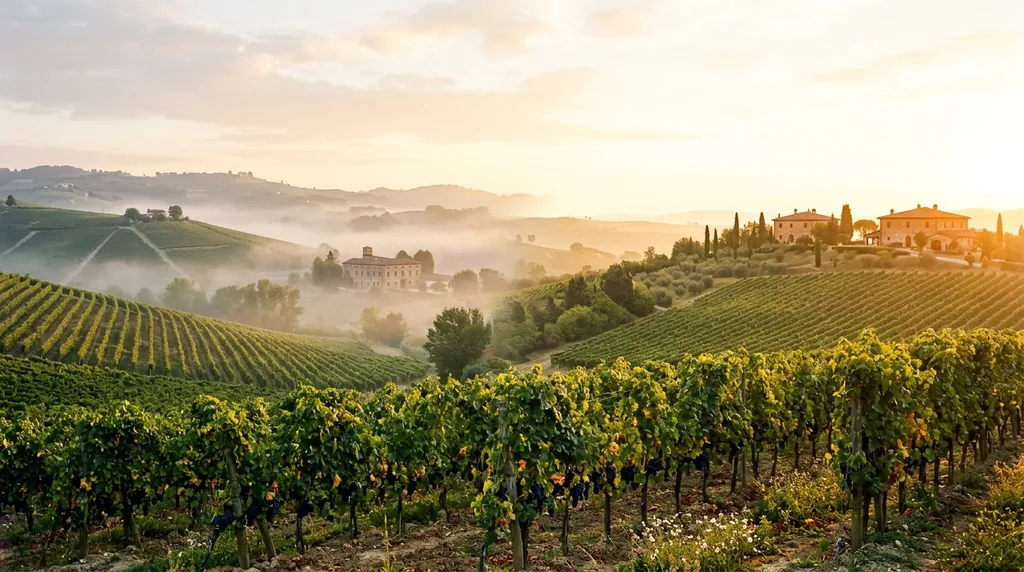
Moving to northwestern Italy at the foot of the Alps, we reach Piedmont (literally Foot of the Mountain). The region is famous for the steep limestone hills of the Langhe, often blanketed in thick autumn morning fog. In Italian, this fog is called nebbia, which gave its name to the region’s most celebrated grape: Nebbiolo.
Nebbiolo is the sole grape behind Barolo, which since the 19th century has carried the title Il Re dei Vini, il Vino dei Re (The King of Wines, the Wine of Kings). Barolo was the favored wine of the House of Savoy nobility and the statesmen who led Italian unification.
Nebbiolo and the Pale Garnet Paradox
One of the most striking traits of Barolo is the contrast between its appearance and its power. Poured into a crystal glass, Barolo looks translucent garnet with an orange-brick rim. Its light color often surprises newcomers who expect something closer to Pinot Noir.
Once it hits the palate, however, Barolo reveals massive structure. Nebbiolo packs dense, chalky tannins and piercing acidity that grip the entire mouth. Its complex aromatics are famously summed up by sommeliers as tar and roses, alongside black cherry, anise, white truffle, and pipe tobacco.
Why Barolo Requires Years of Aging
Because of its formidable tannins and acidity, a young Barolo at 2 to 4 years old can taste austere and tight. Italian DOCG law requires Barolo to age for at least 38 months (with a minimum of 18 months in oak). Barolo Riserva requires 62 months of aging.
Over years in large oak casks (botti) and glass bottles, Nebbiolo’s aggressive tannins slowly polymerize and soften, shifting from sharp astringency to a supple, velvety texture while opening up complex secondary aromas.
Veneto’s Dual Identity: Crisp Prosecco vs. Deep Amarone
While Tuscany and Piedmont are defined by classic limestone-grown reds, Veneto in northeastern Italy offers two contrasting styles: one of the world’s freshest sparkling wines and one of Europe’s most concentrated dry reds.
Prosecco and the Charmat Method
Prosecco is the most popular sparkling wine in the world today, produced in the hills of Veneto and Friuli Venezia Giulia from the local white grape Glera (at least 85%). Unlike Champagne in France, which undergoes secondary fermentation inside each individual bottle, Prosecco uses the Charmat Method (or Metodo Martinotti).
In this process, secondary fermentation takes place in pressurized stainless steel tanks (autoclaves). This preserves the grape’s pure primary fruit aromas without heavy yeasty bread notes. The result is a lively, frothy sparkling wine filled with ripe white pear, Granny Smith apple, sweet melon, and acacia blossom. Prosecco is the classic aperitivo to wake up the palate before a meal.
Amarone della Valpolicella and the Appassimento Method
Elsewhere in Veneto, in the Valpolicella hills north of Verona, producers craft one of the wine world’s most distinctive reds: Amarone della Valpolicella DOCG.
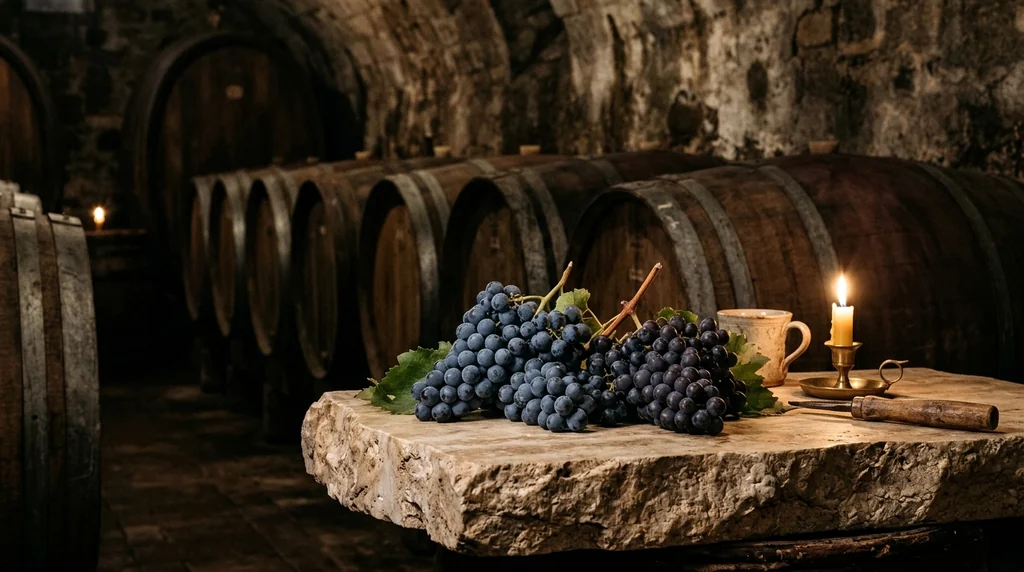
Amarone is blended from local Corvina, Rondinella, and Molinara grapes. What sets it apart is the ancient Appassimento method. After autumn harvest, selected grape bunches are not pressed right away; instead, they are laid out on bamboo mats or ventilated wooden racks (fruttaio) for 90 to 120 days through winter.
During this natural drying phase, the grapes lose 30% to 40% of their water weight, concentrating sugars, acidity, and aromatics. When these raisined grapes are fermented completely dry (secco), they yield a dense, full-bodied red wine rich in dried figs, black raisins, dark cherry, bitter chocolate, and sweet spice, with natural alcohol reaching 15% to 16.5% ABV.
Head-to-Head Comparison of 4 Italian Wine Icons
To help you choose the right bottle for your palate or occasion, compare these four signature Italian wines side by side:
| Comparison Factor | Chianti Classico DOCG | Barolo DOCG | Amarone della Valpolicella | Prosecco DOC |
|---|---|---|---|---|
| Region of Origin | Tuscany (Central Italy) | Piedmont (Northern Italy) | Veneto (Northeastern Italy) | Veneto and Friuli |
| Primary Grape Variety | Sangiovese (minimum 80%) | Nebbiolo (100%) | Corvina, Rondinella, Molinara | Glera (minimum 85%) |
| Color | Bright Ruby Red | Pale Garnet Red | Deep Dark Ruby | Pale Straw Yellow |
| Body Profile | Medium-bodied | Full-bodied | Very Full-bodied (Concentrated) | Light-bodied (Crisp Bubbles) |
| Tannin Level | Firm and Grippy (4/5) | Very High and Chalky (5/5) | Smooth, Velvety, and Structured (4/5) | Virtually Zero (0/5) |
| Acidity Level | High and Crisp (5/5) | Very High (5/5) | Medium, Balanced (3.5/5) | High and Refreshing (4/5) |
| Dominant Flavors | Sour cherry, herbs, dried tomato | Rose petal, tar, black cherry | Raisin, dark chocolate, dried fig | Pear, green apple, acacia |
| Alcohol Content (ABV) | 12.5% to 13.5% | 13.5% to 15% | 15% to 16.5% | 11% to 11.5% |
| Ideal Food Pairings | Tomato-based pasta, pizza, poultry | Red meat steak, ribs, rendang | Aged hard cheeses, grilled meats | Appetizers, canapes, dim sum |
6 Top Italian Wine Bottles at Peakwine
Peakwine curates authentic Italian wines that are officially imported, stored in temperature-controlled facilities, and ready to ship through the Peakwine wine collection across Indonesia:
From the oldest estate of the noble Frescobaldi family in Montespertoli. It offers fresh red cherry, wild strawberry, and violet notes, with a supple texture and crisp acidity that refreshes the palate.
Crafted by legendary producer Antinori, dedicated to winemaking since 1385. Carrying the Gallo Nero black rooster seal, it delivers ripe cherry, red plum, and subtle vanilla from Slavonian oak, framed by polished tannins.
A prestigious Riserva from the cool high-altitude hills of Rufina, aged 24 months in French oak. It pours deep ruby with aromas of blackberry, clove, nutmeg, and leather leading to a long finish.
A classic expression of the King of Wines from Langhe, Piedmont. Made purely from selected Nebbiolo grapes, it shows classic garnet color with dried rose petal, cinnamon spice, and limestone notes backed by firm, authoritative tannins.
A benchmark Appassimento bottling from the Tommasi family. The grapes are dried for 100 days and aged 3 years in large oak casks, yielding a concentrated wine packed with raisin, dark chocolate, and fig over a rich, velvety palate.
A crisp sparkling wine ideal for starting dinner or marking a celebration. Made with the natural Charmat Method, it delivers fine, lively bubbles alongside green apple, white pear, and acacia blossom.
Food Pairing Guide: Italian Wine and Indonesian Cuisine
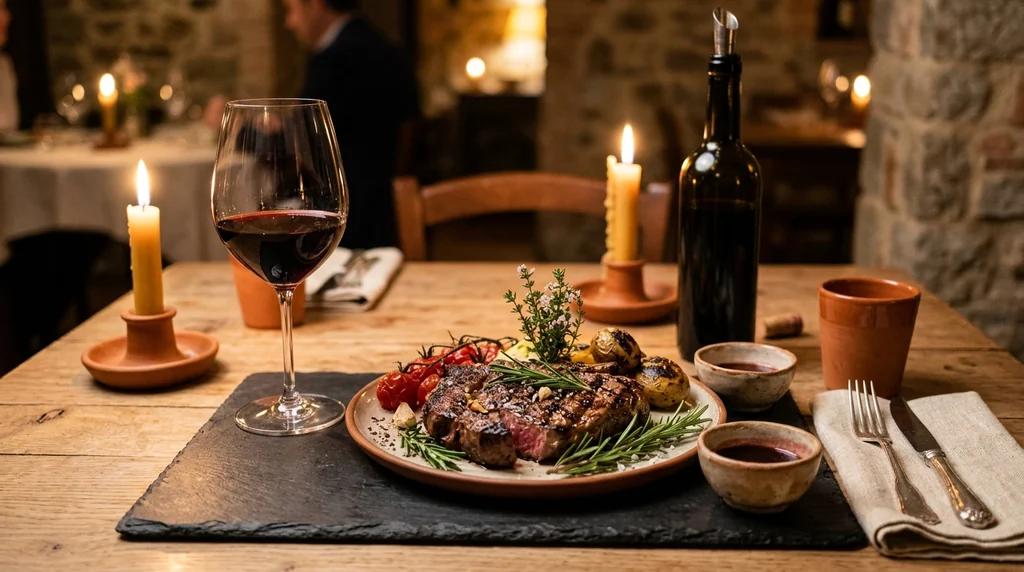
Italian dining culture holds that good wine is never meant to stand alone, but to sit beside warm food at the table. Because Italian wines carry bright acidity and firm tannins, they pair naturally with Indonesian dishes rich in coconut milk, spices, and fat:
- Chianti Sangiovese with Sate Maranggi and Balinese Bebek Betutu: Savory-sweet beef sate maranggi glazed with coriander and palm sugar, and Balinese bebek betutu rich with base genep spice paste and duck fat, both need high acidity in the glass. Sangiovese’s natural brightness acts like a squeeze of lime to clear fat from the palate, while firm tannins hold up to charred meat and local spices.
- Barolo Nebbiolo with Minang Beef Rendang and Spiced Grilled Ribs: Minang beef rendang, slow-cooked for hours until coconut oil caramelizes into the meat fibers, demands a wine of equal weight. Barolo’s dense tannins and dried spice notes match the intensity of rendang. Its chalky tannins bind with beef protein, softening the grip on the palate and bringing out the savory depth of the dish.
- Chilled Prosecco with Martabak Telur and Crispy Seafood Tofu: Indonesian savory fried snacks like minced-beef martabak telur or shrimp-stuffed tofu crisp up on the outside while staying rich inside. Serving Prosecco well chilled (around 6 to 8°C) creates a refreshing temperature contrast. The fine Charmat bubbles sweep away residual oil, leaving the palate clean for the next bite.
Frequently Asked Questions About Italian Wine (FAQ)
The main differences lie in the region of origin, grape variety, and flavor structure. Chianti comes from Tuscany in Central Italy and is made from Sangiovese grapes (at least 70% to 80%), producing a medium-bodied wine with tart red cherry flavors, herbal spice aromas, and crisp acidity that pairs well with tomato-based dishes. Barolo comes from Piedmont in Northern Italy and is made 100% from Nebbiolo grapes, producing a more powerful wine with dense, chalky tannins, signature aromas of dried rose petals, tar, and truffle, and a longer oak-aging requirement before it is ready to drink.
DOCG stands for Denominazione di Origine Controllata e Garantita, the highest tier in Italy’s legal wine classification pyramid. This label guarantees that the wine is produced in a strictly delimited geographical area, adheres to tight per-hectare yield limits, undergoes a minimum aging period, and passes both chemical laboratory testing and a blind tasting evaluation by an independent panel of sommeliers before receiving an official government hologram seal on the bottle neck.
They are not the same, although both are sparkling wines. Prosecco is produced in Italy’s Veneto and Friuli regions using Glera grapes via the Charmat Method (secondary fermentation in pressurized stainless steel tanks). This produces light, crisp bubbles with prominent pear and acacia blossom aromas. Champagne, by contrast, is produced exclusively in France’s Champagne region using the traditional method (secondary fermentation directly inside the bottle), resulting in more complex toasted brioche yeast character and a generally much higher price.
Sangiovese has a translucent ruby-red color with crisp high acidity and firm, fine-grained tannins. Its aromatic profile is led by tart red cherry, wild plum, dried orange peel, and oregano, with notes of damp earth and leather in mature bottles. Its naturally high acidity makes Sangiovese an ideal food wine because it cuts cleanly through rich oils and meat fats.
Italian wines with crisp acidity and firm tannins pair well with Indonesian dishes rich in spices and fat. Sangiovese-based Chianti complements Balinese bebek betutu, sate maranggi, or tongseng kambing because the wine’s acidity cuts through savory meat fat. Full-bodied, deeply tannic Barolo is an ideal match for Minang beef rendang or spiced grilled ribs. Chilled, crisp Prosecco is a clean palate cleanser for appetizers such as martabak telur, seafood-stuffed tahu kipas, or batagor with peanut sauce.
Explore Curated Selections for Your Cellar
Authentic wines, spirits, and sake personally curated by our sommelier team with verified provenance and climate-controlled delivery.
Wine Guide Collection
Over 1,300+ red, white, and sparkling wines from acclaimed global producers.
Explore Wine Catalog → Premium SpiritsWhisky, Gin, and Vodka
Rare single malts, blended Scotch, artisan gin, and 100% agave tequila.
Explore Spirits Catalog → Cold-Chain GuaranteedSake and Asian Drinks
Authentic Japanese Daiginjo, Ginjo, Junmai sake and chilled Korean soju.
Explore Sake Collection → Instant Delivery22+ Official Outlets
Find the nearest Peakwine cellar outlet in Bandung and Jakarta for direct pickup.
Find Store Locations →

 By Wine Style
 Red Wine
 White Wine
 Sparkling Wine & Champagne
 Rosé Wine
 Dessert & Sweet Wine
 Fortified & Port Wine
 By Grape Variety
 Cabernet Sauvignon
 Shiraz
 Chardonnay
 Merlot
 Sauvignon Blanc
 Pinot Noir
 Tempranillo
 Sangiovese
 Malbec
 Grenache
 Semillon
 Primitivo
 Moscato
 Carmenere
 Riesling
 Pinot Grigio
 By Country & Region
 Australia
 France
 Chile
 Indonesia
 Italy
 Argentina
 Spain
 United States
 Portugal
 South Africa
 New Zealand
 Japan
 Germany
 By Taste & Sweetness
 Full-Bodied Wine
 Medium-Bodied Wine
 Light-Bodied Wine
 Sweet & Fruity Wine
 Dry Wine
 Curated Collections
 Best Sellers
 Everyday Value (< 500k)
 Reserve & Cellar

 Whisky & Whiskey
 Single Malt Scotch
 Blended Scotch
 Bourbon & Tennessee
 Japanese Whisky
 Irish Whiskey
 Gin
 London Dry Gin
 Dry Gin
 Tequila & Mezcal
 Vodka
 Premium & Craft Vodka
 Indonesian Vodka
 Rum
 White Rum
 Dark Rum
 Brandy Cognac
 Armagnac
 Liqueur
 Traditional Spirit


