


📖 Table of Contents ▼
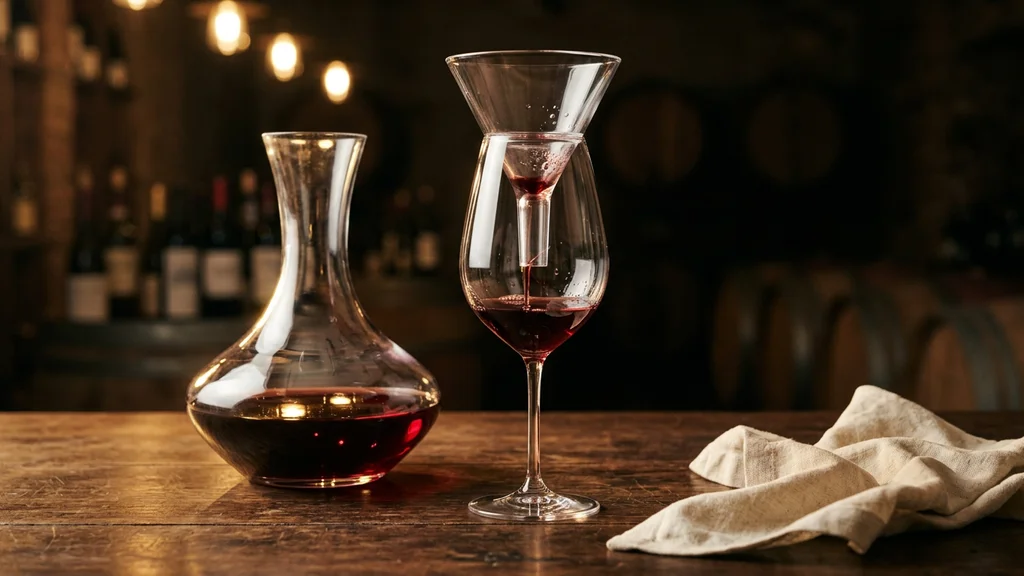
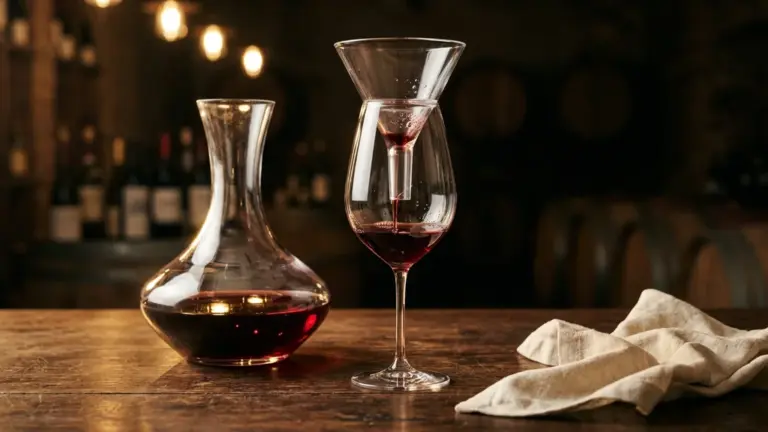
A wine aerator injects air into the wine stream instantly through the physics of the Venturi effect right as the liquid hits the glass, opening up closed aromas and softening tight tannins in a matter of seconds. By contrast, a wine decanter provides gradual oxygenation over 30 to 120 minutes in an open glass vessel while separating natural sediment from older bottles. Knowing when to snap a practical aerator onto the bottle neck versus when to pour into a crystal decanter prevents two common dining-table mistakes: serving a young red wine that tastes tight and astringent, or stripping the delicate complexity of a decades-old fine wine with harsh airflow.
Among wine drinkers in Indonesia, these two tools are often treated as interchangeable, even though their functions are structurally different. If you simply want to enjoy a bottle of young Cabernet Sauvignon on a weeknight without waiting an hour, a compact aerator is your best time-saver. If you are opening an aged vintage from Bordeaux or Barolo that has rested for years in storage, only classic decanting keeps the wine clear while safely coaxing out its layers of aroma.
- Speed of Action: A wine aerator works in 3 to 5 seconds per glass pour; a decanter requires 20 to 120 minutes of quiet rest for a full bottle.
- Different Scientific Principles: Aerators use a constricted tube (the Venturi effect) to draw in pressurized air, while decanters rely on passive oxygen diffusion across a wide liquid surface.
- Sediment Separation: Only a decanter can trap tartrate crystals and tannin sediment at the base of an aged bottle; an aerator risks agitating and mixing sediment straight into your glass.
- Risk of Over-Oxidation in Fine Wine: Wines older than 8 to 10 years or delicate Pinot Noir can easily lose their subtle aromatics if forced through a pressurized aerator.
- Tropical Temperature Rule: In Indonesia’s warm climate, always chill red wine to 14-16°C before decanting so it does not become overly warm by the time you drink it.
How a Wine Aerator Works: The Venturi Effect in Your Glass
When a full-bodied red wine is freshly uncorked, its initial aromas often seem muted or slightly pungent, reminiscent of burnt rubber from reductive sulfur compounds formed during airtight storage. Controlled oxygen exposure helps these unwanted volatile compounds dissipate while triggering partial polymerization of tannin molecules in red wine , softening mid-palate astringency and allowing dark berry fruit to shine.
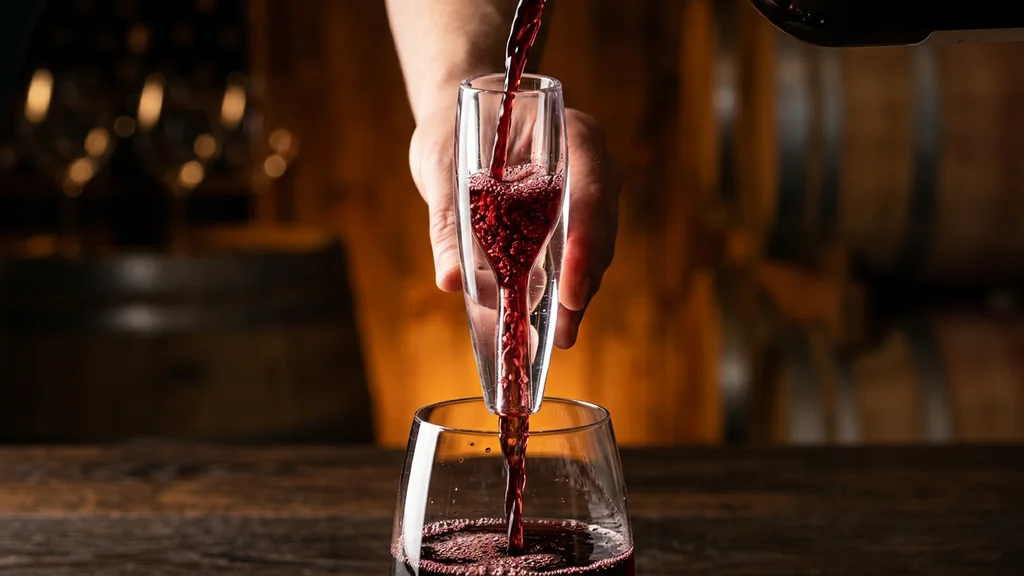
This is where a wine aerator does its heavy lifting. Unlike simply swirling wine in a glass, nearly all modern wine aerators rely on a fluid dynamics principle called the Venturi effect. Inside the acrylic or stainless-steel tube, a narrow constriction accelerates the wine’s flow. As velocity increases, pressure drops inside the funnel, automatically drawing outside air through two small side vents and mixing it with the wine in thousands of micro-bubbles that flash briefly as they land in the glass.
1. Three Most Common Types of Wine Aerators
- Pour-Through / Pourer Spout (Bottle-Mounted): The most compact and affordable option. You insert the rubberized spout into the neck of a freshly opened bottle and pour as usual. Ideal for pouring one or two glasses on a weeknight without washing extra glassware.
- Handheld Tower Aerator (Held Over the Glass): A cone-shaped chamber that sits on a tabletop stand or is held directly above the rim of your glass. It typically includes a fine mesh screen at the top to catch cork fragments (though not fine aged-wine sediment) and a larger Venturi air-injection chamber.
- Electric Battery / USB Wine Dispenser: Uses a mini air pump and draw tube reaching the bottom of the bottle with one-touch button control. While sleek and consistent in flow, this model requires thorough cleaning so the internal tubing does not retain sour residue from previous sessions.
2. Can a Wine Aerator Truly Replace Waiting Time?
In blind tastings conducted by sommeliers on young red wines under five years old, a Venturi aerator softens tannins and opens aromas roughly as effectively as resting the wine in a decanter for 20 to 30 minutes. However, the aerator’s effect is aggressive and brief: it forces a burst of oxygen into the stream all at once without giving complex aromatic compounds time to evolve gradually as they do in a wide glass vessel.
How a Wine Decanter Works: Gradual Oxygenation and Sediment Separation
If an aerator prioritizes speed in seconds, a wine decanter is a sommelier’s instrument of patience, performing two jobs at once: separating solid sediment and gently opening the wine’s structure through slow aeration. For a beginner-friendly step-by-step pouring tutorial, follow our guide on how to decant wine easily for beginners .
A decanter’s physical shape is far more than dining-table decor; it dictates how much oxygen comes into contact with your wine throughout dinner.
1. Wide-Base Decanters (Ship / Swan-Neck Styles for Young Reds):
When a full 750 ml bottle is poured into a flat-bottomed decanter measuring 20 to 25 centimeters across, the wine forms a shallow layer just a few centimeters deep, exposing dozens of times more surface area to air than the bottle neck. This design is built for young, tannic, full-bodied reds such as young Barolo, Cabernet Sauvignon, Australian Shiraz, and Argentine Malbec, allowing layers of oak, cassis, dark chocolate, and spice to unfurl over 30 to 90 minutes.
2. Narrow-Neck Decanters (Classic Carafes for Aged Wines):
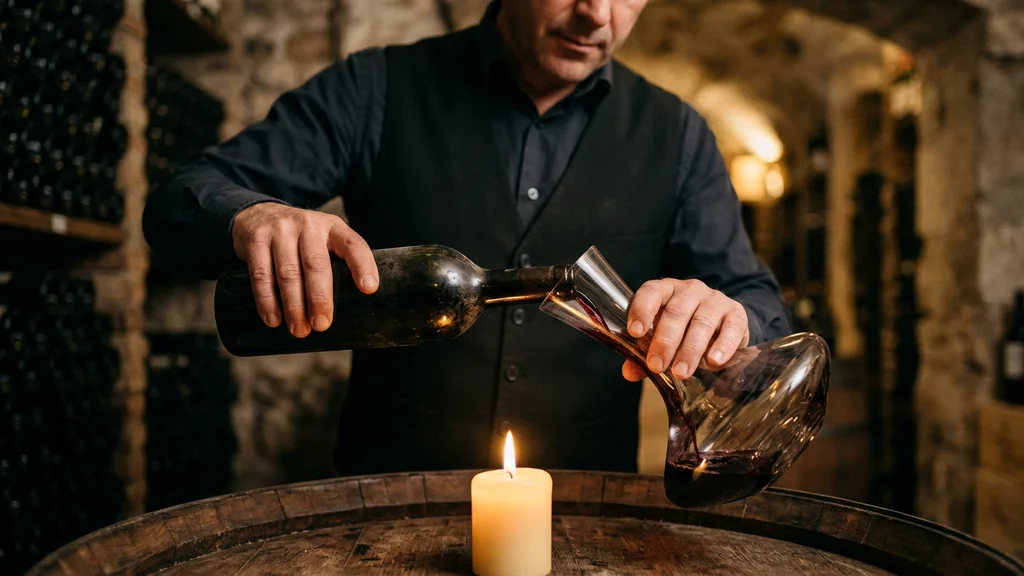
In fine wines aged 10 to 25 years or bottled with minimal filtration, tannins and anthocyanin pigments gradually bind together into dark, sandy sediment at the base or shoulder of the bottle. Although this sediment is completely natural and harmless, its gritty texture and bitterness spoil the final glasses. Because mature wines need minimal oxygen so their dried-flower and truffle aromas do not fade, sommeliers choose a narrower-necked decanter and pour slowly in front of a candle or soft flashlight to trap sediment at the bottle’s shoulder (read more about aging potential in our wine age and aging guide ).
Wine Aerator vs. Decanter: Complete Comparison Table
Use the seven-point comparison matrix below to choose the right serving tool for the bottle you are opening tonight.
| Comparison Aspect | Wine Aerator (Instant) | Crystal Decanter (Classic) |
|---|---|---|
| Oxygenation Mechanism | Active and rapid via Venturi effect constriction while pouring. | Passive and gradual across an open, wide glass surface area. |
| Preparation Time Needed | Instant (3 to 5 seconds right before the wine hits the glass). | Planned (20 to 120 minutes depending on varietal and vintage age). |
| Sediment Handling | Cannot separate sediment; rapid flow risks clouding the wine. | Primary function: traps sediment at the bottle shoulder via a slow, angled pour. |
| Ideal Serving Capacity | Practical for 1 to 2 glasses (when recorking the rest of the bottle for tomorrow). | Designed for finishing a full 750 ml or 1.5 L bottle in one sitting. |
| Best-Suited Wine Styles | Young red wines (1 to 5 years) with firm tannins: Cabernet, Malbec, everyday Shiraz. | Complex fine wines: young to aged Barolo, Bordeaux Grand Cru, Amarone. |
| Risk for Delicate or Aged Wines | High: strong air pressure can strip delicate tertiary aromas immediately. | Low when using a narrow-necked decanter and serving promptly after pouring. |
| Cleaning and Maintenance | Very easy to rinse under warm running water in seconds. | Requires a flexible brush or stainless cleaning beads to prevent cloudiness at the base. |
When to Use an Aerator, a Decanter, or Leave the Wine in the Bottle
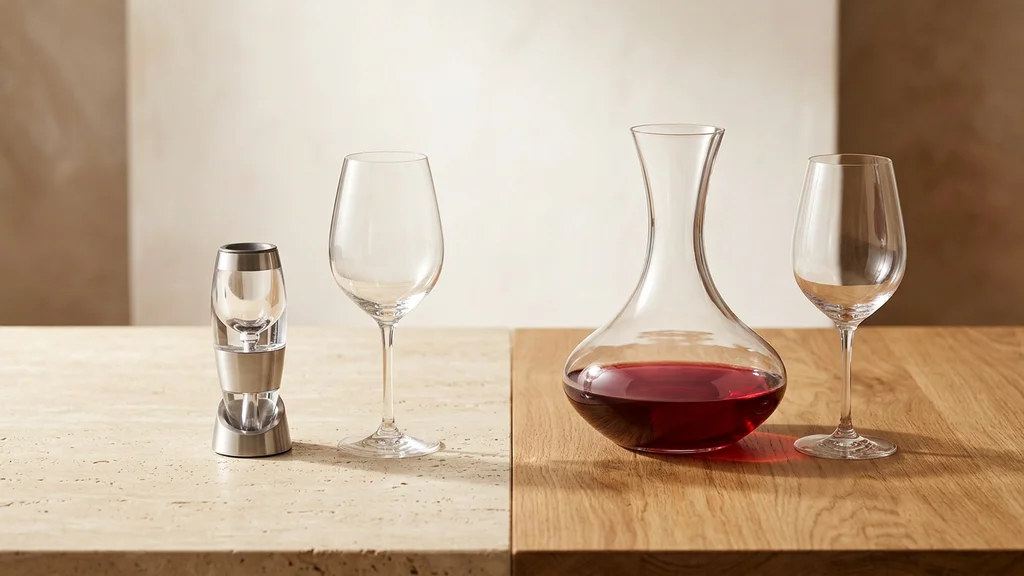
Not every bottle improves with heavy air exposure. As a practical rule at the dinner table or private tasting, divide your approach into these three groups.
1. When an Instant Wine Aerator Is the Best Choice
Attach an aerator whenever you open a commercial red wine under five years old sealed with a screw cap or clean cork and free of sediment, such as Chilean Cabernet Sauvignon, Argentine Malbec, everyday Australian Shiraz, or young Bordeaux Supérieur. Its biggest advantage is not just saving time, but flexibility: if you only want one glass on a Tuesday night, the remaining wine in the bottle stays protected from excess oxidation and can be recorked in the fridge for tomorrow.
2. When a Decanter Is Mandatory (and Aerators Are Off-Limits):
Leave your aerator in the drawer and reach for a clean crystal decanter when opening bottles over eight years old, Nebbiolo from Barolo or Brunello di Montalcino, or Bordeaux Grand Cru Classé. Before pouring, stand the bottle upright for at least 12 to 24 hours so all sediment settles cleanly at the bottom. Pouring slowly into a decanter preserves ruby-to-garnet clarity in the glass while avoiding physical agitation that can shock a mature wine’s delicate structure.
3. Wines That Should Skip Both Tools
Never run Champagne, Cava, Prosecco, or any sparkling wine through a wine aerator, as the narrow constriction instantly flattens the fine carbonation that defines the style. The same applies to crisp, aromatic white wines and rosés (such as Sauvignon Blanc or Pinot Grigio), which taste best poured cold straight into a slender white wine glass . The rare exception among whites is a structured, oak-aged Burgundy Chardonnay, which benefits from 15 to 20 minutes in a narrow decanter.
Sommelier’s Tropical Temperature Note: In Indonesia, where room temperatures average 26-31°C, leaving a decanter on the dining table for 60 minutes will push red wine above 24°C, making alcohol vapors taste hot and sharp. Chill the bottle in a refrigerator for 20 to 30 minutes until it reaches 13-14°C first, then decant so the final serving temperature lands right in the ideal 16-18°C window. See our full wine serving temperature guide .
How to Use a Wine Aerator and Keep Glassware Detergent-Free
The simplest mistake that ruins a great bottle is lingering detergent fragrance or mineral scale inside a decanter or aerator air channel. Follow these four standard steps before and after service.
- Pre-Rinse with Clean Mineral Water: Before opening a prized bottle, rinse the inside of your decanter or aerator with cool mineral water to clear away storage dust. When possible, season the decanter by swirling a splash of wine around the glass walls, then pouring that splash into your tasting glass before decanting the full bottle.
- Pour Once Through the Air Channel (Avoid Double-Passing): Hold a Venturi aerator steady over a glass tilted at roughly 45 degrees, making sure your fingers do not block the side air-intake holes. Avoid pouring a bottle through an aerator more than once unless the wine is extremely young and heavily reduced, as double aeration can flatten fresh fruit aromas.
- Avoid Scented Dish Soap: Never pour citrus- or floral-scented dishwashing liquid into a narrow-necked crystal decanter; surfactants are hard to rinse out completely and will taint the next wine’s bouquet. Rinse immediately after use with warm water and a few tablespoons of coarse salt or stainless-steel decanter cleaning beads, swirling gently.
- Air-Dry Upside Down on a Lint-Free Rack: Wipe only the exterior glass with an unscented microfiber cloth so the interior dries completely without leaving hard-water spots at the base.
6 Red Wine Recommendations at Peakwine: Aerator vs. Decanter Picks
While Peakwine focuses on curating authentic, distributor-warranted bottles (and does not currently sell standalone aerator or decanter hardware), understanding the tannin profile of each red wine in Peakwine’s collection helps you choose the right serving method. The first three bottles below respond immediately to an instant aerator for casual weeknight dinners, while the three classic vintages beneath them shine after resting in a crystal decanter.
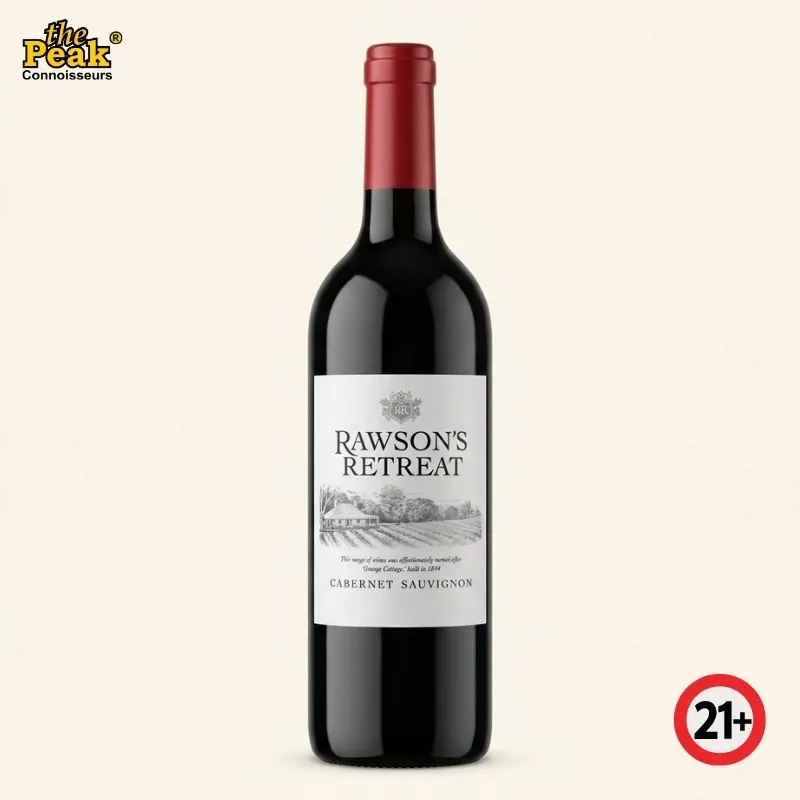
Penfolds Rawsons Retreat Cabernet Sauvignon 2025 Australia 750ml
A young 2025 Cabernet Sauvignon from South Eastern Australia at 14.2% ABV that pairs effortlessly with a wine aerator. A single pour through a Venturi spout lifts ripe blackberry and subtle mint aromas while smoothing young tannins for grilled meats or burgers.
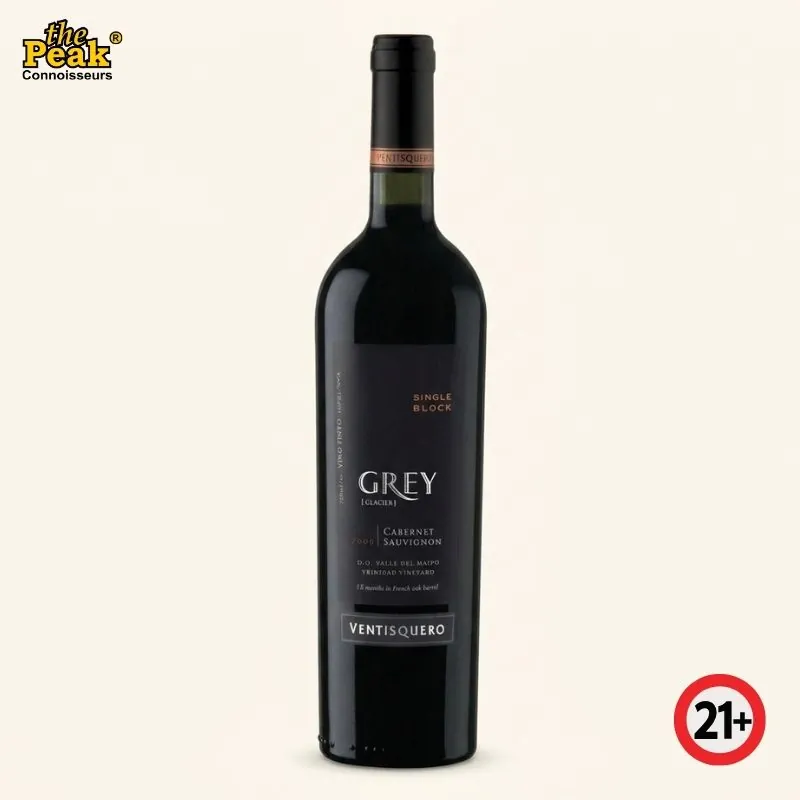
Ventisquero Grey Cabernet Sauvignon 2021 Chile 750ml
A structured single-block Chilean Cabernet Sauvignon at 14.2% ABV layered with oak and cracked black pepper. Ideal through an instant pourer aerator for impromptu dinners, or rested 25 to 30 minutes in a decanter for a plusher texture.
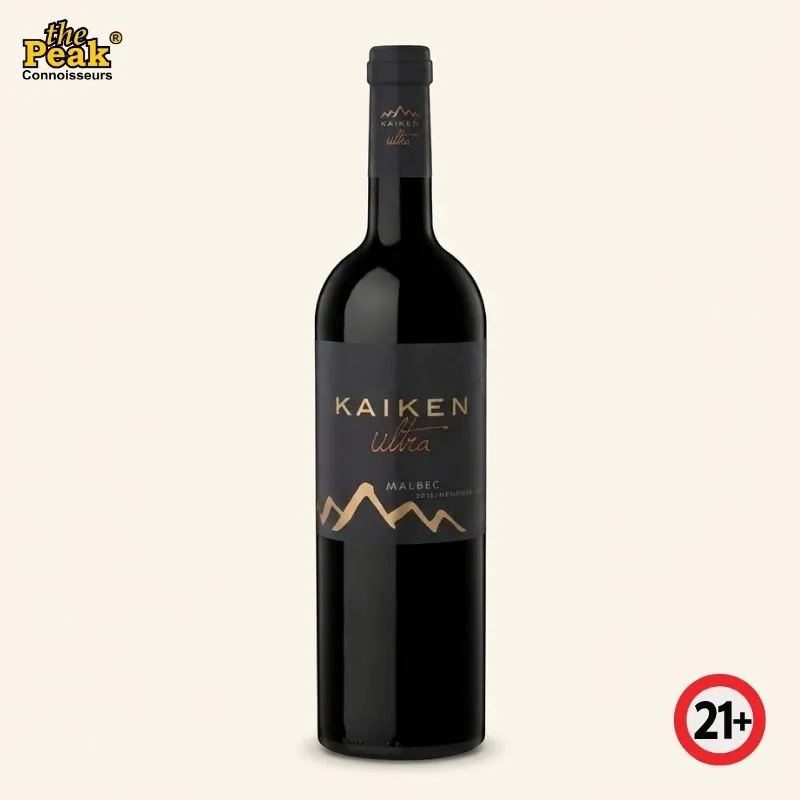
Kaiken Ultra Mendoza Malbec 2022 Argentina 750ml
High-altitude Mendoza Malbec from the Aurelio Montes family at 14.1% ABV, packed with blue plum, dark chocolate, and violet. Run it briefly through an aerator over the glass before serving with grilled short ribs so its full-bodied texture feels smooth from the first sip.
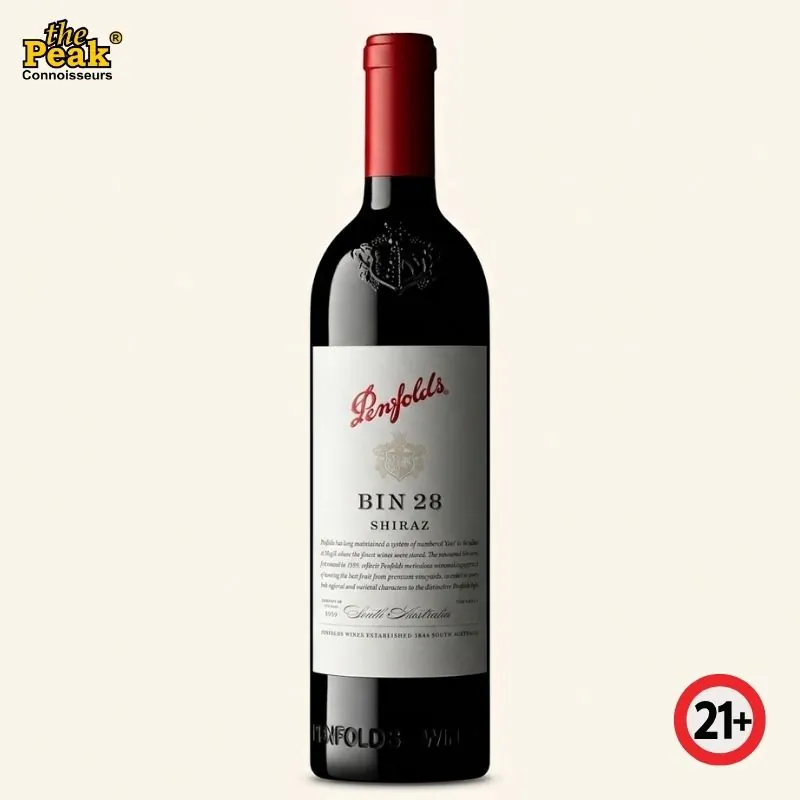
Penfolds Bin 28 Kalimna Shiraz 2016 Australia 750ml
A 2016 South Australian Shiraz at 14.2% ABV now approaching a decade of maturity. Decant slowly into a clean vessel to trap fine sediment and allow 45 minutes of breathing room so clove spice, mocha, and dark fruit open gracefully.
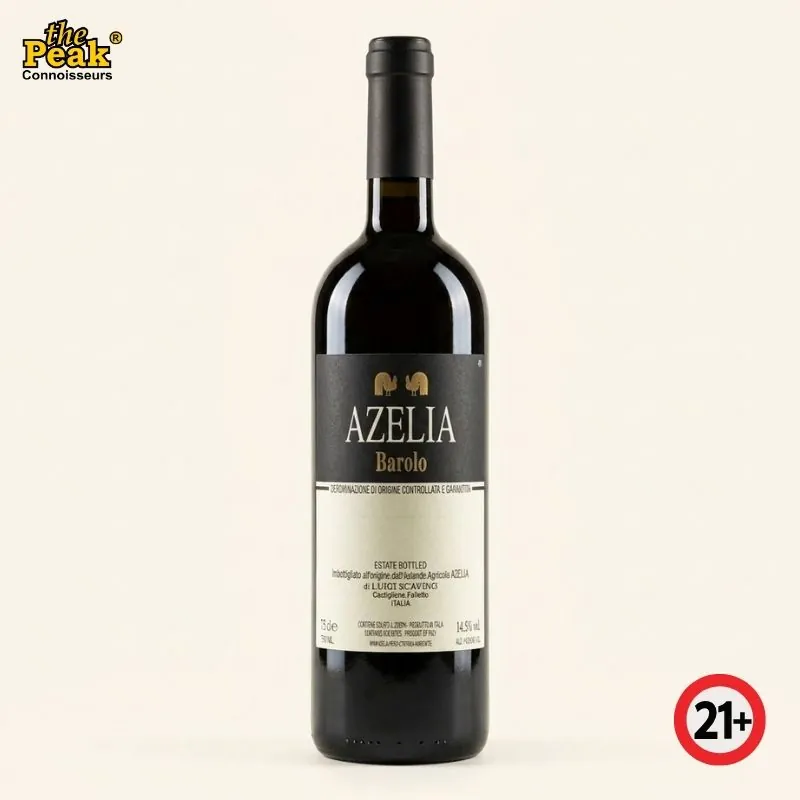
Azelia Barolo 2018 Italy 750ml
A classic Piedmont Nebbiolo at 14.2% ABV with firm, gripping tannins. Skip the harsh aerator and give it 60 to 90 minutes in a wide-based decanter so dried rose petal, aged leather, and red cherry aromatics integrate cleanly.
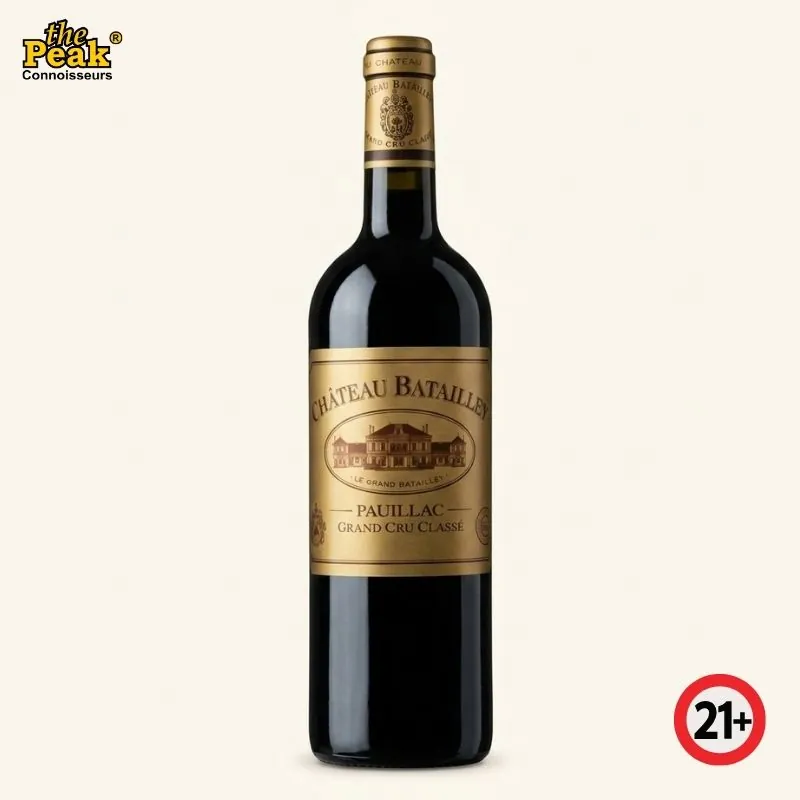
Chateau Batailley Pauillac Grand Cru Classe 2018 France 750ml
A 2018 Fifth Growth Pauillac Grand Cru Classé from Bordeaux at 14.2% ABV, built on dense layers of Cabernet Sauvignon and Petit Verdot. Stand the bottle upright a day ahead, then decant slowly beside a light source for 60 to 120 minutes to unlock world-class cassis, graphite, and cedarwood.
Frequently Asked Questions About Wine Aerators and Decanters
Can a wine aerator really replace a decanter?
For young red wines under five years old, a Venturi-effect aerator softens tannins quickly, roughly matching 20 to 30 minutes of decanting. However, an aerator cannot replace a decanter’s ability to separate sediment or gradually open the structure of aged fine wines.
How long does the oxygenation effect of an aerator last in the glass?
Initial oxygenation from an aerator is noticeable on the first sip and continues to evolve gently in the glass bowl over the next 15 to 30 minutes. If you are only pouring one or two glasses, recork the remaining bottle tightly and store it in the refrigerator to keep it fresh.
When should wine never be poured through an aerator?
Avoid using an aerator on aged fine wines over 8 to 10 years old that contain sediment, delicate light-bodied reds such as mature Pinot Noir, crisp young white wines, and all sparkling wines including Champagne and Prosecco.
Can you pour red wine into a decanter through an aerator at the same time?
This ‘hyper-decanting’ technique should only be used for young, commercial red wines with very firm tannins that you want to drink in under 15 minutes. Never try it on aged vintage wines or bottles with sediment, as excessive air pressure can damage delicate aromas.
Do white wine and sparkling wine need an aerator or decanter?
Most young white wines and sparkling wines need no aeration, as you want to preserve their crisp citrus freshness and carbonation. The rare exception is a complex, oak-aged white wine (such as aged Burgundy Chardonnay), which benefits from 15 minutes in a narrow decanter.
How do you clean a crystal decanter without cloudiness or soap odor?
Rinse the decanter immediately after use with warm running water and no scented dish soap. To remove red wine stains at the wide base, swirl stainless-steel decanter cleaning beads or a mix of warm water and coarse salt, then air-dry upside down without wiping the interior with scented cloth.
Conclusion: Matching the Serving Tool to Every Bottle
The choice between a wine aerator and a decanter is not about which tool is superior, but about matching the age and density of the wine in your bottle. Keep a wine aerator on hand for everyday young reds when you want instant smoothness, and save your crystal decanter for unhurried evenings with structured bottles and sediment-rich classic vintages.
If you want to build a complete foundation from scratch, from choosing your first bottle and managing tropical storage humidity to sommelier-level tasting technique, read Peakwine’s complete wine guide for beginners or browse our curated warranted red wine collection at Peakwine to find your next bottle.

Explore Curated Selections for Your Cellar
Authentic wines, spirits, and sake personally curated by our sommelier team with verified provenance and climate-controlled delivery.
Wine Guide Collection
Over 1,300+ red, white, and sparkling wines from acclaimed global producers.
Explore Wine Catalog → Premium SpiritsWhisky, Gin, and Vodka
Rare single malts, blended Scotch, artisan gin, and 100% agave tequila.
Explore Spirits Catalog → Cold-Chain GuaranteedSake and Asian Drinks
Authentic Japanese Daiginjo, Ginjo, Junmai sake and chilled Korean soju.
Explore Sake Collection → Instant Delivery22+ Official Outlets
Find the nearest Peakwine cellar outlet in Bandung and Jakarta for direct pickup.
Find Store Locations →

 By Wine Style
 Red Wine
 White Wine
 Sparkling Wine & Champagne
 Rosé Wine
 Dessert & Sweet Wine
 Fortified & Port Wine
 By Grape Variety
 Cabernet Sauvignon
 Shiraz
 Chardonnay
 Merlot
 Sauvignon Blanc
 Pinot Noir
 Tempranillo
 Sangiovese
 Malbec
 Grenache
 Semillon
 Primitivo
 Moscato
 Carmenere
 Riesling
 Pinot Grigio
 By Country & Region
 Australia
 France
 Chile
 Indonesia
 Italy
 Argentina
 Spain
 United States
 Portugal
 South Africa
 New Zealand
 Japan
 Germany
 By Taste & Sweetness
 Full-Bodied Wine
 Medium-Bodied Wine
 Light-Bodied Wine
 Sweet & Fruity Wine
 Dry Wine
 Curated Collections
 Best Sellers
 Everyday Value (< 500k)
 Reserve & Cellar

 Whisky & Whiskey
 Single Malt Scotch
 Blended Scotch
 Bourbon & Tennessee
 Japanese Whisky
 Irish Whiskey
 Gin
 London Dry Gin
 Dry Gin
 Tequila & Mezcal
 Vodka
 Premium & Craft Vodka
 Indonesian Vodka
 Rum
 White Rum
 Dark Rum
 Brandy Cognac
 Armagnac
 Liqueur
 Traditional Spirit


