

Does Wine Get Better With Age? Vintage Myths and Facts You Should Know


📖 Table of Contents ▼
Not all wine gets better with age. In fact, more than 90 percent of wine produced worldwide is crafted by winemakers to be enjoyed fresh within 1-3 years of its harvest. Only about 5-10 percent of wines have the tannin structure, acidity, and fruit concentration to improve after 5 years in bottle, and less than 1 percent are rare fine wines capable of aging for decades in a cellar. If you store an ordinary bottle of wine in a closet or kitchen refrigerator for years, it will likely spoil, lose its fresh fruit, and turn flat or sour.
- Most Wines Are Made to Drink Young: Over 90 percent of commercial wines on the market, including Moscato, Pinot Grigio, Sauvignon Blanc, and entry-level reds, are at their peak when young.
- What Vintage Actually Means: The year printed on the label indicates the calendar year the grapes were harvested from the vine, not the year the wine was bottled or released.
- 4 Chemical Pillars of Aging: A bottle can only age gracefully if it has a combination of four natural preservatives: dense tannins, high acidity, balanced alcohol, and residual sugar.
- The Science of Aging: Over time, grippy tannins polymerize into a velvety texture, ruby-red color shifts to brick garnet, and fresh fruit aromas evolve into complex tertiary notes of leather, tobacco, and forest floor.
- Indonesia’s Tropical Climate Challenge: Storing wine at Indonesian room temperature (28-33°C) will ruin it within months; long-term storage requires a wine cellar or chiller held at 12-16°C and 70 percent humidity.
Debunking the Biggest Myth: Why Not All Wine Improves With Age
For many wine drinkers in Indonesia, a popular assumption has persisted for years: the older a bottle of wine, the higher its value and the better its flavor. Movies often reinforce this idea with scenes of characters opening a dusty bottle from a great-grandfather’s collection to mark a historic occasion.
To sommeliers and viticulturists, however, that assumption is a widespread myth that often leads to disappointment. In modern winemaking, producers design most wines for immediate drinkability.
When you buy a crisp Sauvignon Blanc or an approachable young Cabernet Sauvignon, its main appeal lies in primary fruit freshness: ripe blackberries, passionfruit, white flowers, and bright citrus acidity. As explained in our guide on how long wine lasts after opening , wines not built for long-term aging lose their fruit vibrancy quickly. If you hold these fresh bottles for 5-10 years, their natural fruit character fades, leaving a flat, tired, and oxidized liquid.
Biologically and chemically, a wine’s lifespan in bottle follows a bell curve divided into three main phases:
- Youthful Stage: Dominated by fresh primary fruit aromas. In age-worthy wines, tannins at this stage often feel astringent, rigid, and drying on the palate.
- Peak Maturity Window: The sweet spot where tannins have softened, acidity still keeps the wine lively, and ripe fruit integrates with complex bottle-aged aromas.
- Decline and Senescence: The wine loses its fruit character, color fades to dull brown, and flavors turn sharp and vinegary from acetic acid.
What Does Vintage Actually Mean on a Wine Label?
Many beginners assume that a prominent year on the front label, such as ‘2018’ or ‘2020’, is the year the wine was bottled or even an expiration date.
In viticulture, the word vintage comes from the Old French vendange, derived from the Latin vindemia (combining vinum for wine and demo for to pick or harvest). Therefore, vintage is the calendar year in which the grapes were harvested from the vineyard.
If you hold a bottle labeled ‘2016’, it means the grapes were picked in the autumn of 2016. The wine may have spent 2 years fermenting and maturing in oak barrels, been bottled in 2018, and reached Indonesian retail shelves in 2020.
Why Is the Harvest Year So Crucial to a Wine’s Value?
In traditional European wine regions (Old World) like Bordeaux, Burgundy, Tuscany, and Piedmont, weather varies significantly from year to year. As outlined in our comparison of Old World vs. New World wine philosophies , regional microclimates (terroir) determine whether a harvest becomes a standout year or an ordinary one:
- Great Vintage: Occurs when spring is warm without damaging frost, summer brings ample sunshine without extreme drought, and autumn stays dry through harvest. Grapes reach full phenolic ripeness with ideal balance between sugar, acid, and dense tannins. Bottles from great vintages can age for decades and command high prices from collectors.
- Challenging Vintage: Occurs when heavy rain hits before harvest (diluting the grapes), rot spreads, or cold temperatures prevent full ripening. Wines from these years tend to be lighter and are best drunk earlier.
What Does NV (Non-Vintage) Mean on a Bottle?
If a bottle has no harvest year and instead carries the code ‘NV’ (Non-Vintage), the producer is not hiding quality. NV is standard for French Champagne, sparkling wines, and fortified wines like Port. Producers blend base wines from multiple harvest years to maintain a consistent house style every year, regardless of weather variations in any single harvest.
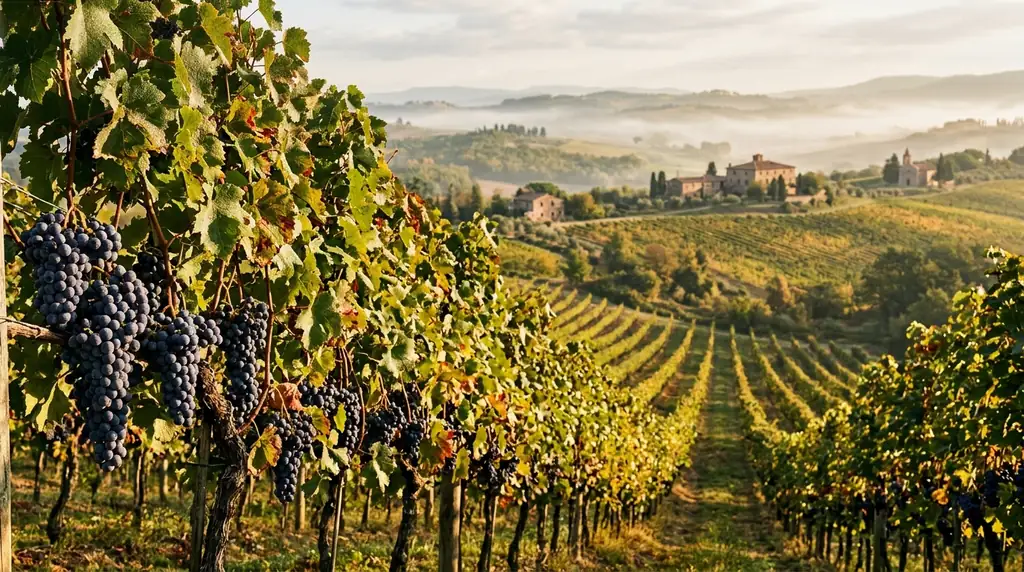
Wine Categories: 90 Percent Drink-Young vs. 10 Percent Age-Worthy
To store your bottles properly at home, it helps to divide wine into two broad groups based on how it was made:
1. The 90 Percent: Fresh, Ready-to-Drink Wines
This group covers most wines found on retail shelves and restaurant lists:
- Most White Wines and Rosés: Sauvignon Blanc (especially from New Zealand), Pinot Grigio, Moscato, young Chenin Blanc, and dry Rosé. Their appeal is crisp acidity and bright citrus or floral aromatics. Peak enjoyment is 1-2 years from harvest.
- Light- to Medium-Bodied Reds: Beaujolais (Gamay), basic Valpolicella, casual Merlot, everyday Pinot Noir, and warm-climate reds. These wines are made for casual dinners and are best consumed within 2-3 years.
- Screwcap-Sealed Wines: Many producers seal fresh, ready-to-drink wines with precision aluminum screwcaps to lock in primary fruit aromas and prevent oxygen ingress.
2. The 10 Percent: Cellar-Worthy Fine Wines
Only select bottles with the right biochemical foundation can survive and improve over decades. As detailed in our guide to French Bordeaux wine styles , fine wine is built with dense structure that needs years to soften:
- High-Tannin, High-Acid Reds: Top Cabernet Sauvignon from Bordeaux (Médoc, Pauillac, Margaux) or Napa Valley, Nebbiolo from Barolo and Barbaresco, Sangiovese Grosso in Brunello di Montalcino, Corvina Appassimento in Amarone della Valpolicella, Northern Rhône Syrah, and Spanish Rioja Gran Reserva. These wines often need 5-10 years just to soften their tannins and can age 15-40 years.
- Structured White Wines: White Burgundy (oak-aged Chardonnay from Grand Cru Côte de Beaune), top German or Alsatian Riesling with high natural acidity, and Loire Valley Chenin Blanc.
- Dessert and Fortified Wines: French Sauternes, Hungarian Tokaji Aszú, and Vintage Port from Portugal’s Douro Valley. High natural sugar and strong alcohol act as powerful preservatives that keep these wines alive for over 50 years.
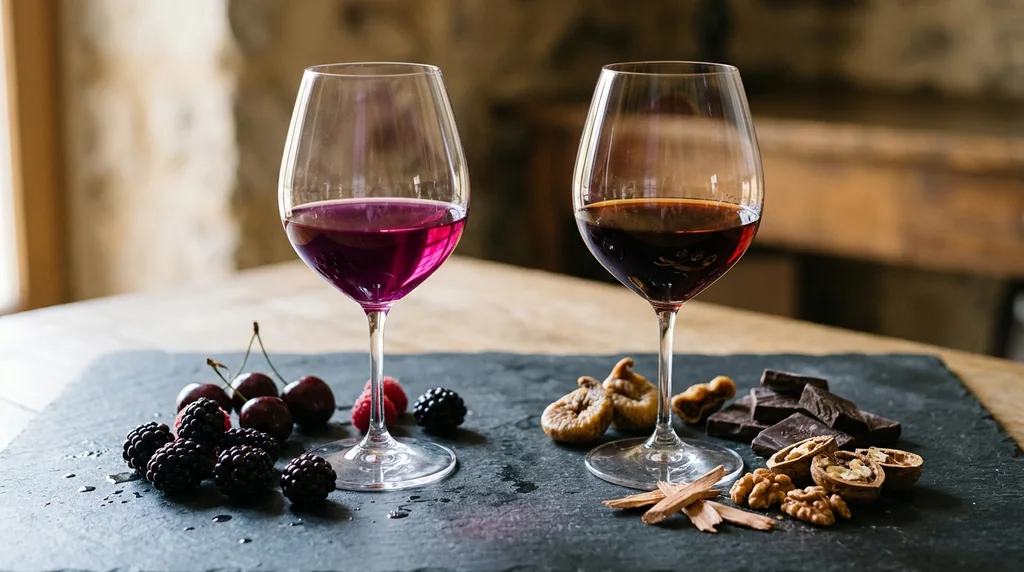
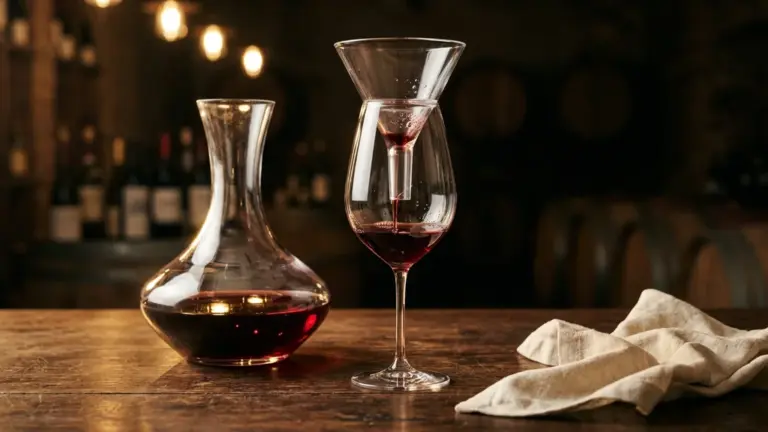
Serving Young vs. Aged Wine: Firm young wines respond well to quick aeration, while older fine wines with sediment require gentle handling. Check the difference in our guide on wine aerators vs. decanters .
4 Biochemical Pillars: Why Some Wines Age Gracefully
What separates a Grand Cru capable of aging 30 years from a Pinot Grigio that fades in 3 years? The answer lies in four natural structural pillars inside the grape. As covered in our guide to wine flavor profiles and tannin structure , these four elements work together as a chemical balancing system:
- 1. Tannin Concentration: Tannins are natural polyphenols extracted from thick grape skins, seeds, stems, and oak barrels. They act as strong antioxidants that protect wine from oxygen damage. Without abundant, ripe tannins, red wine lacks the backbone to survive decades.
- 2. Natural Acidity: High acidity (a low pH between 3.0 and 3.4) inhibits spoilage bacteria. Malic and tartaric acids keep the wine stable and lively so it does not taste heavy or flat as it ages. Varieties with high natural acidity, like Nebbiolo and Riesling, have the longest aging potential.
- 3. Balanced Alcohol (ABV): Alcohol (ethanol) acts as a microbiological stabilizer. However, it must stay in balance with fruit concentration. Excessive alcohol without enough tannin and acid will taste hot and burning once the fruit fades.
- 4. Residual Sugar: Natural sugar is one of the oldest preservatives. In fine sweet wines, high residual sugar creates osmotic pressure that inhibits microbial growth, which is why 19th-century dessert wines can still be drunk today.
Sensory Transformation in Bottle: Color, Texture, and Tertiary Aromas
When a fine wine rests in a stable cellar, the liquid inside is never static. Slow, microscopic oxygen exchange through natural cork pores (micro-oxygenation) drives dramatic sensory changes:
1. Color Spectrum Shifts
In young red wines, free anthocyanin pigments create a deep purple-ruby hue. Over years of micro-oxygenation, these pigments bind with tannins and precipitate out as sediment. The color shifts from deep ruby to garnet, brick red, and finally tawny brown at the rim. In white wines, phenolic oxidation turns clear or greenish hues into deep straw, gold, copper, and amber.
2. Tannin Softening (Polymerization)
If you have ever tasted a very young Barolo or Bordeaux, you know the drying, sandpaper-like grip on your palate. That comes from short-chain monomeric tannins binding to proteins in your saliva. Over years of aging, those tannin molecules polymerize into longer, heavier chains. Longer chains have less surface contact with your tongue, turning a harsh grip into a smooth, rounded, velvety texture.
3. The Emergence of Tertiary Aromas
For sommeliers, the most rewarding change is how the aromatic bouquet evolves over time:
- Primary Aromas (0-3 Years): Fresh fruit notes straight from the grape, such as blackcurrant, raspberry, green apple, passionfruit, and blossoms.
- Secondary Aromas (2-5 Years): Notes from fermentation and oak aging, including vanilla, cedar, toast, butter, and coconut.
- Tertiary Aromas (5-20+ Years): Rare aromas formed through slow reductive reactions in bottle. Fresh fruit gives way to dried fruit (raisin, dried fig, plum jam) alongside savory notes of aged leather, cigar box, damp forest floor (sous-bois), truffle, wet moss, and dark chocolate.
Comparison Matrix: Aging Potential and Peak Drinking Windows by Variety
To help you decide when to open your bottles, here is a practical comparison of aging potential and peak drinking windows across popular wine styles:
| Category and Grape Variety | Tannin and Acid Profile | Average Aging Potential | Peak Drinking Window |
|---|---|---|---|
| Moscato, Prosecco, Asti | No tannin, light sweet acidity | 1-2 years | Drink immediately while fresh |
| Sauvignon Blanc, Pinot Grigio | No tannin, high citrus acidity | 1-3 years | 1-2 years after harvest |
| Casual Chardonnay (Unoaked) | No tannin, medium body | 2-3 years | 1-2 years after harvest |
| White Burgundy Grand Cru (Oaked) | No tannin, high acidity, dense minerality | 7-15 years | 5-10 years after harvest |
| Casual Merlot and Pinot Noir | Soft medium tannin, cherry fruit | 2-5 years | 2-3 years after harvest |
| Modern Commercial Cabernet Sauvignon | Firm round tannin, fruit-forward | 3-7 years | 3-5 years after harvest |
| Barolo and Barbaresco (Nebbiolo) | Massive grippy tannin, high acidity | 15-35 years | 10-20 years after harvest |
| Bordeaux Grand Cru Classé | Structured dense tannin, cassis, cedar | 15-40 years | 12-25 years after harvest |
| Amarone della Valpolicella DOCG | Weighty tannin, concentrated dried fruit | 12-25 years | 8-15 years after harvest |
| Vintage Port (Fortified) | Thick tannin, 20 percent ABV, sweet | 25-60+ years | 20-40 years after harvest |
As the table shows, aging potential varies widely by grape structure. Opening a bottle within its peak window gives you the best tasting experience.
4 Essential Cellar Storage Rules for Indonesia’s Tropical Climate
Cellaring age-worthy fine wine in Indonesia requires careful environmental control. Warm, fluctuating tropical temperatures are the biggest threat to both corks and wine. To age valuable bottles properly for 10-20 years, four storage conditions are non-negotiable:
- 1. Stable Temperature Control (12-16°C): Average indoor temperatures in Indonesia sit around 28-33°C. At that heat, chemical reactions inside the bottle accelerate rapidly. Wine becomes cooked (maderized), losing fresh fruit and developing burnt apple or vinegary notes. Keep your wine at a steady 12-16°C with minimal fluctuation.
- 2. Controlled Humidity (65-75 Percent RH): Low humidity (such as inside a standard kitchen fridge at under 35 percent) pulls moisture out of natural corks. Corks dry out, shrink, and crack, letting oxygen flood the bottle. Keeping humidity around 70 percent keeps corks supple, tight, and airtight.
- 3. Horizontal Bottle Storage: All bottles sealed with natural cork should be stored on their sides. This keeps the wine in constant contact with the inside of the cork so it never dries out. Screwcap bottles are the exception and can be stored upright.
- 4. Protection From UV Light and Vibration: Direct sunlight and harsh room lighting emit UV rays that penetrate glass and damage amino acids and sulfur compounds. This triggers a fault known as lightstruck, which smells like wet wool. Also avoid storing wine near vibrating appliances, as constant micro-vibrations disturb sediment and disrupt tannin polymerization.
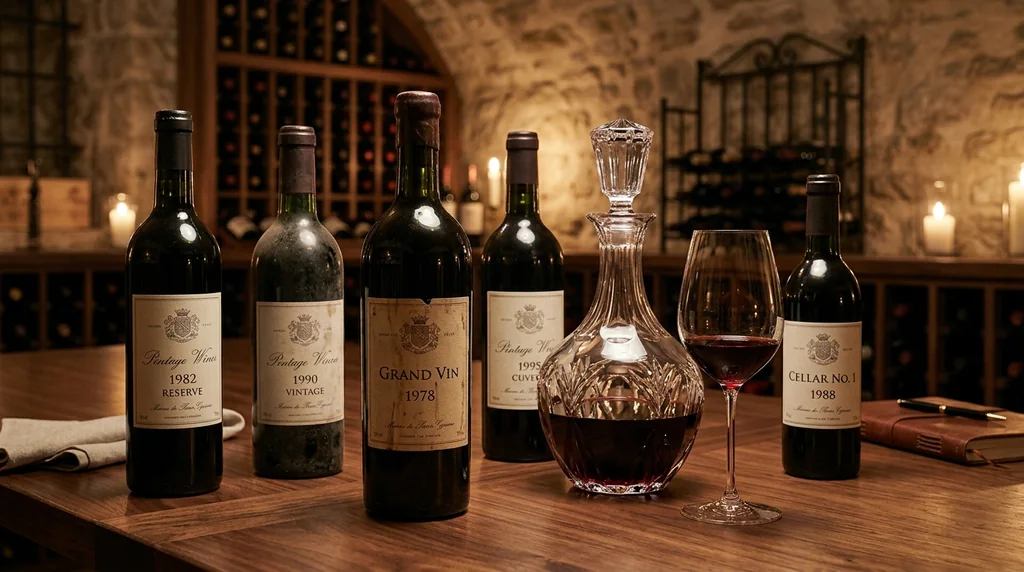
6 Best Vintage and Age-Worthy Wines at Peakwine
If you want to taste the difference between a fresh young wine and a mature fine wine, our Peak Sommelier curators have selected 6 standout bottles currently available in Peakwine’s complete wine catalog for safe delivery across Indonesia:
A clear example of a wine made to drink right away. It offers aromas of sweet black plum, ripe cassis, and soft vanilla on a medium-bodied frame that is approachable for any palate.
A classic vintage that has spent more than 15 years maturing in bottle. Its once-firm tannins have softened, releasing aromas of dried rose petals, black tar, fennel spice, worn leather, and white truffle.
Grown on Coonawarra’s cool-climate Terra Rossa red soil and aged in French oak barrels. It has a cellar potential of 10 to 20 years, with concentrated notes of blueberry, black pepper, cedar, and wild eucalyptus.
Made using the traditional Appassimento method of drying grapes for 100 winter days. This five-star 2016 vintage delivers aromas of dried black cherry, plum jam, dark chocolate, mocha coffee, and cinnamon spice on a rich, full-bodied palate.
One of Pomerol’s standout estates, neighboring the famed Petrus vineyard. This 2010 vintage is built to last 30 to 50 years, showing a velvety texture alongside cassis, black truffle, cigar box, and graphite.
The natural staying power of fortified wine from the 2018 harvest in the Douro Valley. With 20% ABV and rich natural sugar, this bottle offers aromas of sweet black raisin, dark chocolate, dried fig, and warm pepper.
Frequently Asked Questions About Vintage and Wine Aging (FAQ)
Under international food standards and Indonesia’s BPOM regulations, alcoholic beverages above 10% ABV are not required to carry a formal expiration date because alcohol naturally prevents bacterial growth. However, the absence of an expiration date does not mean wine cannot spoil. Wine stored past its drinking window or exposed to heat will lose its fruit character, turn a dull brown color, and taste sour like vinegar.
You can check using sight, smell, and taste. First, look at the color: if red wine has turned muddy brown or white wine has darkened to murky amber-brown, it is heavily oxidized. Second, smell it: spoiled wine gives off sharp scents of vinegar, nail polish remover (ethyl acetate), or damp, musty cardboard (cork taint). Third, take a small sip: if the fruit is completely gone and replaced by a sharp, burning acidity, the wine is past its prime.
Long-term storage of more than a few months in a kitchen refrigerator is strongly discouraged. Household fridges are built to chill food at 2 to 4°C with very dry air below 35% humidity. That environment dries out and shrinks natural corks quickly, leading to premature oxidation. Constant compressor vibrations also disrupt the wine’s chemical stability. A regular fridge is only suitable for chilling a bottle a few hours before serving.
Vintage pricing is driven by supply and demand as well as weather conditions. In a great vintage, grapes reach balanced phenolic ripeness, producing age-worthy wines that collectors pursue worldwide. Over the years, the number of available bottles shrinks as people drink them, while the remaining bottles grow rarer and more mature, pushing prices higher at international auctions.
Yes, modern high-quality screwcaps (such as Stelvin closures) have been proven to keep wine fresh for 10 to 15 years or more without any risk of cork taint (TCA). Producers in Australia and New Zealand even use specialized screwcaps with controlled oxygen transmission rates, allowing structured reds like Shiraz and Cabernet Sauvignon to age gracefully without the risk of corks drying out in tropical climates.
Conclusion: Enjoy Your Young Wines and Protect Your Fine Bottles
Understanding vintage and wine aging frees you from common myths that can ruin a good bottle. Keep in mind that most wines are made to be opened and enjoyed fresh today, not left to gather dust until they fade.
When you choose to invest in age-worthy fine wines, store them in a temperature- and humidity-controlled environment so they can develop properly.
Explore Curated Selections for Your Cellar
Authentic wines, spirits, and sake personally curated by our sommelier team with verified provenance and climate-controlled delivery.
Wine Guide Collection
Over 1,300+ red, white, and sparkling wines from acclaimed global producers.
Explore Wine Catalog → Premium SpiritsWhisky, Gin, and Vodka
Rare single malts, blended Scotch, artisan gin, and 100% agave tequila.
Explore Spirits Catalog → Cold-Chain GuaranteedSake and Asian Drinks
Authentic Japanese Daiginjo, Ginjo, Junmai sake and chilled Korean soju.
Explore Sake Collection → Instant Delivery22+ Official Outlets
Find the nearest Peakwine cellar outlet in Bandung and Jakarta for direct pickup.
Find Store Locations →

 By Wine Style
 Red Wine
 White Wine
 Sparkling Wine & Champagne
 Rosé Wine
 Dessert & Sweet Wine
 Fortified & Port Wine
 By Grape Variety
 Cabernet Sauvignon
 Shiraz
 Chardonnay
 Merlot
 Sauvignon Blanc
 Pinot Noir
 Tempranillo
 Sangiovese
 Malbec
 Grenache
 Semillon
 Primitivo
 Moscato
 Carmenere
 Riesling
 Pinot Grigio
 By Country & Region
 Australia
 France
 Chile
 Indonesia
 Italy
 Argentina
 Spain
 United States
 Portugal
 South Africa
 New Zealand
 Japan
 Germany
 By Taste & Sweetness
 Full-Bodied Wine
 Medium-Bodied Wine
 Light-Bodied Wine
 Sweet & Fruity Wine
 Dry Wine
 Curated Collections
 Best Sellers
 Everyday Value (< 500k)
 Reserve & Cellar

 Whisky & Whiskey
 Single Malt Scotch
 Blended Scotch
 Bourbon & Tennessee
 Japanese Whisky
 Irish Whiskey
 Gin
 London Dry Gin
 Dry Gin
 Tequila & Mezcal
 Vodka
 Premium & Craft Vodka
 Indonesian Vodka
 Rum
 White Rum
 Dark Rum
 Brandy Cognac
 Armagnac
 Liqueur
 Traditional Spirit


