

Understanding Bordeaux Wine: Why This French Region Defines Global Luxury

📖 Table of Contents ▼
Bordeaux wine is the term for wine produced in the Bordeaux region of southwestern France, recognized worldwide as the benchmark of tradition, luxury, and fine wine quality. Unlike New World wines that often rely on a single grape variety ( single varietal ), the hallmark of red Bordeaux lies in the legendary art of blending thick-skinned, firmly tannic grapes like Cabernet Sauvignon with plush, supple grapes like Merlot. Divided by the Gironde Estuary into two contrasting terroirs, the Left Bank and the Right Bank, this historic region is home to the 1855 Classification and some of the most prestigious bottles on earth.
- Geography and Estuary Divide: Located in southwestern France along the Gironde Estuary, formed by the confluence of the Garonne and Dordogne rivers, which splits the region into two main terroirs: the Left Bank (Rive Gauche) and the Right Bank (Rive Droite).
- The Secret of the Bordeaux Blend: Most Bordeaux wines are crafted from a combination of grape varieties. Red Bordeaux blends Cabernet Sauvignon, Merlot, Cabernet Franc, and Petit Verdot to buffer Atlantic weather fluctuations while balancing tannic structure with fruit suppleness.
- Left Bank vs. Right Bank: The Left Bank is dominated by Cabernet Sauvignon on warm gravel soils, producing structured, deeply tannic wines built to age for decades. The Right Bank is dominated by Merlot on cool clay soils, yielding plush, supple wines scented with plum and black cherry.
- The 1855 Classification: Commissioned by Emperor Napoleon III, this official ranking established five tiers of Grand Cru Classé estates, including the world’s most celebrated chateaux: Château Lafite Rothschild, Latour, Margaux, Haut-Brion, and Mouton Rothschild.
- Smart Value Picks: You do not need to spend tens of millions of rupiah to enjoy authentic Bordeaux. Appellations such as Bordeaux Supérieur, satellite regions like Côtes de Bordeaux, and second labels from respected chateaux deliver classic character at accessible prices.
Quick Comparison: Left Bank vs. Right Bank Bordeaux
To understand the Bordeaux wines you see on the shelf, compare the two sides of the estuary below:
| Key Parameter | Left Bank (Rive Gauche) | Right Bank (Rive Droite) |
|---|---|---|
| River Position | South and west of the Garonne River and Gironde Estuary | North and east of the Dordogne River and Gironde Estuary |
| Major Appellations | Médoc, Haut-Médoc, Pauillac, Margaux, Saint-Julien, Graves | Saint-Émilion, Pomerol, Fronsac, Castillon Côtes de Bordeaux |
| Dominant Soil Type | Deep glacial gravel over sand | Cool, iron-rich clay and limestone |
| Primary Grape Variety | Cabernet Sauvignon (typically 60-75%) | Merlot (typically 65-85%) |
| Supporting Varieties | Merlot, Cabernet Franc, Petit Verdot | Cabernet Franc, Cabernet Sauvignon |
| Sensory Profile and Body | Full-bodied, firm gravelly tannins, aromas of cassis, tobacco, and graphite | Round, velvety texture, aromas of ripe plum and dark chocolate |
| Aging Potential | Very long (10 to 30+ years to reach peak maturity) | Matures earlier and drinks well young (5 to 15 years) |
Two Sides of the Estuary: Understanding Left Bank and Right Bank Geography
Bordeaux is not a single vineyard. Spanning more than 110,000 hectares in southwestern France, the region is naturally split by the Gironde Estuary, formed where the Garonne River to the south meets the Dordogne River to the north. As we explored in our guide to Old World vs. New World wine philosophy and terroir , geography and soil in Europe play a decisive role in shaping the character of every bottle.
Left Bank: Cabernet Sauvignon Mastery on Médoc Gravel
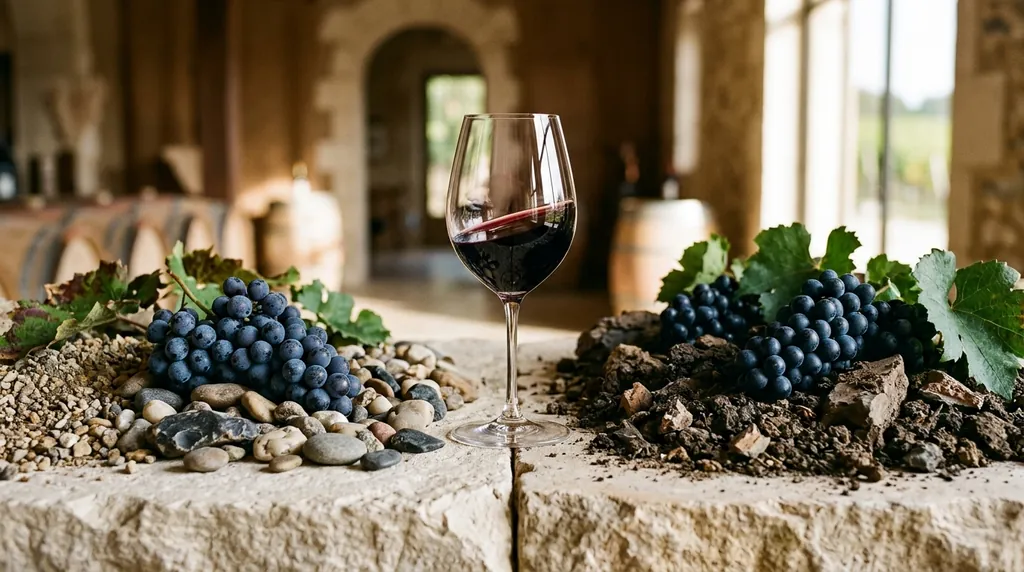
To the south and west of the river (the Left Bank) lie the Médoc peninsula and the Graves region. What sets this area apart is its deep layer of gravel ( gravel beds ), deposited by ancient glaciers from the Pyrenees thousands of years ago.
Gravel performs two vital ecological functions for grapevines:
- Rapid Water Drainage: When heavy Atlantic rains hit the vineyards, water drains quickly through the stones rather than pooling on the surface. This forces vine roots to dig many meters deep in search of moisture and natural minerals.
- Heat Absorption and Reflection: Gravel stones absorb daytime sunlight and radiate that warmth back to the grape clusters during cool nights. This steady heat is essential for thick-skinned Cabernet Sauvignon grapes , which require a long growing season to ripen fully without green, bitter flavors.
Left Bank wines show firm tannic structure, crisp acidity, full body, and layered aromas of blackcurrant , cedarwood, pipe tobacco, and pencil graphite. Powerful and concentrated in their youth, they possess legendary cellar longevity.
Right Bank: Merlot Elegance on Saint-Émilion and Pomerol Clay
Across the estuary to the north and east (the Right Bank), the landscape shifts to the limestone hills around the historic town of Saint-Émilion and the plateau of Pomerol. Here, soils are dominated by iron-rich clay layered over limestone .
Unlike warm, free-draining gravel, clay stays cool and retains moisture near the surface. This environment is less suited to late-ripening Cabernet Sauvignon, but it is ideal for thinner-skinned, early-budding Merlot grapes .
Merlot grown on Right Bank clay produces wines with a round, velvety texture. The palate offers ripe plum, sweet black cherry, fig, dark chocolate, sweet spice, and damp forest floor. Right Bank wines are far more approachable and expressive in their youth than their counterparts across the river.
Why Is Bordeaux Always Blended? The Art of Grape Orchestration
Wine lovers often ask why Bordeaux estates almost never bottle 100% single-varietal wines. Why do they always blend?
This tradition rests on two fundamental pillars: protection against Atlantic weather risks (vintage insurance) and the pursuit of lasting flavor balance .
Natural Insurance Against a Shifting Maritime Climate
Bordeaux sits close to the Atlantic Ocean. Its maritime climate brings unpredictable rainfall, damp autumn fog, and the threat of spring frost . In some years, a cold spring can damage Cabernet Sauvignon buds, or early autumn rain can cause Merlot to rot before harvest.
By planting multiple grape varieties that bud and ripen at different times, estate owners protect themselves against total crop failure. If weather harms one variety, others can still be harvested at peak quality.
How Red Bordeaux Varieties Work Together
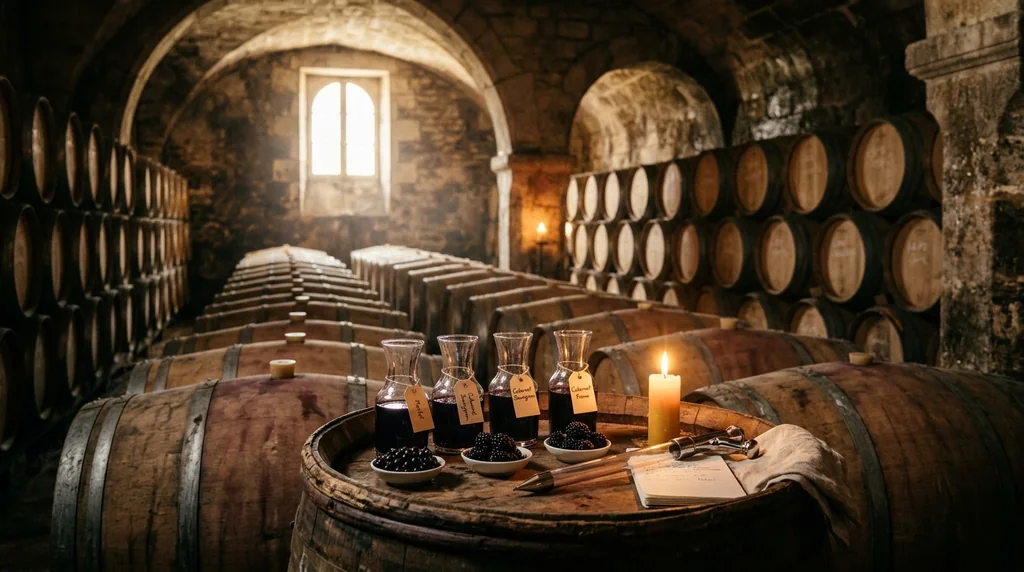
From a sensory perspective, crafting a Bordeaux blend is like assembling an orchestra where each instrument plays a distinct role:
- Cabernet Sauvignon: Forms the structural backbone of the wine, contributing firm tannins, fresh acidity, deep ruby color, and decades of aging potential.
- Merlot: Provides the fleshy core that wraps around that backbone, adding roundness, ripe plum fruit, warm alcohol, and immediate palate appeal.
- Cabernet Franc: Brings aromatic lift with notes of violet, fresh herbs, fine black pepper, and a graceful finish.
- Petit Verdot: Used in small proportions (1-5%) like a pinch of spice, adding deep purple hue, extra tannin density, and exotic spice notes.
Bordeaux Blanc: White Wines Worth Discovering
While Bordeaux is famous for its reds, the region also produces crisp, dry white wines ( Bordeaux Blanc Sec ). White Bordeaux typically pairs Sauvignon Blanc , which contributes lively acidity and aromas of passion fruit and citrus, with Sémillon , which adds rich texture, weight on the palate, and notes of beeswax, honey, and toasted nuts.
The 1855 Classification: Napoleon III’s Charter of Luxury
Discussing Bordeaux prestige without mentioning The 1855 Classification is like discussing cinema without the Oscars. This document remains the most influential milestone in establishing global fine wine hierarchy.
In 1855, Emperor Napoleon III organized the grand Exposition Universelle de Paris to present France’s finest products to world leaders and merchants. He instructed the Bordeaux Chamber of Commerce to draw up an official ranking of the Médoc’s top wine estates.
The Chamber of Commerce tasked experienced wine brokers ( courtiers ) with compiling the list. Notably, the ranking was not decided by blind tasting, but strictly by consistent reputation and the highest prices international buyers had paid at auction for over a century .
The historic ranking divided 61 top red wine chateaux into five tiers ( Crus Classés ):
-
Premier Cru (First Growths):
The legendary top tier. Only five chateaux hold this status:
- Château Lafite Rothschild (Pauillac)
- Château Latour (Pauillac)
- Château Margaux (Margaux)
- Château Haut-Brion (Pessac-Léognan, Graves)
- Château Mouton Rothschild (Pauillac; promoted from Second Growth to First Growth in 1973 after a decades-long campaign by Baron Philippe de Rothschild).
- Deuxièmes Crus (Second Growths): 14 renowned chateaux (such as Château Léoville Las Cases, Pichon Baron, Cos d’Estournel, and Montrose).
- Troisièmes Crus (Third Growths): 14 historic chateaux (such as Château Palmer and Calon-Ségur).
- Quatrièmes Crus (Fourth Growths): 10 distinguished chateaux (such as Château Talbot and Beychevelle).
- Cinquièmes Crus (Fifth Growths): 18 notable chateaux (such as Château Pontet-Canet and Lynch-Bages).
What makes this system remarkable is its permanence. Since 1855, the list has remained virtually unchanged for more than 170 years. As a result, these classified chateaux have become global status symbols, inflation-resistant investment assets, and prized targets at international auctions.
Why Bordeaux Is Expensive and How to Choose Smartly
Many assume every bottle from Bordeaux costs tens of millions of rupiah. That impression is understandable because international media coverage focuses on rare First Growths or micro-production Right Bank icons like Château Pétrus and Le Pin.
Prices at the top are driven by scarce historic vineyard land that cannot be expanded, berry-by-berry hand sorting, 18 to 24 months of aging in costly new French oak barrels, and global investment demand through futures ( en primeur ).
Smart Strategies for Buying Quality Bordeaux Without Overspending
Fortunately for wine drinkers in Indonesia, Bordeaux produces hundreds of millions of bottles each year across very accessible price tiers. Follow these sommelier tips to find genuine Bordeaux quality for less:
- Choose Bordeaux Supérieur: The Bordeaux Supérieur designation requires stricter vineyard standards than basic regional Bordeaux, including higher vine density, lower yields per hectare, and mandatory barrel aging for at least 12 months. These bottles deliver richer concentration and structure at around Rp 400,000 to Rp 650,000.
- Look to the Côtes de Bordeaux Satellite Appellations: Satellite appellations such as Castillon Côtes de Bordeaux border the hillsides of Saint-Émilion directly. Estates here share similar limestone soils and microclimates with chateaus that cost millions of rupiah, yet they offer far more approachable prices.
- Rely on Historic Producers and Negociant Labels: Noble First Growth families like the Rothschild dynasty produce Mouton Cadet so everyday drinkers can experience the blending standards of a legendary house. Likewise, the Jean-Pierre Moueix family, the key force behind Château Pétrus in Pomerol, crafts select Bordeaux wines under strict sommelier quality control.
Vivino Sensory Profile and Luxury Food Pairing Guide
Referring to our wine sensory glossary covering tannin, body, and acidity , classic red Bordeaux occupies a commanding position:
- Body: 5 out of 5 (Full-bodied, dense, authoritative, and coats the entire palate).
- Tannin: 4.5 out of 5 (Concentrated and firm in youth, softening into fine-grained, satin-like texture with age).
- Acidity: 3.5 out of 5 (Fresh acidity that keeps the wine lively and prevents palate fatigue).
- Sweetness: 1 out of 5 (Bone-dry, with all sugar fermented out to less than 2 grams per liter).
- Primary Aromas: Blackcurrant (cassis), ripe black plum, cedarwood, cigar box, pencil graphite, oak vanilla, and damp forest floor ( sous-bois ).
The Art of Food Pairing
Bordeaux’s firm tannins and natural acidity make it a natural partner for protein-rich dishes and savory fats. Tannins bind to meat proteins on the palate, softening the texture of the dish while refreshing your mouth between bites.
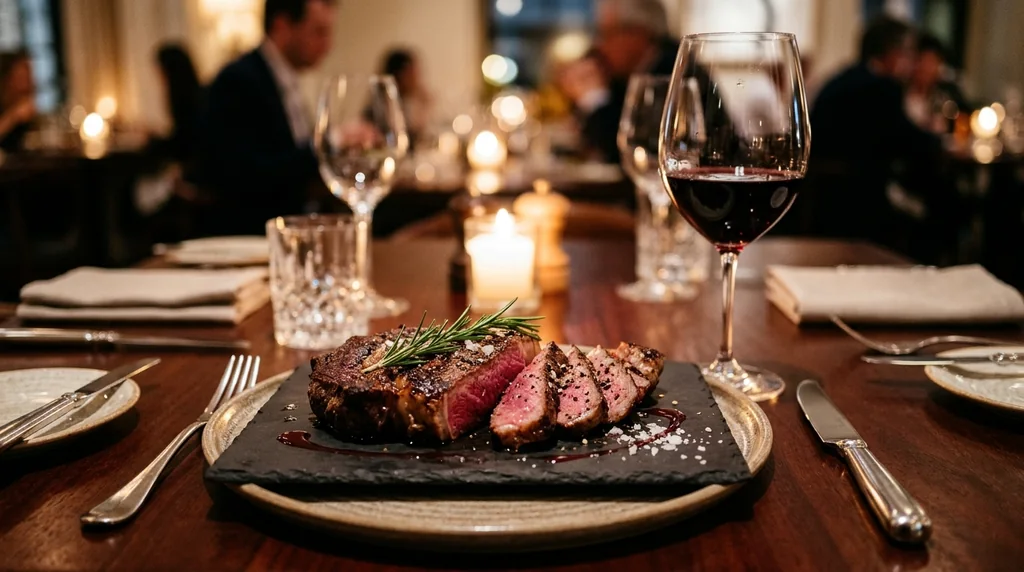
- Roast Meats and Steak: Pairs effortlessly with prime ribeye , tenderloin basted in herb butter, or roasted lamb chops with garlic and rosemary jus.
- Richly Spiced Indonesian Cuisine: The concentrated body and cedarwood notes of a Bordeaux blend stand up to bold Indonesian meat dishes, such as Minang Beef Rendang , Beef Sate Maranggi , Spiced Lamb Gulai , or Javanese Beef Bistik . Its natural acidity cuts cleanly through rich coconut milk and spiced oils.
- Hard Cheeses: Ideal alongside aged cheeses such as Comté, Aged Cheddar, or mature Gouda.
6 Sommelier-Selected Bordeaux Bottles at Peakwine
To experience the authority of southwestern France at your own table, our sommeliers have curated six active Bordeaux bottles available through Peakwine’s fine wine collection :
Serving Ritual: How to Enjoy Bordeaux Wine Properly
To let Bordeaux’s full aromatic depth and structure open up in the glass, follow these three sommelier service standards:
- Cool Serving Temperature (16°C to 18°C): Never serve red Bordeaux at Indonesian room temperature (28°C to 30°C), as alcohol vapors will dominate and dull the fruit balance. Conversely, do not serve it straight from a 4°C refrigerator, which makes tannins taste rigid and bitter. Chill the bottle in the fridge for 20 to 30 minutes before opening to reach an ideal 17°C.
- Bordeaux Crystal Glassware: Use a tall-stemmed glass with a deep, wide bowl and a slightly tapered rim. This shape gives cedar and cassis aromatics ample room to aerate and concentrate.
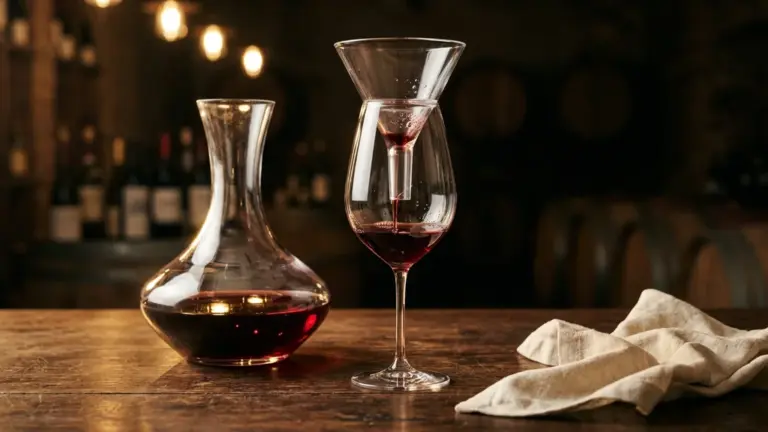
- Decant for Aeration: Following our guide on decanting techniques to soften young tannins , pour the wine into a glass decanter 45 to 90 minutes before dinner. Oxygen exposure softens firm young tannins and unlocks layered fruit aromas.
Frequently Asked Questions (Bordeaux Wine FAQ)
Bordeaux and Burgundy are France’s two most prestigious wine regions, yet they follow opposite philosophies. Bordeaux sits in southwestern France under a maritime Atlantic climate and produces blended red wines based on Cabernet Sauvignon and Merlot that are structured, full-bodied, and tannic. Burgundy lies in eastern France under a continental climate and produces single-varietal wines from Pinot Noir for reds and Chardonnay for whites, yielding lighter, silky textures and bright red-fruit profiles.
A Bordeaux Blend refers to the regional tradition of combining several classic grape varieties in a single bottle. For red wines, the core marriage pairs Cabernet Sauvignon for tannic structure and aging potential with Merlot for supple, sweet plum fruit, often accented by Cabernet Franc, Petit Verdot, or Malbec. For white wines, the classic blend pairs crisp Sauvignon Blanc with textural Sémillon.
Bordeaux is naturally split by the Gironde Estuary, formed where the Garonne and Dordogne rivers meet. The left side of the estuary is the Left Bank, known for warm gravel soils ideal for Cabernet Sauvignon. The right side is the Right Bank, known for cooler clay and limestone soils suited to ripening Merlot.
No. While First Growth chateaus such as Château Margaux or Château Lafite command tens of millions of rupiah as luxury collectibles, Bordeaux produces hundreds of millions of bottles each year across every tier. Categories like Bordeaux Supérieur or satellite appellations such as Castillon Côtes de Bordeaux deliver classic Bordeaux character at IDR 400,000 to IDR 700,000 per bottle.
Cellaring potential depends on classification tier and tannin structure. Everyday regional Bordeaux AOC wines are typically ready to drink within 3 to 5 years of the vintage. However, classified bottles from Pauillac, Margaux, Saint-Julien, or Saint-Émilion Grand Cru are built to age for 10, 20, or even more than 30 years when stored at a steady 12°C to 16°C with proper humidity.
Conclusion: The Enduring Legacy of Wine’s Global Benchmark
Understanding Bordeaux wine means appreciating how gravel and clay estuary soils, centuries of winemaking discipline, and strict appellation law combine to set a global standard of luxury. From the structured authority of the Left Bank to the plush sensuality of the Right Bank, Bordeaux delivers distinction in every pour.
If you are just beginning your exploration, read our complete wine guide for beginners to build a solid foundation across the world’s major wine styles. Explore our curated Bordeaux selection at Peakwine for your next dinner with family or colleagues.
Explore Curated Selections for Your Cellar
Authentic wines, spirits, and sake personally curated by our sommelier team with verified provenance and climate-controlled delivery.
Wine Guide Collection
Over 1,300+ red, white, and sparkling wines from acclaimed global producers.
Explore Wine Catalog → Premium SpiritsWhisky, Gin, and Vodka
Rare single malts, blended Scotch, artisan gin, and 100% agave tequila.
Explore Spirits Catalog → Cold-Chain GuaranteedSake and Asian Drinks
Authentic Japanese Daiginjo, Ginjo, Junmai sake and chilled Korean soju.
Explore Sake Collection → Instant Delivery22+ Official Outlets
Find the nearest Peakwine cellar outlet in Bandung and Jakarta for direct pickup.
Find Store Locations →

 By Wine Style
 Red Wine
 White Wine
 Sparkling Wine & Champagne
 Rosé Wine
 Dessert & Sweet Wine
 Fortified & Port Wine
 By Grape Variety
 Cabernet Sauvignon
 Shiraz
 Chardonnay
 Merlot
 Sauvignon Blanc
 Pinot Noir
 Tempranillo
 Sangiovese
 Malbec
 Grenache
 Semillon
 Primitivo
 Moscato
 Carmenere
 Riesling
 Pinot Grigio
 By Country & Region
 Australia
 France
 Chile
 Indonesia
 Italy
 Argentina
 Spain
 United States
 Portugal
 South Africa
 New Zealand
 Japan
 Germany
 By Taste & Sweetness
 Full-Bodied Wine
 Medium-Bodied Wine
 Light-Bodied Wine
 Sweet & Fruity Wine
 Dry Wine
 Curated Collections
 Best Sellers
 Everyday Value (< 500k)
 Reserve & Cellar

 Whisky & Whiskey
 Single Malt Scotch
 Blended Scotch
 Bourbon & Tennessee
 Japanese Whisky
 Irish Whiskey
 Gin
 London Dry Gin
 Dry Gin
 Tequila & Mezcal
 Vodka
 Premium & Craft Vodka
 Indonesian Vodka
 Rum
 White Rum
 Dark Rum
 Brandy Cognac
 Armagnac
 Liqueur
 Traditional Spirit


