

Understanding Cabernet Sauvignon: Flavor Profile, Food Pairing, and Bottle Recommendations


📖 Table of Contents ▼
Cabernet Sauvignon is the most popular and widely planted red wine grape variety in the world, known as the ‘King of Red Wine’ for its full-bodied character, firm tannins, refreshing acidity, and decades-long aging potential in the bottle. For wine drinkers in Indonesia, Cabernet Sauvignon offers an ideal entry point into structured wines, marked by signature aromas of blackcurrant and cedar spice, and a remarkably smooth mouthfeel when paired with savory red meat steaks.
Cabernet Sauvignon sensory flavor profile
When you swirl a crystal glass and sip a quality Cabernet Sauvignon, your palate experiences five structured sensory pillars:
The most recognizable trait of Cabernet Sauvignon is its firm astringency that coats the gums and palate. This sensation is not a flaw, but rather the presence of phenolic compounds (tannins) from thick grape skins that preserve the wine for years.
Regional styles: Old World vs. New World Cabernet
Cabernet Sauvignon’s character is shaped heavily by the climate and soil where it grows (terroir):
- Old World (Bordeaux Left Bank, France): Grown on gravel soils in Medoc and Pauillac, the grapes ripen slowly in a moderate maritime climate. The resulting wines are leaner and more savory, with crisp acidity and notes of fresh cassis, forest floor, cedar pencil shavings, and graphite.
- New World (Napa Valley USA, Maipo Valley Chile, Coonawarra Australia): Grown under abundant sunshine, these grapes develop higher sugar levels and riper, softer tannins. Aromas burst with blackberry jam, mocha, roasted cocoa, rich vanilla from American oak barrels, and a touch of eucalyptus mint typical of Australia’s terra rossa soils.
Comparison: Cabernet Sauvignon vs. Merlot vs. Shiraz
Unsure how to tell red wines apart on a restaurant menu? The comparison table below breaks down three of the most popular red grape varieties:
| Character Pillar | Cabernet Sauvignon | Merlot | Shiraz (Syrah) |
|---|---|---|---|
| Body | Full-Bodied (Rich and dense) | Medium to Full (Round and smooth) | Full-Bodied (Bold and powerful) |
| Tannin Level | High and firmly structured | Medium and velvety | Medium to high |
| Dominant Fruit Profile | Blackcurrant, cassis, black cherry | Ripe plum, raspberry, pomegranate | Ripe blackberry, dark fruit jam |
| Signature Secondary Aromas | Cedarwood, tobacco, bell pepper | Milk chocolate, dried bay leaf | Black pepper, smoked meat, clove |
| Beginner Friendliness | Best enjoyed alongside food | Very approachable on its own | Great for fans of bold, spicy flavors |
Food pairing science: Why Cabernet and steak are a classic match
Why do sommeliers worldwide recommend Cabernet Sauvignon when you order Ribeye, Sirloin, or Wagyu steak? The answer lies in biochemical interaction on your palate:
- Saliva Protein Binding: Wine tannins bind to proline-rich proteins in human saliva. When sipped alone without food, tannins leave the mouth feeling dry and astringent.
- Meat Fat Emulsion: When you chew a slice of grilled beef rich in marbling, fat and protein coat your tongue and palate.
- Natural Palate Cleanser: When you sip Cabernet Sauvignon, its tannins and acidity cut through that fat layer, cleanse the palate instantly, and prepare your senses for the next bite.
Curated Cabernet Sauvignon bottle recommendations in Indonesia
Here are four favorite Cabernet Sauvignon bottles from Peakwine’s official catalog, ready for direct delivery with guaranteed BPOM excise authenticity:
Lindemans Bin 45 is one of the most popular Cabernet Sauvignon labels in Indonesia. It balances ripe dark fruit with soft vanilla notes, making it approachable for both casual drinkers and everyday budgets.
View Lindemans Bin 45 Cabernet at PeakwineMontes Classic Series Cabernet Sauvignon demonstrates Chile’s reputation as a world-class wine producer. Its plush texture and bright red fruit pair gracefully with refined French oak.
View Montes Classic Cabernet at PeakwineRawsons Retreat pays tribute to Dr. Christopher Penfold’s historic 1844 stone cottage. It delivers the blending integrity of Australia’s most renowned wine house at an accessible price.
Shop This BottleBeringer Napa Valley represents classic California red wine luxury. Napa Valley’s Mediterranean climate produces Cabernet Sauvignon with deep flavor concentration and a velvety finish.
View Beringer Napa Valley Cabernet at PeakwineServing temperature, decanting, and crystal glassware guide
To get the most out of a bottle of Cabernet Sauvignon in Indonesia’s tropical climate, follow these three sommelier service guidelines:
- Ideal Serving Temperature (16-18°C): Avoid serving red wine at warm Indonesian room temperature (28-32°C), as the alcohol will taste sharp and burn the nose. Chill the bottle in a standard refrigerator for 30-45 minutes before opening.
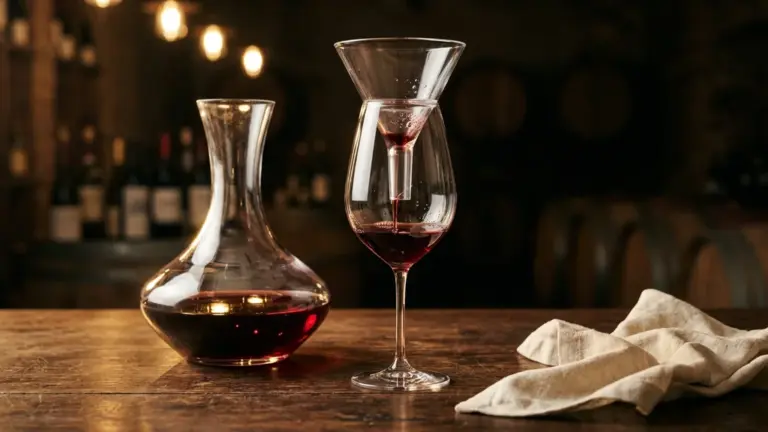
- Decanting (Aeration): Young Cabernet Sauvignon (under 5 years old) has tight, ‘closed’ tannins. Pour the wine into a glass decanter for 30-60 minutes before serving. Oxygen softens the tannin structure and opens up the fruit aromas.
- Bordeaux Glassware: Use crystal stemware with a tall, wide bowl (a Bordeaux glass). This shape gives the wine room to breathe and directs the liquid to the center of the tongue so fruit and tannins balance evenly.
Frequently asked questions about Cabernet Sauvignon
What does Cabernet Sauvignon taste like?
Cabernet Sauvignon is dry and full-bodied, with firm tannins and balanced acidity. Its primary flavors are dark fruits like blackcurrant (cassis), black cherry, and ripe plum, accompanied by secondary notes of cedarwood, vanilla, tobacco, and fresh green bell pepper.
What is the main difference between Cabernet Sauvignon and Merlot?
Cabernet Sauvignon has higher tannins, sharper acidity, and a heavier dark-fruit profile. By contrast, Merlot has rounder, velvety tannins and red-fruit flavors like plum and sweet cherry, which often makes it easier to drink for beginners.
Is Cabernet Sauvignon wine sweet?
Traditionally, Cabernet Sauvignon is a dry wine with natural residual sugar below 3-5 grams per liter. Any perceived sweetness comes from ripe black fruit aromas and sweet vanilla oak notes rather than added sugar.
How much does a bottle of Cabernet Sauvignon cost in Indonesia?
At Peakwine, quality bottles from Australia and Chile (such as Lindemans Bin 45 or Montes Classic) start from IDR 360,000 to IDR 570,000. Reserve and premium Napa Valley bottles from the United States range from IDR 880,000 to IDR 1,300,000 and up, all with official BPOM excise guarantees.
How can I order Cabernet Sauvignon with fast delivery from Peakwine?
You can order directly through the Peakwine website catalog or contact our WhatsApp concierge. We provide 30-60 minute instant delivery across Bandung and Greater Jakarta (Jabodetabek) using protective, shatter-proof airbag bottle packaging.
Explore Curated Selections for Your Cellar
Authentic wines, spirits, and sake personally curated by our sommelier team with verified provenance and climate-controlled delivery.
Wine Guide Collection
Over 1,300+ red, white, and sparkling wines from acclaimed global producers.
Explore Wine Catalog → Premium SpiritsWhisky, Gin, and Vodka
Rare single malts, blended Scotch, artisan gin, and 100% agave tequila.
Explore Spirits Catalog → Cold-Chain GuaranteedSake and Asian Drinks
Authentic Japanese Daiginjo, Ginjo, Junmai sake and chilled Korean soju.
Explore Sake Collection → Instant Delivery22+ Official Outlets
Find the nearest Peakwine cellar outlet in Bandung and Jakarta for direct pickup.
Find Store Locations →


 By Wine Style
 Red Wine
 White Wine
 Sparkling Wine & Champagne
 Rosé Wine
 Dessert & Sweet Wine
 Fortified & Port Wine
 By Grape Variety
 Cabernet Sauvignon
 Shiraz
 Chardonnay
 Merlot
 Sauvignon Blanc
 Pinot Noir
 Tempranillo
 Sangiovese
 Malbec
 Grenache
 Semillon
 Primitivo
 Moscato
 Carmenere
 Riesling
 Pinot Grigio
 By Country & Region
 Australia
 France
 Chile
 Indonesia
 Italy
 Argentina
 Spain
 United States
 Portugal
 South Africa
 New Zealand
 Japan
 Germany
 By Taste & Sweetness
 Full-Bodied Wine
 Medium-Bodied Wine
 Light-Bodied Wine
 Sweet & Fruity Wine
 Dry Wine
 Curated Collections
 Best Sellers
 Everyday Value (< 500k)
 Reserve & Cellar

 Whisky & Whiskey
 Single Malt Scotch
 Blended Scotch
 Bourbon & Tennessee
 Japanese Whisky
 Irish Whiskey
 Gin
 London Dry Gin
 Dry Gin
 Tequila & Mezcal
 Vodka
 Premium & Craft Vodka
 Indonesian Vodka
 Rum
 White Rum
 Dark Rum
 Brandy Cognac
 Armagnac
 Liqueur
 Traditional Spirit


