


📖 Table of Contents ▼
Decanting wine is the process of pouring wine from its bottle into a decanter to separate the liquid from sediment and give the wine room to breathe. Below, we cover the benefits of decanting, how to do it properly, which wines benefit most, and bottle recommendations from Peakwine.
Why Is Decanting Wine Important for Beginners?
Decanting is not just a formal sommelier ritual. It serves a practical purpose, especially for aged bottles or young wines that need their aromas opened up. As wine ages in the bottle, sediment forms at the bottom and can leave a bitter taste or gritty texture on the palate. That is where decanting makes a clear difference.
What Is Decanting Wine?
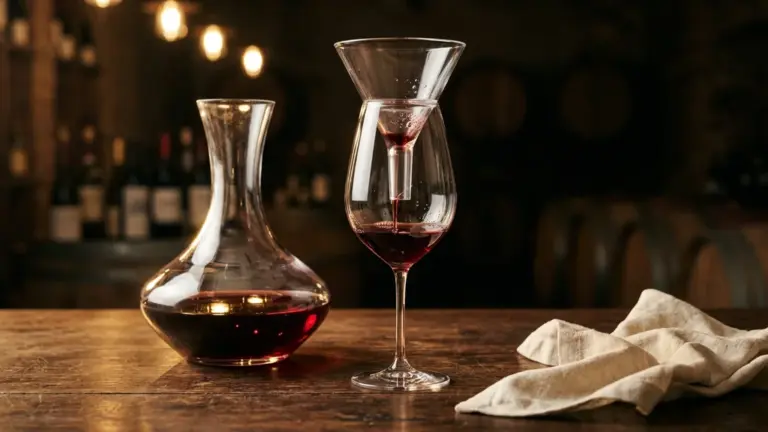
Decanting wine means pouring wine from its original bottle into another vessel, usually a glass decanter, to separate the clear liquid from its sediment. The goal is to pour clean wine into the glass without stray particles dulling the flavor. The word decanting comes from the Latin canthus (rim of a vessel), referring to the slow pour that keeps sediment behind.
Benefits of Decanting Wine
- Aeration (giving wine room to breathe). When wine meets oxygen, aromatic compounds open up and the palate feels smoother, more balanced, and more complex. This helps young, tannic wines like Cabernet Sauvignon or Syrah that can taste tight or astringent right after opening.
- Maximizing aroma and flavor. Decanting helps wine release muted aromas, from dark fruit and spice to oak notes that become much clearer in the glass.
- Smoother texture. In older or unfiltered bottles, sediment settles at the base. Decanting leaves that sediment behind so the pour is clean and supple.
Instant Aerator vs. Decanter: Want to soften young red wine tannins in seconds without waiting 30 to 60 minutes? Learn when to use a quick pourer and when a glass vessel is essential in our guide on wine aerator vs. decanter functions .
How to Decant Wine Properly
- Choose the right decanter for the wine. For young wines, use a wide-based decanter to maximize oxygen exposure. For older wines, choose a narrow-necked decanter so they do not get too much air too quickly.
- Stand the bottle upright before decanting. Let the bottle rest upright for a few hours so sediment settles to the bottom before you pour.
- Pour slowly. Pour the wine into the decanter in a steady, gentle stream while watching the neck of the bottle. Stop pouring as soon as sediment reaches the neck.
- For young red wines: decant for about 1-2 hours to soften tannins and open up the aromatics.
- For aged red wines: decant right before serving so the wine does not oxidize.
- For sparkling wines: decant only briefly, if at all, so the bubbles stay lively.
Which Wines Are Best for Decanting?
Red, white, and even sparkling wines can benefit from decanting. The deciding factor is not color, but the age and structure of the wine.
- Red wine. Most commonly decanted due to firm tannins and sediment in aged bottles. Top candidates include Cabernet Sauvignon (bold, high-tannin structure that benefits from air), Syrah (layered flavors that need time to open), and Bordeaux Blends (rich aromatics and structure that come into balance with aeration).
- White wine. Certain full-bodied or aged white wines, such as oaked Chardonnay, also benefit from brief decanting.
Recommended Wines for Decanting
Ventisquero Reserva Cabernet Sauvignon

A bold red wine for drinkers who enjoy concentrated aromatics. It offers ripe blackcurrant notes and supple tannins, making it ideal to decant before serving. Decanting brings its fruit and structure into balance, especially alongside red meat such as steak or lamb chops.
View Ventisquero CabernetKaiken Mai Mendoza

A youthful wine with layered depth and a touch of spice. Decanting helps open up its fruit and spice aromatics so the palate feels richer. Pair it with tomato-based pasta or pizza topped with smoked meats.
View Kaiken Mai MendozaEnjoy Better-Tasting Wine with Proper Decanting
Decanting is a simple, effective technique to improve both flavor and aroma, whether you are pouring an aged bottle with sediment or a young, tannic red. Peakwine carries a curated range of wines suited for decanting, including Ventisquero Reserva Cabernet Sauvignon and Kaiken Mai Mendoza.
Browse Wine Collection
Explore Curated Selections for Your Cellar
Authentic wines, spirits, and sake personally curated by our sommelier team with verified provenance and climate-controlled delivery.
Wine Guide Collection
Over 1,300+ red, white, and sparkling wines from acclaimed global producers.
Explore Wine Catalog → Premium SpiritsWhisky, Gin, and Vodka
Rare single malts, blended Scotch, artisan gin, and 100% agave tequila.
Explore Spirits Catalog → Cold-Chain GuaranteedSake and Asian Drinks
Authentic Japanese Daiginjo, Ginjo, Junmai sake and chilled Korean soju.
Explore Sake Collection → Instant Delivery22+ Official Outlets
Find the nearest Peakwine cellar outlet in Bandung and Jakarta for direct pickup.
Find Store Locations →

 By Wine Style
 Red Wine
 White Wine
 Sparkling Wine & Champagne
 Rosé Wine
 Dessert & Sweet Wine
 Fortified & Port Wine
 By Grape Variety
 Cabernet Sauvignon
 Shiraz
 Chardonnay
 Merlot
 Sauvignon Blanc
 Pinot Noir
 Tempranillo
 Sangiovese
 Malbec
 Grenache
 Semillon
 Primitivo
 Moscato
 Carmenere
 Riesling
 Pinot Grigio
 By Country & Region
 Australia
 France
 Chile
 Indonesia
 Italy
 Argentina
 Spain
 United States
 Portugal
 South Africa
 New Zealand
 Japan
 Germany
 By Taste & Sweetness
 Full-Bodied Wine
 Medium-Bodied Wine
 Light-Bodied Wine
 Sweet & Fruity Wine
 Dry Wine
 Curated Collections
 Best Sellers
 Everyday Value (< 500k)
 Reserve & Cellar

 Whisky & Whiskey
 Single Malt Scotch
 Blended Scotch
 Bourbon & Tennessee
 Japanese Whisky
 Irish Whiskey
 Gin
 London Dry Gin
 Dry Gin
 Tequila & Mezcal
 Vodka
 Premium & Craft Vodka
 Indonesian Vodka
 Rum
 White Rum
 Dark Rum
 Brandy Cognac
 Armagnac
 Liqueur
 Traditional Spirit


