


📖 Table of Contents ▼
Wine glass names are not just labels. Bordeaux, Burgundy, white wine, rosé, flute, and dessert wine glasses each have a shape engineered for one job: concentrating aromas and directing liquid to the right part of the palate. Use the wrong glass, and an aromatic Pinot Noir can taste flat; use the right one, and even an everyday bottle opens up.
This guide covers the seven most common wine glass types, their functions, and their capacities, from a 600 ml Burgundy bowl down to a 150 ml dessert glass. You will find a quick-reference size chart, tips for matching glasses to your favorite styles, and rental options for larger events. As a rule of thumb, a standard wine pour is 150 ml, so the glass is always much larger than the serving.
Why Are There So Many Types of Wine Glasses?
There are so many types because every wine has a distinct aromatic profile and structural balance, and glass shape is the tool used to manage them. Bold, tannic reds need room to breathe, crisp whites need a narrower rim to preserve delicate aromatics, and sparkling wines need a slender profile to keep their bubbles intact. Each glass is named for the job it does.
Bowl shape controls two things: how quickly alcohol evaporates and where aromas gather before reaching your nose. A wide bowl with a generous opening accelerates aeration, which suits tannic reds like Cabernet Sauvignon or Merlot. A smaller bowl with a tapered rim slows evaporation, ideal for Sauvignon Blanc or Riesling. Champagne uses a tall, narrow flute so bubbles rise in a steady stream instead of dissipating.
Why Choosing the Right Wine Glass Matters
The right glass matters because most of what we perceive as flavor in wine is actually detected by the nose, not the tongue. Bowl geometry dictates where aromas collect, how fast alcohol volatilizes, and where the wine lands on your palate when you sip. That is why the exact same bottle can taste noticeably different in two different glasses.
- Maximizes aroma. A Burgundy glass, with its extra-wide bowl, captures the delicate bouquet of Pinot Noir and funnels it straight to the nose. A white wine glass with a narrower rim keeps floral and citrus notes focused rather than letting them scatter.
- Balances palate perception. A broader rim like a Bordeaux glass directs wine toward the front and center of the tongue first, bringing fruit forward. A tapered rim guides white wine toward the sides of the palate to emphasize crisp acidity.
- Preserves sparkling bubbles. A slender flute keeps effervescence lively from the first sip to the last. Wide coupes look photogenic, but carbonation vanishes far more quickly.
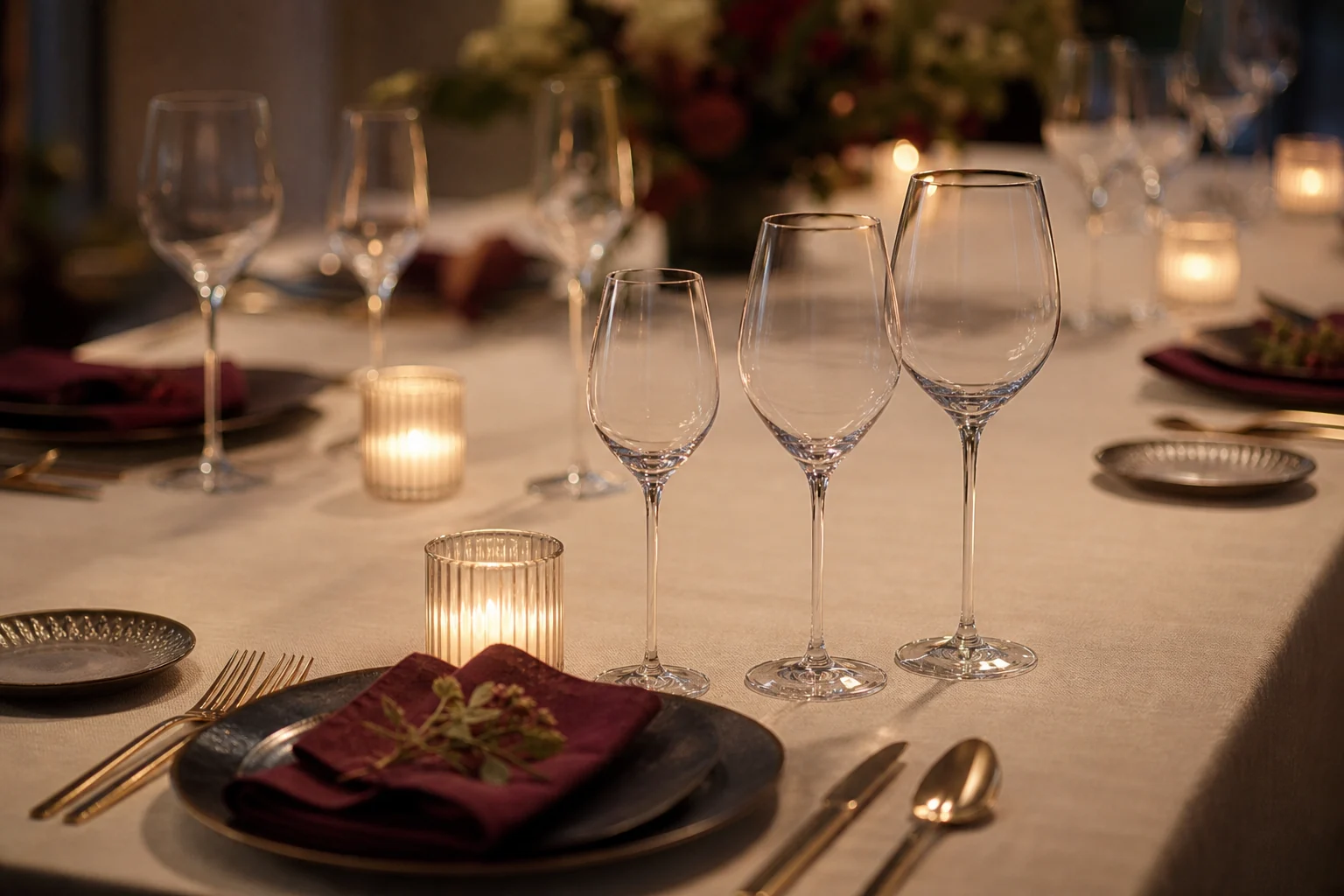
- Sets the tone at the table. Matching each pour to its proper stemware shows guests they are being hosted with care, whether at an intimate wine dinner or a private party.
Types of Wine Glasses and Their Functions
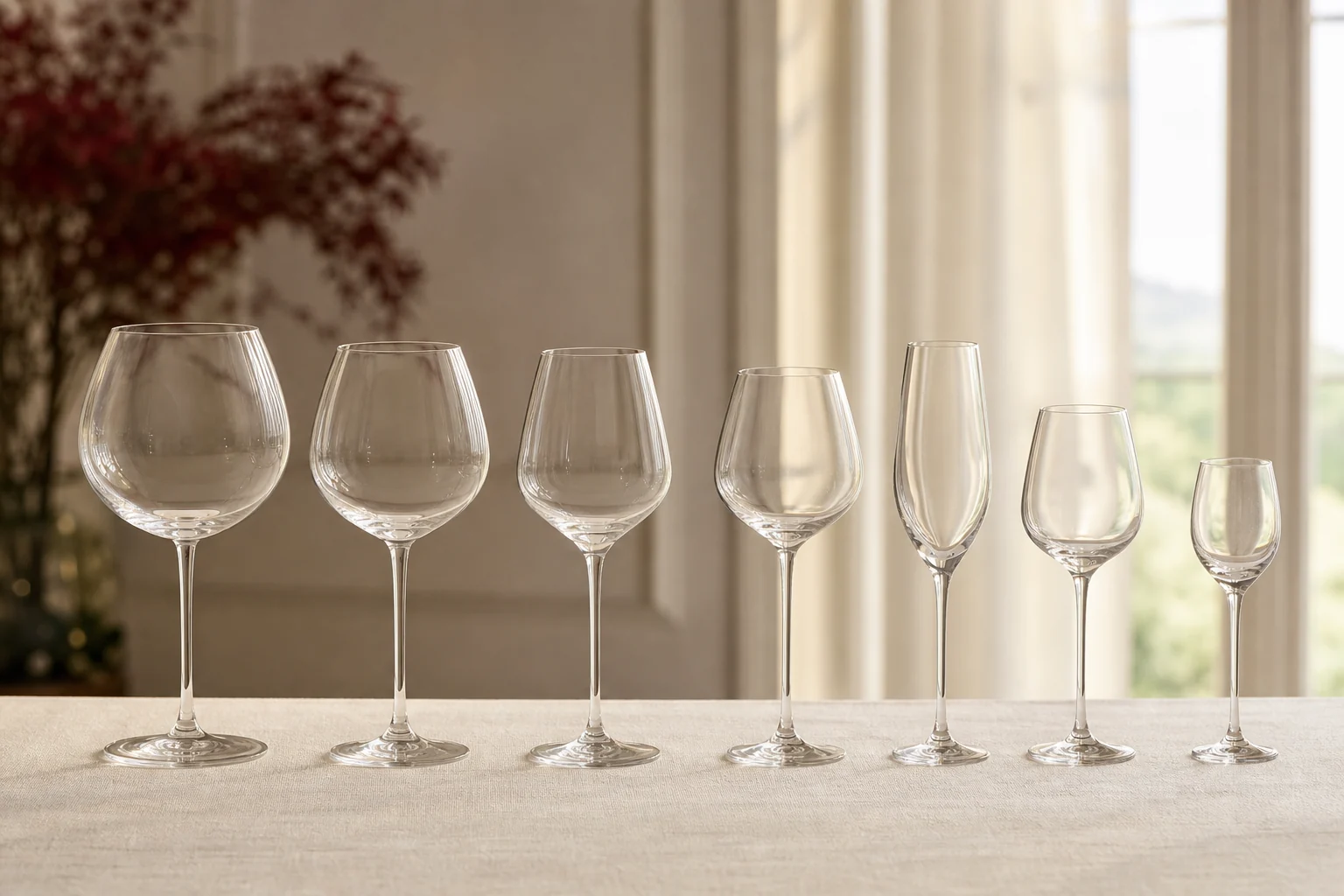
The seven most widely used wine glasses are Bordeaux, Burgundy, white wine, rosé, Champagne flute, dessert wine, and universal. They differ in bowl capacity, rim width, and the wine styles they flatter most. Below, they are ordered by style, from full-bodied reds to all-purpose stemware.
1. Bordeaux Glass
Key feature: tall profile with a broad bowl that tapers slightly at the rim. Capacity: 450 to 600 ml. Best for: Cabernet Sauvignon, Merlot, Bordeaux blends, Syrah.
The generous space gives tannic reds plenty of air to soften, while the slightly tapered rim directs the wine toward the middle of the palate so fruit flavors register before the tannins grip.
2. Burgundy Glass
Key feature: the largest, roundest bowl, noticeably wider than a Bordeaux glass. Capacity: 600 to 750 ml, the largest of all wine glasses. Best for: Pinot Noir, Nebbiolo, Gamay.
Lighter-bodied reds have delicate, volatile aromas that need maximum surface area to open up. The round bowl traps those aromatics and channels them cleanly to your nose with every sip.
3. White Wine Glass
Key feature: smaller and slimmer than red wine glasses, with a narrower rim. Capacity: 300 to 400 ml. Best for: Sauvignon Blanc, Riesling, Pinot Grigio.
The compact size keeps white wine chilled longer while locking in bright floral and citrus notes. A Chardonnay glass variation features a slightly wider bowl for full-bodied whites that benefit from a touch more air.
4. Rosé Wine Glass
Key feature: shorter bowl with a gently flared lip. Capacity: 300 to 400 ml. Best for: Provence rosé, off-dry rosé, and young rosé wines.
The flared rim guides the wine to the tip of the tongue, accentuating crisp acidity and fresh berry fruit. It is ideal for chilled rosé enjoyed on a warm afternoon.
5. Champagne Flute Glass
Key feature: tall, narrow bowl on a long stem. Capacity: 180 to 300 ml. Best for: Champagne, Prosecco, Cava, and other sparkling wines.
Its slim silhouette forces bubbles to rise in a tight, steady bead, preserving carbonation, while the small surface area keeps aromatics from escaping too quickly.
6. Dessert Wine Glass
Key feature: petite proportions, like a miniature white wine glass. Capacity: 150 to 250 ml. Best for: Port, Sauternes, ice wine, and sweet Sherry.
Sweet dessert wines are rich in sugar and often higher in alcohol, so a standard pour is only around 60 ml. The smaller bowl keeps each sip balanced and helps the bottle go further.
7. Universal Wine Glass
Key feature: medium proportions sitting between red and white stemware. Capacity: 350 to 450 ml. Best for: almost any style of wine.
A single set of universal glasses saves cabinet space and budget without sacrificing much in the glass. It is the smartest starting point for beginners or hosts who open a wide variety of bottles.
Wine Glass Types and Sizes Chart
This table summarizes all seven glasses so you can compare them at a glance. Capacities reflect standard retail sizes and may vary slightly by manufacturer.
| Glass Name | Capacity | Shape Profile | Best For |
|---|---|---|---|
| Bordeaux | 450-600 ml | Tall, wide bowl | Cabernet, Merlot, Syrah |
| Burgundy | 600-750 ml | Largest, round bowl | Pinot Noir, Nebbiolo |
| White wine | 300-400 ml | Slim, narrow rim | Sauvignon Blanc, Riesling |
| Rosé | 300-400 ml | Short bowl, flared rim | Young rosé, sweet rosé |
| Champagne flute | 180-300 ml | Tall and slender | Champagne, Prosecco |
| Dessert wine | 150-250 ml | Petite, mini white glass | Port, Sauternes, ice wine |
| Universal | 350-450 ml | Medium proportions | All wine styles |
The rule of thumb is simple: the fuller and more complex the wine, the larger the bowl it needs; the lighter and crisper the wine, the smaller the glass.
How to Choose the Right Wine Glass
The easiest approach is to match the bottles you open most often with the bowl that flatters them. Structured reds like Cabernet and Merlot belong in a Bordeaux glass, Pinot Noir and Nebbiolo shine in Burgundy, crisp whites belong in a white wine glass, sparkling wines in a flute, and sweet pours in a dessert glass. If that feels like too much, start with a single universal glass.
- Buy for what you actually drink. Invest in glasses for the styles you pour regularly, not every varietal on the shelf. Cabernet fans only need Bordeaux stems; Riesling drinkers can stick to white wine glasses.
- Three styles cover the basics. A trio of universal, white wine, and Bordeaux glasses handles almost every bottle you will serve at home without requiring a full set of every shape.
- Prioritize shape over price. Fine crystal feels lighter on the lip, but clear, affordable glass with the right bowl geometry still performs well. Get the shape right before splurging on materials.
- Rent for larger gatherings. For wine dinners, tastings, or private parties that require dozens of stems, renting makes far more sense than buying. Peakwine offers full-service glass rental across a wide range of wine glass styles.
If you want a deeper breakdown by wine style, including which stems beginners should buy first, read our dedicated wine glass buying guide .
Peakwine Picks for Your Special Event
These two crowd-pleasing bottles are in stock at Peakwine with current pricing: 88 Vineyards Merlot Medium Sweet, a smooth, approachable pour for beginners, and Villa Mottura Primitivo, a richer red built for meat dishes. Both are best served in a Bordeaux glass with a 150 ml pour.
88 Vineyards Merlot Medium Sweet
Rp577.000. A medium-sweet Merlot with soft plum and red cherry notes, gentle tannins, and easy appeal for casual wine drinkers. Ideal for social gatherings, served slightly chilled in a 150 ml pour.
View 88 Vineyards MerlotVilla Mottura Primitivo Di Manduria DOC
Rp531.000. Primitivo from Manduria offering ripe berry fruit, warm spice, and a hint of cocoa. Full-bodied enough for steak, lamb, or aged cheese, it anchors a formal dinner table when served at 16-18°C.
View Villa Mottura PrimitivoTo browse more bottles on your own, explore the full Peakwine wine catalog .
Enjoy Wine in the Right Glass with Peakwine
The right glass transforms how a bottle tastes, and you do not need to buy seven different sets to get started. Peakwine provides glass rental services across Bandung, Jakarta, Bali, and Karawang for everything from intimate tastings to formal dinners. Reach out to check availability and event details.
Contact PeakwineFAQ
Why do wine glasses have different names?
Every wine has distinct aromatics, flavors, and acidity. Glass names reflect shapes designed for those traits: red wines need wide bowls to breathe, sparkling wines need narrow flutes to hold bubbles, and sweet wines only need small pours.
What is the difference between a Bordeaux glass and a Burgundy glass?
A Bordeaux glass is tall with a 450-600 ml bowl built for tannic reds like Cabernet Sauvignon and Merlot. A Burgundy glass is rounder and larger at 600-750 ml, designed to concentrate the delicate aromas of lighter reds like Pinot Noir.
Is a white wine glass different from a red wine glass?
Yes. White wine glasses are smaller at 300-400 ml with a narrower opening to preserve crisp acidity and fresh aromas. Red wine glasses are larger to give the wine room to aerate and open up.
Do I need to own every type of wine glass?
No. Beginners can start with a universal wine glass; a combination of universal, white wine, and Bordeaux glasses covers nearly every everyday pour.
What is the standard wine glass size?
A standard wine pour is 150 ml, and glasses are always larger to leave room for swirling and aroma: Bordeaux is 450-600 ml, white wine is 300-400 ml, and flutes are 180-300 ml. In practice, fill the bowl about one-third full.
What are stemless wine glasses called?
They are simply called stemless wine glasses. They share the same bowl shape as stemmed glasses without the stem. They are stable and easy to wash, though holding the bowl warms the wine faster, making them better for reds than chilled whites.
Where can I get wine glasses for a special event?
Glass rental is a practical solution when you do not want to buy dozens of stems. Peakwine offers rental services for various wine glass types tailored to your event needs via Peakwine offers rental services for various types of wine glasses tailored to your event needs.

Explore Curated Selections for Your Cellar
Authentic wines, spirits, and sake personally curated by our sommelier team with verified provenance and climate-controlled delivery.
Wine Guide Collection
Over 1,300+ red, white, and sparkling wines from acclaimed global producers.
Explore Wine Catalog → Premium SpiritsWhisky, Gin, and Vodka
Rare single malts, blended Scotch, artisan gin, and 100% agave tequila.
Explore Spirits Catalog → Cold-Chain GuaranteedSake and Asian Drinks
Authentic Japanese Daiginjo, Ginjo, Junmai sake and chilled Korean soju.
Explore Sake Collection → Instant Delivery22+ Official Outlets
Find the nearest Peakwine cellar outlet in Bandung and Jakarta for direct pickup.
Find Store Locations →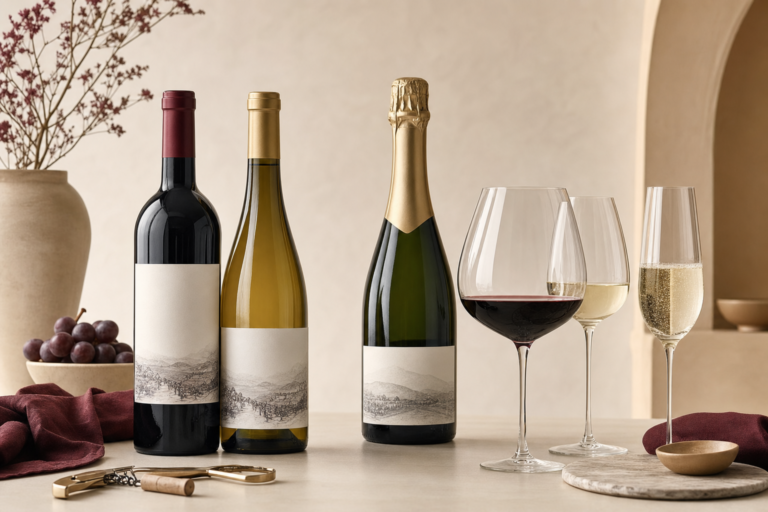

 By Wine Style
 Red Wine
 White Wine
 Sparkling Wine & Champagne
 Rosé Wine
 Dessert & Sweet Wine
 Fortified & Port Wine
 By Grape Variety
 Cabernet Sauvignon
 Shiraz
 Chardonnay
 Merlot
 Sauvignon Blanc
 Pinot Noir
 Tempranillo
 Sangiovese
 Malbec
 Grenache
 Semillon
 Primitivo
 Moscato
 Carmenere
 Riesling
 Pinot Grigio
 By Country & Region
 Australia
 France
 Chile
 Indonesia
 Italy
 Argentina
 Spain
 United States
 Portugal
 South Africa
 New Zealand
 Japan
 Germany
 By Taste & Sweetness
 Full-Bodied Wine
 Medium-Bodied Wine
 Light-Bodied Wine
 Sweet & Fruity Wine
 Dry Wine
 Curated Collections
 Best Sellers
 Everyday Value (< 500k)
 Reserve & Cellar

 Whisky & Whiskey
 Single Malt Scotch
 Blended Scotch
 Bourbon & Tennessee
 Japanese Whisky
 Irish Whiskey
 Gin
 London Dry Gin
 Dry Gin
 Tequila & Mezcal
 Vodka
 Premium & Craft Vodka
 Indonesian Vodka
 Rum
 White Rum
 Dark Rum
 Brandy Cognac
 Armagnac
 Liqueur
 Traditional Spirit


