

Sauvignon Blanc vs Chardonnay: Which White Wine Fits Your Palate?

📖 Table of Contents ▼
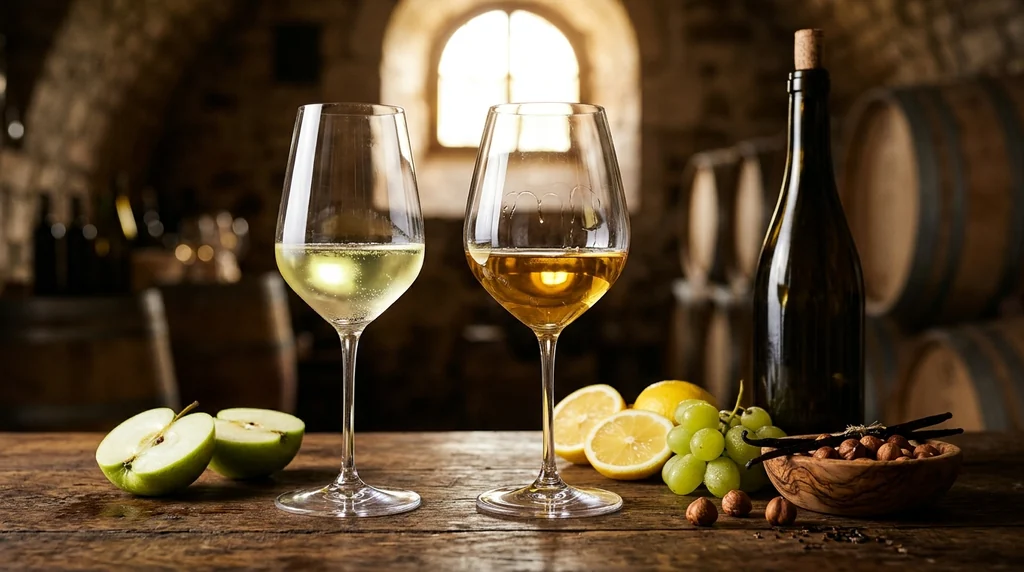
The main differences between Sauvignon Blanc and Chardonnay lie in their flavor profile, acidity, and use of oak. Sauvignon Blanc is a crisp, high-acidity white wine dominated by fresh herbs, lime, and passionfruit, almost always fermented in stainless steel tanks (unoaked). In contrast, Chardonnay is a versatile white wine with a creamy texture and medium-to-full body, often shaped by malolactic fermentation and oak aging that yield savory butter, vanilla, and ripe fruit notes.
- Primary Flavor Profile: Sauvignon Blanc highlights sharp citrus acidity and fresh herbs; Chardonnay emphasizes a supple texture, ripe tropical fruit, and notes of butter or biscuit.
- Oak Aging: Roughly 95% of Sauvignon Blanc is unoaked to preserve bright fruit freshness; Chardonnay is widely made in an oaked style aged in French or American oak barrels.
- Fermentation Method: Chardonnay commonly undergoes Malolactic Fermentation (MLF), which converts tart malic acid into soft lactic acid; Sauvignon Blanc avoids MLF to retain its natural, racy acidity.
- Alcohol Content (ABV): Sauvignon Blanc averages 12% to 13.5% ABV; Chardonnay tends to be slightly warmer at 13.5% to 14.5% ABV.
- Ideal Food Pairings: Sauvignon Blanc excels with bright, acidic dishes, raw oysters, and goat cheese; Chardonnay pairs naturally with creamy sauces, butter-poached lobster, and roast salmon.
Origins and Winemaking Philosophy of Two Classic White Grapes
On the global white wine stage, Sauvignon Blanc and Chardonnay hold top billing with contrasting personalities. Both grapes originate in France, yet they bring very different winemaking philosophies to your glass.
Sauvignon Blanc traces its roots to western France, notably the Loire Valley (Sancerre and Pouilly-Fumé) and Bordeaux. Its name comes from the French word sauvage , meaning wild, referring to the native vines that grew freely across southwestern France. In winemaking, Sauvignon Blanc is prized for capturing pure, unadulterated freshness. Winemakers limit intervention: fermentation takes place at cool temperatures in airtight stainless steel tanks to lock in volatile fruit aromatics and preserve racy malic acidity.
On the other hand, Chardonnay hails from Burgundy, born from an ancient natural crossing between Pinot Noir and Gouais Blanc. Among sommeliers, Chardonnay is known as the winemaker’s blank canvas . This golden-green grape lacks the assertive herbal aromatics of Sauvignon Blanc, offering instead a remarkably adaptable structure. Its final character depends heavily on cellar decisions: whether the wine rests in new oak barrels, undergoes lees stirring (bâtonnage), or stays crisp without oak contact.
Side-by-Side Comparison: Sauvignon Blanc vs Chardonnay
To help you compare these two varieties directly, here is a technical matrix based on international sommelier sensory standards.
| Sensory Parameter | Sauvignon Blanc | Chardonnay |
|---|---|---|
| Dominant Flavor Profile | Lime, green apple, passionfruit, cut grass, fresh herbs | Yellow apple, ripe pear, pineapple, fresh butter, vanilla, biscuit |
| Body | Light to Medium-bodied (agile and brisk on the palate. | Medium to Full-bodied (weighty, plush, and round. |
| Acidity Level | High and sharp (crisp, racy, mouthwatering. | Medium to Soft (round and smooth from malolactic conversion. |
| Oak Aging | Almost always Unoaked (except Fumé Blanc styles. | Widely Oaked (Unoaked versions also available. |
| Malolactic Fermentation (MLF). | Avoided (to keep malic acidity sharp and bright. | Frequently used (produces savory diacetyl compounds. |
| Alcohol Content (ABV). | Average 12% to 13.5% ABV | Average 13.5% to 14.5% ABV |
| Optimal Serving Temperature | 7°C to 10°C (well-chilled straight from the fridge. | 10°C to 13°C (cool, allowing buttery aromatics to open. |
| Best Glass Shape | Narrow, upright bowl (focuses crisp citrus aromatics. | Wide, rounded bowl (aerates layered oak notes. |
The Science Behind the Glass: Why Sauvignon Blanc Smells Herbal and Chardonnay Tastes Buttery
The sensory divide between these two white wines is not accidental. It comes down to grape biochemistry paired with modern cellar techniques.
1. Pyrazines and Thiols in Sauvignon Blanc
Have you ever noticed scents of freshly cut grass, tomato leaf, or green bell pepper in a glass of Sauvignon Blanc? Those signature notes come from natural chemical compounds called methoxypyrazines (often shortened to pyrazines). These compounds concentrate in Sauvignon Blanc grape skins when grown in cooler climates.
Beyond pyrazines, enological research shows that Sauvignon Blanc is rich in volatile thiols (aromatic organic sulfur compounds). When yeast breaks down thiol precursors during cool fermentation, they transform into expressive tropical aromas: passionfruit, grapefruit, and guava. This explains why Sauvignon Blanc from Marlborough, New Zealand or Rueda, Spain bursts with freshness the moment it hits the glass.
2. Malolactic Fermentation and Oak in Chardonnay
While Sauvignon Blanc highlights bright natural fruit acid, classic Chardonnay wins drinkers over with its silky texture and savory depth. The secret lies in a secondary process called Malolactic Fermentation (MLF). .
Biologically, wine grapes contain malic acid (the same tart acid found in green apples). In Chardonnay production, winemakers introduce lactic acid bacteria ( Oenococcus oeni ) after alcoholic fermentation finishes. These bacteria convert sharp malic acid into soft lactic acid (the gentler acid found in milk or yogurt). A byproduct of this conversion is an organic compound called diacetyl , the molecule responsible for natural buttery aroma and flavor.
When this softened wine then ages for months in oak barrels, the wood imparts vanillin (sweet vanilla aroma), lactones (toasted coconut notes), and fine wood tannins. The result is a full-bodied, creamy white wine with impressive aging potential.
Food Pairing Guide: Finding the Right Match
Understanding these two grapes will sharpen how you pair wine at formal dinners or casual nights out. Here are the core sommelier pairing rules.
Best Food Pairings for Sauvignon Blanc
With its high acidity and brisk herbal character, Sauvignon Blanc acts like a squeeze of fresh lime over food. The golden rule: pair it with lean seafood, crisp greens, or citrus-driven sauces.
- Fresh Seafood: Raw oysters, poached shrimp with lemon, white fish sashimi, garlic grilled calamari, and ceviche.
- Fresh Cheeses: The classic match for Sauvignon Blanc is goat cheese (chèvre), feta, or ricotta. The wine’s acidity cuts cleanly through the creamy richness of the cheese.
- Indonesian Cuisine: Grilled fish with rica-rica chili, Manadonese sour fish soup (kuah asam), urap sayur, karedok, and lemongrass-scented Balinese sate lilit.
Best Food Pairings for Chardonnay (Oaked and Full-Bodied).
Chardonnay’s rich butter and vanilla profile calls for dishes with matching weight and fat. Its moderate acidity clashes with overly sour foods, but it shines alongside creamy, savory plates.
- Creamy Dishes: Fettuccine alfredo, wild mushroom or truffle risotto, spaghetti carbonara, and crab corn chowder.
- Poultry and Rich Fish: Herb-butter roast chicken, smoked duck, pan-seared butter salmon, and lobster thermidor.
- Indonesian Cuisine: Savory opor ayam, mild snapper gulai, spiced Balinese ayam betutu in coconut broth, and chicken satay with rich peanut sauce.
6 Curated Bottles: Peakwine Sommelier Picks
To taste the contrast between these two grapes firsthand, the Peakwine sommelier team has curated 6 official bottles available in our catalog with a 100% authenticity guarantee.
Roebuck Estate Sauvignon Blanc 2017
A smart entry point to pure Sauvignon Blanc character. It delivers fresh cut grass, green apple, and crisp acidity that feels refreshing in Indonesia’s tropical climate.
Lindemans Bin 95 Sauvignon Blanc 2019
From Lindemans’ signature Bin series. It brings together passionfruit, grapefruit, and a clean, zesty finish. Approachable for newcomers and best served cold on warm afternoons.
Marqués de Riscal Rueda Sauvignon Blanc 2022
From a historic Spanish producer. It offers an elegant blend of gooseberry, dried herbs, and chalky minerality typical of Rueda’s limestone soils. A refined match for special seafood dinners.
Sunnycliff Estate Chardonnay 2015
A medium-bodied Chardonnay with subtle oak influence. It pairs ripe melon and yellow peach with a supple texture that never feels heavy, suited for relaxed weeknight dinners.
Beringer Napa Valley Chardonnay 2019
A classic Napa Valley Chardonnay icon. Aged in oak with full malolactic fermentation, it opens with savory butter, baked apple pie, vanilla, and a plush, silky palate.
Penfolds Max’s Chardonnay 2017
A tribute to legendary Chief Winemaker Max Schubert. It displays precise ripe citrus acidity, toasted hazelnut layers, and world-class French oak integration.
Sommelier Verdict: Which One Should You Choose?
Choosing between Sauvignon Blanc and Chardonnay is not about which wine is objectively better. It comes down to the occasion and what your palate craves right now.
- Choose Sauvignon Blanc if: You want a brisk, refreshing pour with sharp citrus acidity, lively energy, and fresh herbal aromatics, especially on a hot afternoon with raw oysters or grilled seafood.
- Choose Chardonnay if: You prefer a plush, full-bodied white wine with a creamy mouthfeel, savory butter, sweet vanilla, and rich depth for formal dinners with cream sauces, pasta, or butter-roasted poultry and fish.
All six white wines above are available to order online at Peakwine with insured delivery across Indonesia, or in person at your nearest official Peakwine outlet.
Frequently Asked Questions (FAQ).
What is the main difference between Sauvignon Blanc and Chardonnay?
The core differences lie in acidity, body, and fermentation method. Sauvignon Blanc typically has high, crisp acidity, a light-to-medium body, no oak contact (unoaked), and aromas of fresh herbs, cut grass, lime, and passionfruit. Chardonnay is more adaptable, often aged in oak with malolactic fermentation, resulting in a creamy texture, medium-to-full body, and notes of butter, vanilla, and ripe tropical fruit.
Which one tastes sweeter: Sauvignon Blanc or Chardonnay?
Technically, both are almost always made as dry white wines with very low residual sugar below 4 grams per liter. However, ripe, oak-aged Chardonnay often feels richer, rounder, and slightly sweeter on the palate due to vanilla, caramel, and ripe fruit notes. Sauvignon Blanc tastes noticeably drier and sharper because of its brisk acidity.
Why does Chardonnay often taste like butter and vanilla?
The buttery sensation in Chardonnay comes from malolactic fermentation, where lactic acid bacteria convert sharp malic acid (like green apple) into soft lactic acid and diacetyl, a natural compound that smells and tastes like butter. Vanilla, toasted coconut, and sweet spice notes come from aging the wine in new oak barrels.
Do Sauvignon Blanc and Chardonnay have different alcohol levels (ABV)?
Sauvignon Blanc averages 12% to 13.5% ABV because it is often harvested in cooler climates to preserve crisp acidity. Chardonnay, especially from warmer regions like Napa Valley or South Australia, is picked riper with higher sugar levels, resulting in a slightly higher alcohol range of 13.5% to 14.5% ABV.
What foods pair best with Sauvignon Blanc and Chardonnay?
Sauvignon Blanc pairs naturally with bright seafood dishes like raw oysters, ceviche, lemon-garlic shrimp, goat cheese salads, and herb-driven plates. Oaked Chardonnay matches rich, creamy dishes such as alfredo pasta, butter-poached lobster, roast salmon, herb-butter roast chicken, and cream of mushroom soup.
Explore Curated Selections for Your Cellar
Authentic wines, spirits, and sake personally curated by our sommelier team with verified provenance and climate-controlled delivery.
Wine Guide Collection
Over 1,300+ red, white, and sparkling wines from acclaimed global producers.
Explore Wine Catalog → Premium SpiritsWhisky, Gin, and Vodka
Rare single malts, blended Scotch, artisan gin, and 100% agave tequila.
Explore Spirits Catalog → Cold-Chain GuaranteedSake and Asian Drinks
Authentic Japanese Daiginjo, Ginjo, Junmai sake and chilled Korean soju.
Explore Sake Collection → Instant Delivery22+ Official Outlets
Find the nearest Peakwine cellar outlet in Bandung and Jakarta for direct pickup.
Find Store Locations →

 By Wine Style
 Red Wine
 White Wine
 Sparkling Wine & Champagne
 Rosé Wine
 Dessert & Sweet Wine
 Fortified & Port Wine
 By Grape Variety
 Cabernet Sauvignon
 Shiraz
 Chardonnay
 Merlot
 Sauvignon Blanc
 Pinot Noir
 Tempranillo
 Sangiovese
 Malbec
 Grenache
 Semillon
 Primitivo
 Moscato
 Carmenere
 Riesling
 Pinot Grigio
 By Country & Region
 Australia
 France
 Chile
 Indonesia
 Italy
 Argentina
 Spain
 United States
 Portugal
 South Africa
 New Zealand
 Japan
 Germany
 By Taste & Sweetness
 Full-Bodied Wine
 Medium-Bodied Wine
 Light-Bodied Wine
 Sweet & Fruity Wine
 Dry Wine
 Curated Collections
 Best Sellers
 Everyday Value (< 500k)
 Reserve & Cellar

 Whisky & Whiskey
 Single Malt Scotch
 Blended Scotch
 Bourbon & Tennessee
 Japanese Whisky
 Irish Whiskey
 Gin
 London Dry Gin
 Dry Gin
 Tequila & Mezcal
 Vodka
 Premium & Craft Vodka
 Indonesian Vodka
 Rum
 White Rum
 Dark Rum
 Brandy Cognac
 Armagnac
 Liqueur
 Traditional Spirit


