

Understanding Riesling: The Aromatic White Wine Built for Spicy Food


📖 Table of Contents ▼
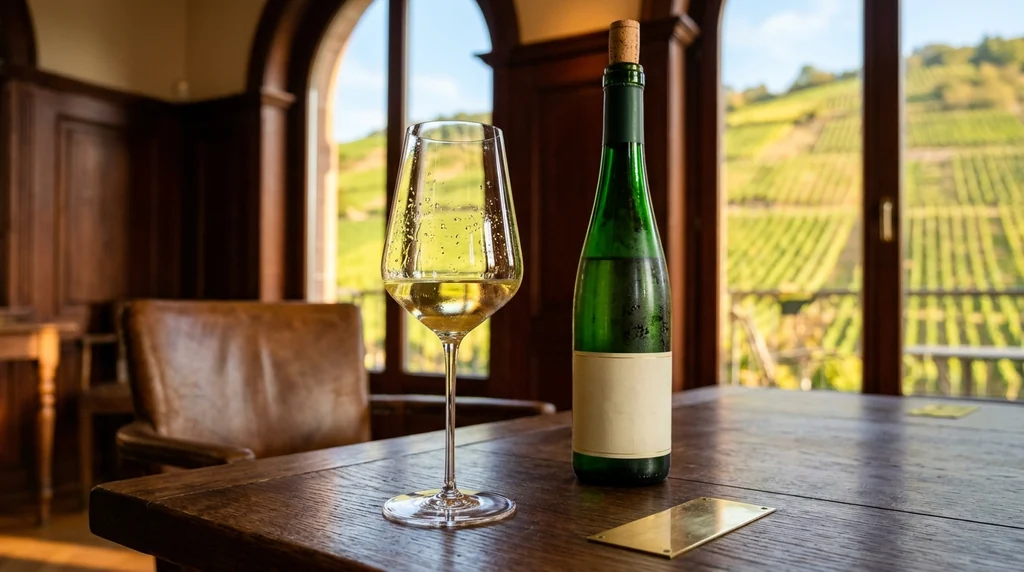
Riesling is one of the world’s most versatile and prestigious aromatic white wines, originating along Germany’s Rhine River. This greenish-yellow-skinned grape is prized for its electric natural acidity, jasmine and lime blossom aromatics, and sharp slate minerality. Contrary to the common assumption that Riesling is always sweet, it is produced across a wide spectrum: from bone-dry and off-dry to legendary sweet dessert wines. Thanks to its brisk acidity and moderate alcohol, international sommeliers recognize Riesling as the top wine pairing for spicy, herb-rich Indonesian and Asian dishes.
- Broad Flavor Spectrum: Riesling is not always sweet; styles range from bone-dry (Trocken) with crisp minerality and balanced off-dry (Kabinett) to botrytized sweet dessert wines.
- High Natural Acidity: This acidity forms the structural backbone of the wine, keeping it lively on the palate and balancing any natural residual sugar.
- Champion of Spicy Food Pairing: Natural residual sugar and high acidity work together to neutralize chili capsaicin without triggering a burning sensation.
- Almost Always Unoaked: Roughly 99% of Riesling is fermented in stainless steel tanks or neutral large oak casks to preserve pure fruit aromatics and vineyard terroir.
- Signature Petrol Aromas (TDN): In mature vintages, Riesling develops a prized petroleum or kerosene note (from the compound 1,1,6-trimethyl-1,2-dihydronaphthalene) sought after by fine wine collectors.
- Exceptional Aging Potential: Firm natural acidity allows quality Riesling to age and gain complexity in the cellar for 10 to 30 years.
Origins of Riesling: Historic Heritage of the Rhine Valley
The earliest written record of Riesling dates back to March 13, 1445, in Rüsselsheim, Germany, in a monastery inventory listing the purchase of riesslingen vine cuttings. For more than five centuries, the Rhine and Mosel valleys have served as the spiritual home of this thin-skinned grape.
Riesling vines have hardy wood that withstands harsh Central European winters. Along the steep Mosel River, vineyards are planted on slate slopes with inclines up to 60 degrees. Dark blue and grey slate absorbs solar heat by day and radiates it back to the vines at night, allowing the grapes to ripen slowly in a cool climate.
Although Germany produces around 40% of the world’s Riesling, the grape also thrives in Alsace, France (known for dry, full-bodied styles), Austria’s Wachau Valley, and South Australia’s Clare Valley and Eden Valley, which yield dry Rieslings with sharp lime zest character.
The Riesling Flavor Spectrum: Debunking the Sweetness Myth
One of the most common misconceptions among new wine drinkers is that every bottle of Riesling tastes like sweet syrup. This view stems largely from the wave of mass-market, artificially sweetened wines that flooded international shelves in the 1970s and 1980s.
In the hands of modern artisan producers, Riesling is one of the most transparent grapes in the world. It spans a clearly defined sweetness spectrum regulated by international wine law:
- Bone-Dry to Dry (Trocken): No perceptible sweetness on the palate. All natural grape sugars are fermented into alcohol, resulting in a crisp, taut wine with lime, green apple, and wet stone minerality. This style dominates Alsace, Austria, Australia, and German bottles labeled Trocken .
- Off-Dry to Semi-Sweet (Feinherb / Kabinett): Offers a gentle touch of sweetness balanced by high natural acidity. Rather than feeling heavy or cloying, it tastes like biting into a ripe white peach or crisp Fuji apple. This is the most versatile style for everyday dining.
- Sweet Dessert Wine (Spätlese, Auslese, Beerenauslese, Eiswein): Made from late-harvested grapes, fruit affected by noble rot ( Botrytis cinerea ), or grapes frozen naturally on the vine. These wines deliver concentrated honey, dried apricot, and orange marmalade flavors backed by brisk acidity.
German Riesling Sweetness Classification: How to Read the Label
German wine producers classify quality based on grape ripeness at harvest under the Prädikatswein system. Understanding these label terms ensures you select the exact sweetness level you want:
| Label Tier | Harvest Timing | Flavor Profile and Character | Average ABV |
|---|---|---|---|
| Trocken | Standard regular harvest | Completely dry, zero sweetness, piercing acidity, high minerality | 12.0%-13.0% ABV |
| Kabinett | Early harvest at balanced ripeness | Light-bodied, crisp, off-dry with delicate apple and peach sweetness | 8.0%-10.0% ABV |
| Spätlese | Late harvest (1-2 weeks later) | Richer, ripe tropical fruit aromatics; produced in both dry and sweet styles | 8.5%-11.5% ABV |
| Auslese | Selected ripest grape bunches | Intensely sweet, rich honey and mango notes, often touched by noble rot | 7.5%-10.0% ABV |
| Beerenauslese (BA) | Hand-selected botrytis-affected berries | Lush, syrupy dessert wine with dried apricot, caramel, and candied fruit | 6.5%-8.0% ABV |
| Eiswein (Ice Wine) | Picked naturally frozen on the vine (-7°C) | Extreme concentration of pure acidity and sugar, tangerine and wild honey | 7.0%-9.0% ABV |
Vivino Sensory Chart: Riesling Flavor Characteristics
Based on Vivino’s five-dimensional sensory framework, here is how Riesling performs on the palate:
| Sensory Pillar | Dry Riesling (Trocken) | Off-Dry Riesling (Kabinett / Semi-Sweet) |
|---|---|---|
| Body | Light to medium-bodied (lean, brisk, and clean) | Medium-bodied (supple texture coating the palate) |
| Acidity | Very high (electric, racy, like fresh-squeezed lime) | High yet rounded (cushioned by natural fruit sweetness) |
| Sweetness | Bone-dry (residual sugar below 4 grams per liter) | Off-dry to semi-sweet (residual sugar 15 to 35 grams per liter) |
| Fruit and Floral Notes | Pomelo zest, Granny Smith green apple, crushed lemon | Ripe white peach, jasmine, lychee, honey pineapple, pear |
| Minerality | Wet flint, chalk, crisp saline minerality | Mosel slate, beeswax, wildflower honey |
The Science Behind Petrol Notes (TDN Compound)
For newcomers tasting a Riesling aged five to ten years or more, the first sniff from the glass can be surprising: a distinct aroma reminiscent of kerosene, gasoline, or subtle diesel (petroleum notes).
In enological chemistry, this is not a wine fault, but a hallmark of world-class Riesling. The aroma comes from a natural chemical compound called 1,1,6-trimethyl-1,2-dihydronaphthalene , commonly abbreviated as TDN .
TDN forms when natural carotenoid pigments in the grape skins break down during bottle aging. Three main factors drive its development:
- Abundant Sunlight Exposure: Grapes ripening on steep slopes absorb ultraviolet light that stimulates higher carotenoid synthesis.
- Extreme Natural Acidity: High tartaric and malic acid levels act as natural catalysts for slow acid hydrolysis over years of cellaring.
- Low Yields: Carefully tended old vines produce more concentrated flavors and secondary metabolites.
When layered with ripe peach fruit and citrus acidity, this subtle petrol nuance adds a degree of complexity prized by collectors worldwide.
Food Pairing Science: Why Riesling Excels with Spicy Indonesian Cuisine
Pairing wine with spice-laden, chili-hot Indonesian dishes can quickly go wrong if you choose the wrong bottle. Why?
Chili heat comes from a chemical compound called capsaicin . Capsaicin is hydrophobic and binds directly to heat-sensing TRPV1 receptors on your tongue, signaling a burning sensation to the brain.
When you drink a high-alcohol red wine (above 14% ABV) or a heavily tannic Cabernet Sauvignon with spicy food, the alcohol dissolves capsaicin and spreads it across your mouth, while tannins react with salivary proteins to create a sharp, bitter, stinging sensation.
This is where Riesling (especially Off-Dry / Kabinett styles) saves the meal through three principles of flavor science:
- Natural Residual Sugar Tames Heat: Residual sugar gently coats the tongue, insulating TRPV1 receptors from capsaicin and calming chili heat immediately.
- High Acidity Cuts Through Fat and Coconut Milk: Indonesian classics like rendang, ayam betutu, and gulai kakap are rich in coconut milk and oil. Riesling’s crisp acidity slices through richness like a squeeze of fresh lime, refreshing your palate between bites.
- Low Alcohol Prevents Additional Burn: German Rieslings typically sit between 8% and 10% ABV, avoiding the throat-warming burn that clashes with fiery sambal.
Recommended Indonesian and Asian Menu Pairings:
- Bebek Betutu and Ayam Taliwang: The bright acidity and stone fruit sweetness of Dr. Loosen Kabinett tame bird’s eye chili heat while complementing roasted shrimp paste and aromatic galangal.
- Jimbaran Grilled Fish and Sambal Matah: High-mineral dry Riesling (such as Trimbach or Leeuwin Estate) lifts the natural sweetness of grilled seafood and balances lemongrass-infused sambal matah.
- Tom Yum Goong and Thai Green Curry: Lemongrass and kaffir lime leaf aromatics in the broth align naturally with the citrus drive of semi-sweet Riesling.
- Dim Sum and Sichuan Dishes: The aromatic lift of De Bortoli Traminer Riesling pairs cleanly with sesame oil, ginger, and numbing Sichuan peppercorns.
6 Best Riesling Bottles: Peakwine Sommelier Selection
To explore Riesling from bone-dry to semi-sweet, the Peakwine sommelier team has curated six official bottles available in our catalog, backed by a 100% authenticity guarantee and temperature-controlled storage:
De Bortoli Sacred Hill Traminer Riesling 2019
A balanced blend pairing the rose petal and lychee aromatics of Gewürztraminer with Riesling’s crisp natural acidity. Softly semi-sweet and approachable for newcomers, it pairs well with spicy dim sum or garlic butter chicken.
Dr. Loosen Riesling Kabinett 2021
Crafted by legendary Mosel producer Ernst Loosen, this wine delivers white peach, crisp green apple, sharp slate minerality, and precise sweet-tart balance at a light 8.5% ABV. An ideal match for sambal terasi and spicy rica-rica.
Selbach-Oster Riesling Kabinett 2018
From a family estate with over 400 years of Mosel winemaking heritage. It offers racy acidity alongside wild jasmine, kaffir lime, and pure orchard fruit. This is a strong choice for fine dining and spicy-sour seafood.
Trimbach Riesling 2014
The global benchmark for uncompromising dry French Riesling. Now mature, the 2014 vintage shows electric acidity, limestone minerality, subtle petrol complexity, and enough weight for crab in oyster sauce or crisp roast pork.
Leeuwin Estate Art Series Riesling 2018
A modern Australian Riesling from cool-climate coastal Margaret River. Bone-dry and focused, it bursts with fresh lime juice, kaffir lime leaf, and crystalline minerality. Pair it with fresh sashimi, oysters, or ceviche.
Selbach-Oster Zeltinger Schlossberg Spätlese Trocken 2015
A flagship bottling from the steep slate slopes of Zeltinger Schlossberg. It combines late-harvest richness (Spätlese) with a completely dry finish (Trocken), offering apricot, wild honey, deep petrol minerality, and decades of aging potential.
How to Serve and Store Riesling for Peak Flavor
To bring out Riesling’s aromatics and keep its acidity crisp on the palate, follow these standard sommelier serving guidelines:
- Crisp Chilled Serving Temperature: For sweet or off-dry Riesling (such as Dr. Loosen Kabinett or De Bortoli), serve chilled at 6°C to 9°C to keep the sweetness lively rather than cloying. For full-bodied dry Riesling (such as Trimbach or Selbach Trocken), serve slightly warmer at 8°C to 10°C so the mineral and fruit layers open up fully.
- Choosing the Right Glassware: Use a slender-stemmed white wine glass with a medium bowl and a slightly tapered rim. This shape concentrates the jasmine and lime aromatics directly toward your nose and directs the wine onto the center of the palate.
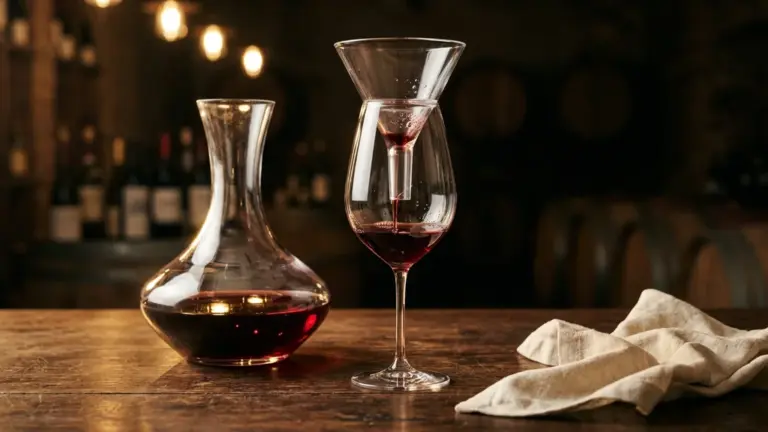
- Does Riesling Need Decanting? Young Riesling generally does not require decanting. However, for aged Riesling (over 7 years old) or high-quality dry Riesling, letting it rest in the glass or a decanter for 15 to 30 minutes helps release closed aromatics and soften its natural petrol notes.
Frequently Asked Questions (FAQ)
Are all Riesling wines sweet?
No. This is one of the most common myths in the wine world. Riesling is produced across a wide flavor spectrum, from bone-dry with no residual sugar, to off-dry with balanced sweetness, to sweet dessert wine. In Alsace, France, and Australia, most Riesling is made in a dry style. In Germany, a bottle labeled ‘Trocken’ indicates a dry wine with crisp acidity and pronounced minerality.
Why is Riesling considered the best pairing for spicy food?
Spicy food contains capsaicin, a compound that triggers a burning sensation on the tongue. High alcohol and heavy tannins in red wine actually amplify that heat and bitterness on the palate. In contrast, off-dry Riesling has low alcohol (often below 10% ABV), high natural acidity to cleanse the palate, and a touch of residual sugar that coats taste receptors and cools chili heat instantly.
Why does aged Riesling smell like kerosene or petrol?
The distinct kerosene or petroleum aroma in aged Riesling comes from a natural chemical compound called 1,1,6-trimethyl-1,2-dihydronaphthalene (TDN). It develops naturally during bottle aging as a result of sunlight exposure on ripe grapes and high acidity. For sommeliers worldwide, subtle TDN notes are a hallmark of noble vintage maturity and top-tier Riesling terroir, not a wine fault.
What is the alcohol content (ABV) of Riesling wine?
Riesling’s alcohol level varies widely depending on the winemaking style. Sweet or semi-sweet German Kabinett and Spätlese styles typically have low alcohol, ranging from 7.5% to 9.5% ABV, because fermentation is halted early to preserve natural sugar. Meanwhile, dry Rieslings from Alsace, Austria, and Australia carry standard alcohol levels between 12% and 13% ABV.
How should Riesling wine be served and stored for optimal flavor?
Riesling is best served chilled at 6 to 9°C for sweet or off-dry styles, and 8 to 10°C for dry styles. Use a slender-stemmed white wine glass with a medium bowl to preserve crisp acidity and concentrate floral and fruit aromas. Store unopened bottles in a cool place at 12 to 15°C away from direct sunlight.
Explore Curated Selections for Your Cellar
Authentic wines, spirits, and sake personally curated by our sommelier team with verified provenance and climate-controlled delivery.
Wine Guide Collection
Over 1,300+ red, white, and sparkling wines from acclaimed global producers.
Explore Wine Catalog → Premium SpiritsWhisky, Gin, and Vodka
Rare single malts, blended Scotch, artisan gin, and 100% agave tequila.
Explore Spirits Catalog → Cold-Chain GuaranteedSake and Asian Drinks
Authentic Japanese Daiginjo, Ginjo, Junmai sake and chilled Korean soju.
Explore Sake Collection → Instant Delivery22+ Official Outlets
Find the nearest Peakwine cellar outlet in Bandung and Jakarta for direct pickup.
Find Store Locations →

 By Wine Style
 Red Wine
 White Wine
 Sparkling Wine & Champagne
 Rosé Wine
 Dessert & Sweet Wine
 Fortified & Port Wine
 By Grape Variety
 Cabernet Sauvignon
 Shiraz
 Chardonnay
 Merlot
 Sauvignon Blanc
 Pinot Noir
 Tempranillo
 Sangiovese
 Malbec
 Grenache
 Semillon
 Primitivo
 Moscato
 Carmenere
 Riesling
 Pinot Grigio
 By Country & Region
 Australia
 France
 Chile
 Indonesia
 Italy
 Argentina
 Spain
 United States
 Portugal
 South Africa
 New Zealand
 Japan
 Germany
 By Taste & Sweetness
 Full-Bodied Wine
 Medium-Bodied Wine
 Light-Bodied Wine
 Sweet & Fruity Wine
 Dry Wine
 Curated Collections
 Best Sellers
 Everyday Value (< 500k)
 Reserve & Cellar

 Whisky & Whiskey
 Single Malt Scotch
 Blended Scotch
 Bourbon & Tennessee
 Japanese Whisky
 Irish Whiskey
 Gin
 London Dry Gin
 Dry Gin
 Tequila & Mezcal
 Vodka
 Premium & Craft Vodka
 Indonesian Vodka
 Rum
 White Rum
 Dark Rum
 Brandy Cognac
 Armagnac
 Liqueur
 Traditional Spirit


