

Shiraz vs Syrah: Differences Between Australian and French Bold Reds, Flavor Profiles, and Top Bottles


📖 Table of Contents ▼
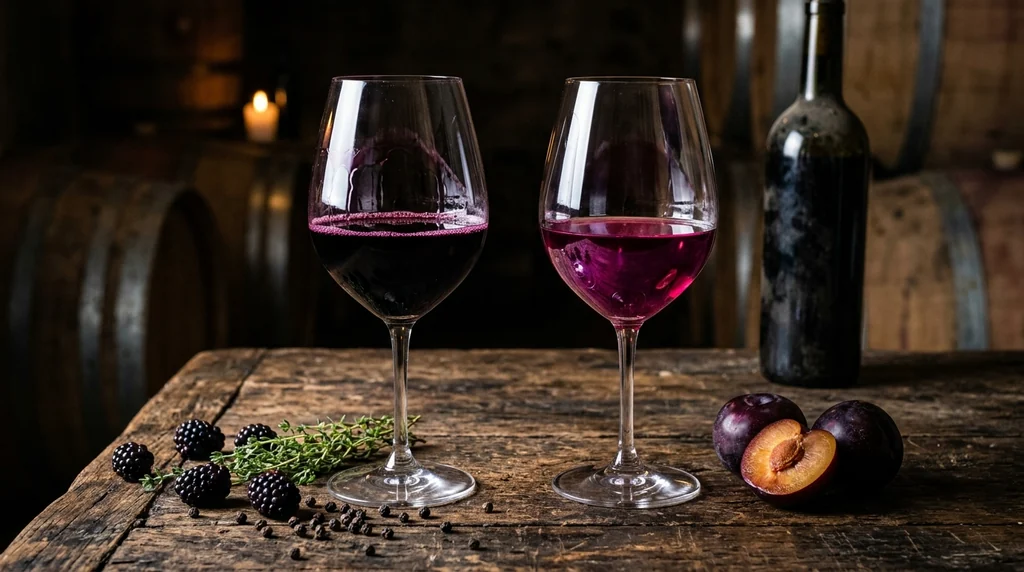
Biologically, Shiraz and Syrah are the exact same red grape variety, yet sommeliers worldwide use the two names to distinguish two very different winemaking philosophies and flavor profiles. Syrah represents the classic Old World style of France’s Rhône Valley: structured, restrained, brisk in acidity, and rich in cracked black pepper. Shiraz is Australia’s New World signature: full-bodied, bold, and concentrated with ripe plum, blackberry jam, and warm chocolate notes.
Genetic origins: Are Shiraz and Syrah the same grape?
For centuries, a popular myth claimed that Crusaders brought this grape from the ancient city of Shiraz in Persia (modern-day Iran) to Europe. That romantic story persisted until modern genetics uncovered the real origin.
In 1998, DNA profiling led by Dr. Carole Meredith at the University of California, Davis proved that Syrah is 100 percent native to France . The variety is the natural offspring of two obscure grapes from southeastern France: Dureza (a dark-skinned red grape from Ardèche) and Mondeuse Blanche (a white grape from Savoy). This natural cross gave birth to Syrah on the steep slopes of the northern Rhône Valley.
How did Syrah become Shiraz in the southern hemisphere? The story begins in 1832, when viticulture pioneer James Busby brought hundreds of vine cuttings from Europe to Australia. His ship’s cargo manifest listed cuttings labeled Scyras and Ciras . As those vines thrived in the Barossa Valley and Hunter Valley, local pronunciation gradually evolved into Shiraz . Since then, Shiraz has become Australia’s most iconic and widely planted red grape.
Terroir factors: Why French Syrah and Australian Shiraz taste different
Despite sharing identical DNA, a bottle of Syrah from Hermitage in France tastes dramatically different from a Barossa Valley Shiraz (read our full guide to Australian and New Zealand wines). This contrast comes down to climate, soil, and oak maturation.
1. Climate and Rotundone
France’s northern Rhône Valley has a temperate climate shaped by the cool, gusty Mistral wind. Grapes ripen slowly and evenly, preserving high natural acidity. This cooler environment encourages high concentrations of an aromatic compound called rotundone in the grape skins, which gives Syrah its signature cracked black pepper aroma.
By contrast, South Australia’s Barossa Valley and McLaren Vale bask in intense summer sunshine. Warm temperatures accelerate sugar accumulation, producing deep purple pigments, lush black fruit flavors like blackberry jam, black plum, and fig, and higher natural alcohol.
2. Oak Barrel Philosophy
French Syrah producers typically age their wines in French oak , which has a tight grain. French oak imparts fine tannins alongside subtle cedar, cinnamon, and restrained vanilla without masking the wine’s fresh acidity. Classic Australian Shiraz often uses American oak or a blend of both. American oak releases higher levels of wood lactones, adding toasted coconut, mocha espresso, sweet vanilla, and dark chocolate notes.
5-pillar Vivino sensory profile: Shiraz vs Syrah
To help you recognize what is in the glass at a restaurant or dinner table, here is an objective 5-pillar sensory comparison based on international sommelier standards and Vivino data.
Syrah Sensory Profile (French Old World Style).
Shiraz Sensory Profile (Australian New World Style).
Comparison table: French Syrah vs Australian Shiraz (Head-to-Head).
The comparison table below summarizes the key differences between these two styles, building on what you have read in our guides to Cabernet Sauvignon characteristics and Merlot for beginners :
| Comparison Dimension | Syrah (Old World / France). | Shiraz (New World / Australia). |
|---|---|---|
| Key Regions | Northern Rhône Valley (Hermitage, Côte-Rôtie, Cornas). | Barossa Valley, McLaren Vale, Hunter Valley |
| Vineyard Climate | Moderate to cool, windy, slow ripening | Warm to hot Mediterranean, abundant sunshine |
| Texture (Body). | Medium-to-full body, lean, structured | Full-bodied, powerful, dense, creamy |
| Dominant Aromas | Black pepper, violet, wild herbs, smoked meat | Blackberry jam, dark chocolate, sweet plum, vanilla |
| Average Alcohol | 12.5% to 13.5% ABV (fresh and balanced). | 14.0% to 15.5% ABV (warm on the palate). |
| Oak Profile | Predominantly French oak (cedar, subtle wood spice). | American and French oak (vanilla, mocha, toffee). |
| Best Food Pairings | Roast lamb, Peking duck, sautéed mushrooms | Black pepper sirloin steak, BBQ ribs, Padang beef rendang |
Serving guide: Ideal temperature, glassware, and decanting
Bold, high-tannin wines like Shiraz require the right temperature and glassware so alcohol heat never overwhelms your palate.
- Optimal Serving Temperature (16-18°C): Never serve Shiraz at Indonesian tropical room temperature (28-32°C). Warm room temperatures cause alcohol to evaporate quickly and burn the nose. Chill the bottle in the refrigerator for 20 to 30 minutes before opening to bring it down to a cool, balanced temperature.
- Glassware (Syrah/Shiraz Glass): Use a stemmed glass with a medium-to-large bowl that tapers gently at the rim. This shape gives the wine room to breathe while directing concentrated black pepper and dark fruit aromas straight to your nose.
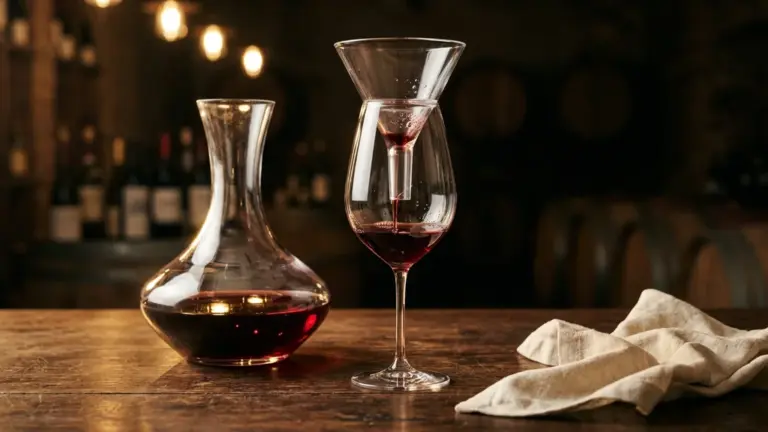
- Decanting Time (Aeration): For young, full-bodied Australian Shiraz, decant into a glass decanter for 45 to 60 minutes before serving. Oxygen softens gripping tannins and opens up layers of chocolate and black plum. For older French Syrah, decanting helps separate the wine from natural sediment at the bottom of the bottle.
Food pairing science: Best dishes for Shiraz and Syrah
Firm tannins and bold spice make both styles natural partners for rich, fatty meats. Culinary science shows that meat proteins and fats bind to tannin molecules on the palate, softening astringency while making the meat taste juicier. You can also read our full guide on wine for steak and seafood .
1. Best Pairings for Bold Shiraz (Australian Style).
Australian Shiraz’s concentrated dark fruit, sweet vanilla, and plush body stand up effortlessly to caramelized glazes, savory Indonesian sweet soy sauce, and charcoal smoke:
- Honey-Glazed BBQ Beef Ribs: The caramelized sweetness of barbecue sauce pairs naturally with Shiraz’s blackberry jam and vanilla oak.
- Padang Beef Rendang: Shiraz is one of the best red wines for rendang. Its dense body matches the rich coconut-spice paste without losing its fruit character.
- Black Pepper Sirloin Steak: Well-marbled beef coated in cracked black pepper sauce melds cleanly with Shiraz’s natural spice.
2. Best Pairings for Structured Syrah (French Style).
French Syrah’s sharp black pepper, crisp acidity, and herbal notes pair beautifully with gamey meats and fresh herbs.
- Rosemary Roast Lamb Chops: Roast lamb has a distinct richness that calls for Syrah’s high acidity and herbal spice to cut through the fat.
- Peking Duck: Crispy, savory duck skin pairs cleanly with the Northern Rhône’s tart plum fruit and structured tannins.
- Sate Kambing with Sweet Soy and Shallots: Syrah’s brisk acidity balances the rich goat fat and fresh sliced shallots.
5 curated Shiraz and Syrah bottle recommendations at Peakwine
Here are 5 sommelier-selected bottles from the official Peakwine catalog, spanning approachable everyday pours to collectible classics. Every bottle is 100% authentic with official Indonesian customs excise stamps and reliable cold-chain delivery.
Lindemans Bin 50 Shiraz 2023 Australia 750ml
One of the world’s most popular Australian Shiraz labels for ripe fruit character at an accessible price. Expect bright red plum, blackberry, gentle vanilla spice, and soft, beginner-friendly tannins.
Paul Jaboulet Aine Cotes Du Rhone Parallele 45 Syrah 2014 France 750ml
An authentic expression of French Syrah from the legendary producer Paul Jaboulet Aine in the Rhone Valley. Crafted from a dominant blend of Syrah and Grenache, this wine opens with aromas of fresh black pepper, wild violets, and Mediterranean garrigue herbs, supported by crisp, focused acidity.
Peter Lehmann The Barossan Shiraz 2019 Australia 750ml
The Barossa Valley is the spiritual home for Shiraz lovers worldwide, and Peter Lehmann is one of the region’s most respected winemakers. The Barossan pours a deep garnet red with generous aromas of blackberry jam, espresso mocha, warm oak spice, and round, muscular tannins.
Montes Alpha Syrah 2020 Chile 750ml
Montes Alpha is a pioneer of world-class fine wine from Chile’s Colchagua Valley. This Syrah combines warm South American dark fruit ripeness with European-style French oak aging, delivering notes of cigar tobacco, black pepper, damp leather, and plush, concentrated tannins.
Penfolds Bin 28 Kalimna Shiraz 2017 Australia 750ml
First produced in 1959, Bin 28 is a benchmark of warm-climate Australian Shiraz. Named after the legendary Kalimna vineyard in northern Barossa, this wine offers dense dark fruit concentration, cinnamon spice, mocha, and firm tannins built to age gracefully for more than 20 years in the cellar.
Explore all of the featured bottles above in the Peakwine wine collection or visit your nearest Peakwine store location in Bandung and Jakarta for a direct consultation with our sommelier.
Frequently Asked Questions About Shiraz and Syrah
What is the main difference between Shiraz and Syrah?
Genetically, Shiraz and Syrah are the exact same grape variety (Vitis vinifera). The difference lies in winemaking style and region: the Syrah label refers to the Old World style of France’s Rhone Valley, which is leaner, firmly structured, and driven by spice and black pepper. Meanwhile, the Shiraz label refers to Australia’s signature New World style, which is full-bodied, bold, rich in ripe dark fruit jam aromas, and warmer in alcohol.
Is Shiraz a sweet wine?
Most quality Shiraz wines are dry red wines with no added sugar. However, Australia’s warm climate ripens the grapes fully and gives the wine a fruit-forward impression of natural sweetness from ripe plum, blackberry, and vanilla oak aromas, even though residual sugar remains very low.
Why does Syrah have a distinct black pepper aroma?
The black pepper aroma in Syrah comes from a natural aromatic compound called rotundone found in the grape skins. This compound develops especially well in cool-to-moderate vineyard climates such as France’s Northern Rhone Valley.
What is the average alcohol level (ABV) in Shiraz and Syrah?
French-style Syrah typically ranges from 13.0% to 14.0% ABV due to Europe’s cooler climate. By contrast, Australian-style Shiraz usually carries a higher ABV between 14.0% and 15.0% or more, driven by higher natural grape sugars ripened under the Barossa Valley sun.
What foods pair best with Shiraz and Syrah?
Australian Shiraz pairs naturally with rich, savory, and fatty meats such as BBQ beef ribs, black pepper steak, Padang beef rendang, and lamb satay. French Syrah is an ideal match for rosemary-roasted lamb, Peking duck, or sauteed mushroom dishes.
Explore Curated Selections for Your Cellar
Authentic wines, spirits, and sake personally curated by our sommelier team with verified provenance and climate-controlled delivery.
Wine Guide Collection
Over 1,300+ red, white, and sparkling wines from acclaimed global producers.
Explore Wine Catalog → Premium SpiritsWhisky, Gin, and Vodka
Rare single malts, blended Scotch, artisan gin, and 100% agave tequila.
Explore Spirits Catalog → Cold-Chain GuaranteedSake and Asian Drinks
Authentic Japanese Daiginjo, Ginjo, Junmai sake and chilled Korean soju.
Explore Sake Collection → Instant Delivery22+ Official Outlets
Find the nearest Peakwine cellar outlet in Bandung and Jakarta for direct pickup.
Find Store Locations →

 By Wine Style
 Red Wine
 White Wine
 Sparkling Wine & Champagne
 Rosé Wine
 Dessert & Sweet Wine
 Fortified & Port Wine
 By Grape Variety
 Cabernet Sauvignon
 Shiraz
 Chardonnay
 Merlot
 Sauvignon Blanc
 Pinot Noir
 Tempranillo
 Sangiovese
 Malbec
 Grenache
 Semillon
 Primitivo
 Moscato
 Carmenere
 Riesling
 Pinot Grigio
 By Country & Region
 Australia
 France
 Chile
 Indonesia
 Italy
 Argentina
 Spain
 United States
 Portugal
 South Africa
 New Zealand
 Japan
 Germany
 By Taste & Sweetness
 Full-Bodied Wine
 Medium-Bodied Wine
 Light-Bodied Wine
 Sweet & Fruity Wine
 Dry Wine
 Curated Collections
 Best Sellers
 Everyday Value (< 500k)
 Reserve & Cellar

 Whisky & Whiskey
 Single Malt Scotch
 Blended Scotch
 Bourbon & Tennessee
 Japanese Whisky
 Irish Whiskey
 Gin
 London Dry Gin
 Dry Gin
 Tequila & Mezcal
 Vodka
 Premium & Craft Vodka
 Indonesian Vodka
 Rum
 White Rum
 Dark Rum
 Brandy Cognac
 Armagnac
 Liqueur
 Traditional Spirit


