

Australian and New Zealand Wine: Why They Are So Popular in Indonesia


📖 Table of Contents ▼
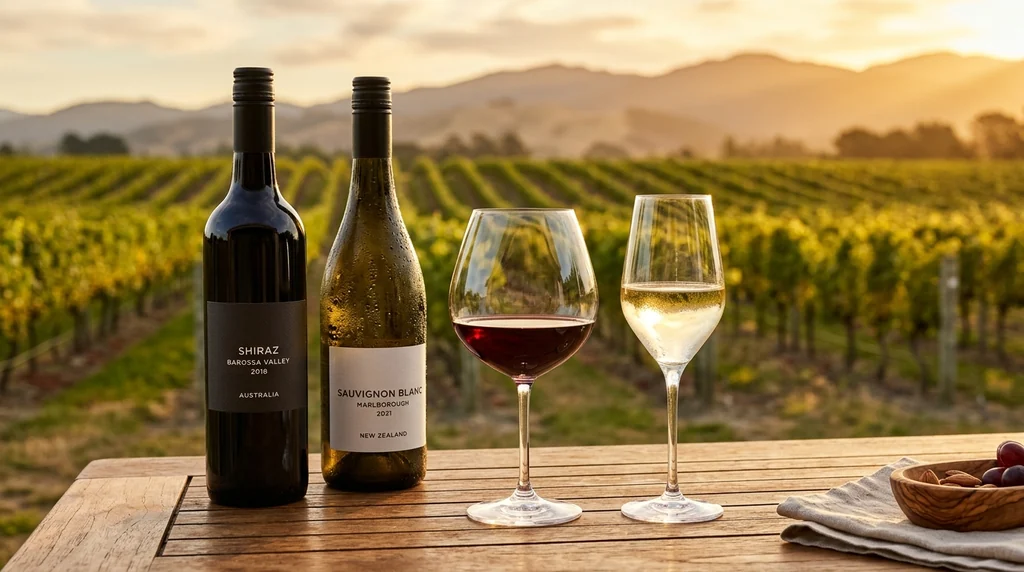
The best Australian and New Zealand wines are defined by expressive, fruit-forward profiles, lively natural freshness, and modern screwcap convenience that suit Indonesian palates and tropical weather. From the concentration of century-old Shiraz vines in Barossa Valley and the elegance of Coonawarra’s Terra Rossa soil to the crisp passionfruit aromatics of Marlborough Sauvignon Blanc and silky New Zealand Pinot Noir, Australasia delivers New World character ready to drink without decades of cellaring.
- Fruit-Forward Philosophy Unlike European wines that lean earthy and astringent, Australasian wines highlight pure fruit ripeness that charms the palate immediately without hours of decanting.
- The Rise of the Screwcap Pioneers of aluminum seal technology, guaranteeing zero risk of cork taint and holding up reliably against Indonesia’s tropical humidity.
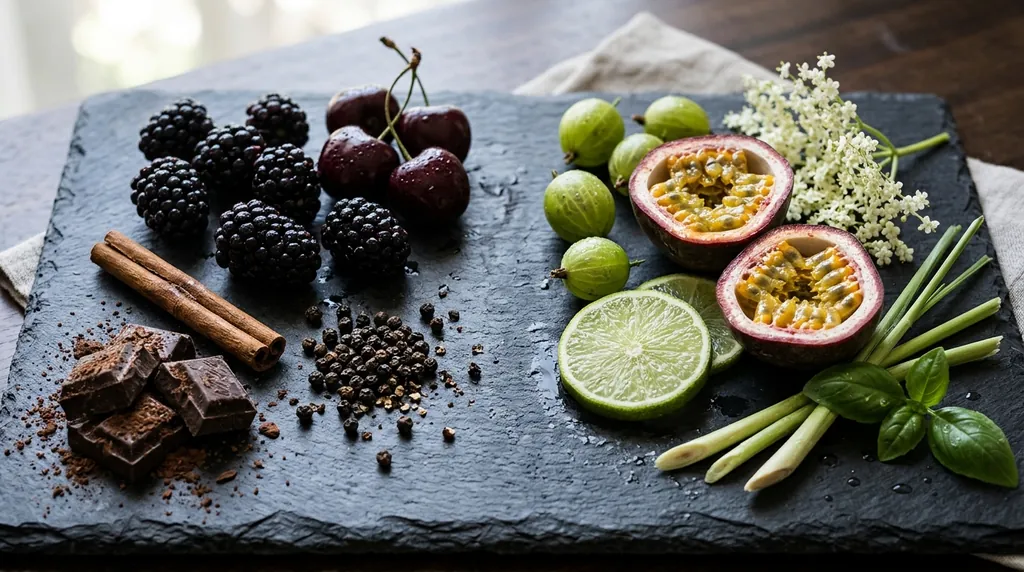
- Barossa Valley and Old-Vine Shiraz Home to pre-Phylloxera Shiraz vines over 150 years old, producing dense, full-bodied reds with black plum, dark chocolate, and black pepper notes.
- Marlborough, Capital of Sauvignon Blanc Cool Pacific breezes and sharp day-to-night temperature swings yield the world’s crispiest white wines, bursting with passionfruit and zesty acidity.
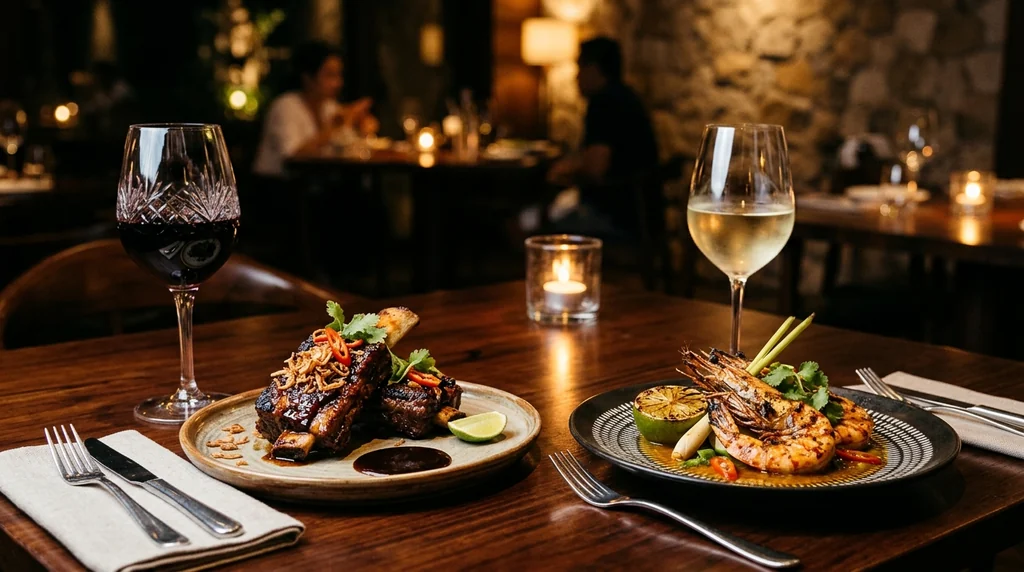
- Versatile Indonesian Food Pairing Sauvignon Blanc’s acidity cuts through rich, spicy grilled seafood, while Shiraz’s power matches the depth of rendang and sate kambing.
The New World Flavor Revolution: Why Indonesian Palates Love Fruit-Forward Wines
For many wine drinkers in Indonesia, tasting classic European (Old World) wines such as Bordeaux or Barolo can leave a sharp, astringent impression. As explained in our guide to Old World vs. New World wine philosophies , traditional European winemaking prioritizes firm tannin structure and centuries-old conventions, often designing bottles to age for a decade or more before softening.
By contrast, producers in Australia and New Zealand take a bold, modern approach centered on pure fruit expression and immediate drinkability upon release.
Winemakers in the Southern Hemisphere are not bound by rigid geographic rules like France’s AOC or Italy’s DOCG systems. They freely apply modern viticultural science, control fermentation temperatures in stainless steel tanks, and harvest grapes at peak phenolic ripeness. The result is wine with aromas that leap from the glass: ripe dark berries in reds and bright tropical fruit in whites.
This rich, fresh fruit character aligns naturally with Indonesian taste preferences. Local palates accustomed to layered spices, savory umami, chili heat, and subtle sweetness find an easy match in wines that do not dry out the mouth. Australian and New Zealand wines offer honest, approachable warmth that is enjoyable without needing a history lesson before opening the bottle.
The Screwcap Revolution: Science Over Cork Myths in Tropical Climates
If one technical innovation permanently reshaped the modern wine industry, it was the decision by Australian and New Zealand producers to adopt the screwcap (Stelvin closure).
For centuries, natural cork was treated as a symbol of luxury and tradition. Yet natural cork carries a serious flaw: susceptibility to Trichloroanisole (TCA), a chemical compound that makes wine smell musty like wet cardboard or damp rags, a fault known as cork taint. Globally, roughly 3 to 5 percent of natural-corked bottles suffer TCA spoilage before reaching the glass.
That vulnerability becomes even more critical in tropical countries like Indonesia. Warm ambient temperatures and shifting humidity can cause natural corks to shrink, dry out, or grow mold. Once a cork dries, outside air seeps into the bottle and triggers premature oxidation, turning fresh fruit aromas sour like apple cider vinegar.
Recognizing this threat, New Zealand winemakers launched the New Zealand Screwcap Wine Seal Initiative in 2001, quickly joined by producers in South Australia’s Clare Valley and Barossa Valley. Years of independent laboratory testing proved that screwcaps deliver clear advantages.
- Zero Risk of Cork Taint Screwcaps use precision aluminum with a synthetic liner free of the microorganisms that produce TCA.
- Bottle-to-Bottle Consistency Every bottle maintains uniform freshness and aging potential, eliminating random variation caused by uneven cork quality.
- Flexible Home Storage Screwcap bottles can be stored upright in a standard refrigerator without worrying about the cork drying out.
- Effortless Opening Without a Corkscrew You can open a bottle anywhere, whether at a beach picnic, birthday gathering, or dinner at home, without hunting for a wine opener.
Today, over 95 percent of New Zealand wines and more than 85 percent of Australian wines use screwcaps. Far from signaling cheap wine, a screwcap is a mark of quality assurance for smart drinkers.
Exploring Australia’s Iconic Regions: From Barossa’s Power to Coonawarra’s Elegance
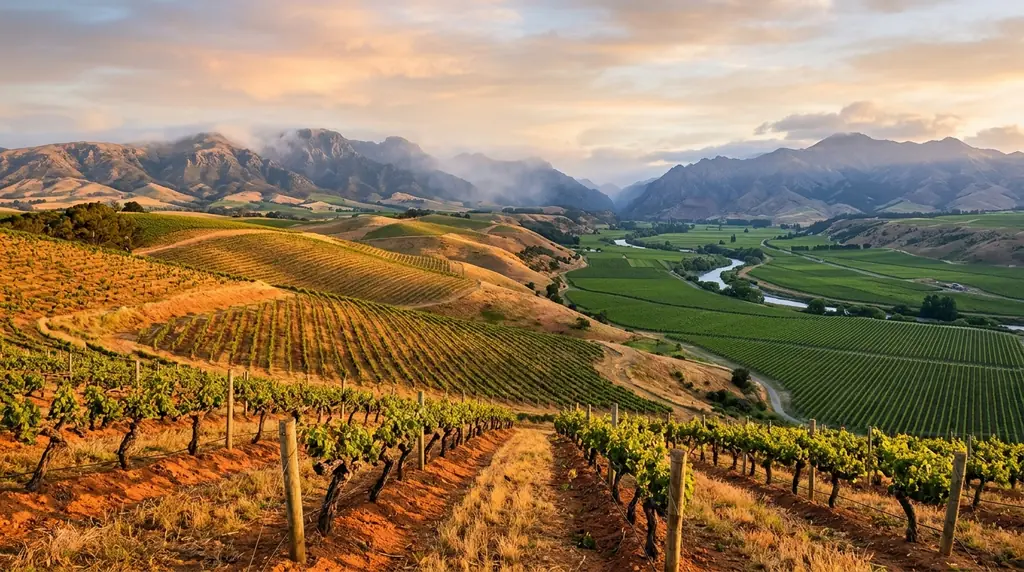
Australia is a global wine powerhouse with more than 65 official Geographical Indications (GIs). Among them, two regions in South Australia hold legendary international status.
Barossa Valley: Home to the World’s Oldest Shiraz Vines
Located about 60 kilometers northeast of Adelaide, Barossa Valley is the spiritual home of Shiraz. As detailed in our profile of Shiraz’s deep character , Barossa is one of the few wine regions on earth spared from the devastating Phylloxera root louse. It preserves ungrafted pre-Phylloxera Shiraz vines over 150 years old, planted in the 1840s by Silesian German immigrants.
These ancient vines yield small berries with extraordinary flavor concentration. Classic Barossa Shiraz is full-bodied with plush, velvety tannins and layers of black plum, blackberry jam, dark chocolate, espresso, and warm black pepper. When aged in American oak, it develops inviting notes of vanilla and toasted coconut.
Coonawarra: The Magic of Terra Rossa Red Soil
Further south toward the cooler coast lies Coonawarra, famous for its 15-kilometer strip of iron-rich red clay soil known as Terra Rossa. Sitting directly over porous limestone, this soil creates natural drainage ideal for deep vine roots.
Coonawarra is a haven for structured Cabernet Sauvignon and refined Shiraz. Compared with Barossa’s lush warmth, Coonawarra wines show crisp cassis (blackcurrant), tailored tannins, and signature herbal notes of wild mint and eucalyptus. This structure gives Coonawarra wines impressive aging potential favored by fine wine collectors.
Exploring New Zealand’s Wine Paradise: Marlborough Magic and Southern Cool
If Australia rules bold, powerful reds, New Zealand reigns as the queen of crisp white wines, led by the unmistakable purity of Sauvignon Blanc.
Marlborough: The World Capital of Sauvignon Blanc
Situated at the northern tip of the South Island, Marlborough offers near-perfect conditions for Sauvignon Blanc. As covered in our guide to Sauvignon Blanc flavor profiles , protective mountain ranges ensure low rainfall and abundant daytime sunshine, while cool Pacific Ocean breezes drop nighttime temperatures sharply (a wide diurnal temperature swing).
This dramatic day-to-night temperature shift slows grape ripening, allowing complex aromatics to build while preserving high natural acidity.
Marlborough Sauvignon Blanc is recognizable in a single sniff: bursting with passionfruit, pink grapefruit, gooseberry, and guava, balanced by freshly cut grass and tomato leaf. On the palate, its zesty, racy acidity delivers unmatched refreshment that wakes up the appetite immediately.
Central Otago and Marlborough: The Grace of Pinot Noir
Beyond Sauvignon Blanc, New Zealand has proven its mastery of one of the world’s most demanding red grapes: Pinot Noir. As explored in our guide to the elegance of Pinot Noir , Central Otago, the world’s southernmost wine region with a semi-continental climate, alongside Marlborough’s cool valleys, produces world-class Pinot Noir.
New Zealand Pinot Noir pours a bright, translucent ruby color with aromas of ripe red cherry, fresh plum, rose petal, and damp forest floor. Its tannins are silky and fine-grained, making it an ideal red wine for drinkers who dislike heavy astringency.
5-Point Vivino Sensory Comparison: Barossa Shiraz vs. Marlborough Sauvignon Blanc
To help you compare these two Australasian icons side by side, here is a sensory breakdown based on Vivino’s five-point scale.
| Sensory Dimension | Australian Shiraz (Barossa Valley) | New Zealand Sauvignon Blanc (Marlborough) |
|---|---|---|
| Core Character Profile | Bold, Dense, Spicy, Lush | Crisp, Zesty, Tropical Aromatic |
| Body | 5/5 (Full-bodied, rich on the palate) | 2/5 (Light-to-medium bodied, lively) |
| Tannin | 4/5 (Firm, round, velvety texture) | 1/5 (Virtually zero tannin, ultra-smooth) |
| Acidity | 3/5 (Medium, balanced by warm fruit) | 5/5 (High, crisp and zesty) |
| Sweetness | 1.5/5 (Dry, with ripe sweet-fruit impression) | 1/5 (Dry, bright refreshing acidity) |
| Alcohol (ABV) | 14.5% to 15.5% | 12.5% to 13.0% |
| Dominant Aromas | Blackberry, ripe plum, dark chocolate, black pepper | Passionfruit, pink grapefruit, gooseberry, fresh grass |
| Aging Potential | Drink now through 10 years | Best enjoyed within 1 to 3 years |
This comparison highlights two complementary personalities: Australian Shiraz satisfies lovers of rich, warming reds, while New Zealand Sauvignon Blanc is the ultimate thirst-quencher for tropical dining.
The Art of Food Pairing: Matching Australasian Wines with Indonesian Cuisine
One of the biggest reasons Australian and New Zealand wines thrive in Indonesia is their natural affinity for spice-rich, savory local dishes.
Australian Shiraz: Best Friend to Grilled Meats and Coconut Curries
Australian Shiraz’s higher alcohol and plush tannins act like a palate cleanser, cutting through rich red-meat fat. Meanwhile, its natural black pepper and clove notes echo Indonesian marinades.
- Sate Maranggi and Sate Kambing Charred beef or lamb fat pairs smoothly with Shiraz’s velvety tannins, while sweet soy sauce and bird’s eye chili are softened by ripe plum fruit.
- Minang Beef Rendang Caramelized coconut milk and complex galangal, lemongrass, and chili demand a bold red wine that will not get lost beside the dish.
- Honey-Glazed Grilled Beef Ribs Sweet-savory rib glaze finds an appealing contrast against Shiraz’s vanilla and toasted oak.
New Zealand Sauvignon Blanc: Refreshing Counterpoint to Spicy, Tangy Seafood
The racy acidity in New Zealand Sauvignon Blanc works just like a squeeze of fresh lime over seafood, cutting oiliness and lifting sweet, savory ocean flavors.
- Jimbaran-Style Grilled Fish Sweet-spicy Balinese tomato, shrimp paste, and coconut oil sambal are cooled by Sauvignon Blanc’s passionfruit and lime zest.
- Prawns in Padang Sauce Citrusy wine acidity tames chili heat and keeps the palate clean between bites.
- Grilled Squid Rica-Rica Chilled Sauvignon Blanc’s crispness cools fiery spice without overpowering the tender squid.
New Zealand Pinot Noir: Graceful Partner for Poultry and Mushrooms
For aromatic poultry dishes, New Zealand Pinot Noir is hard to beat. Its gentle tannins never overwhelm tender duck or chicken.
- Roast Duck and Bebek Betutu Crispy duck fat is balanced by Pinot Noir’s bright acidity, while red cherry notes complement Balinese base genep spices.
- Butter-Sauteed Mushrooms Pinot Noir’s earthy forest-floor notes meld naturally with the umami of oyster or button mushrooms.
6 Top Australian and New Zealand Wine Picks at Peakwine
Peakwine curates authentic, officially imported Australian and New Zealand bottles stored in temperature-controlled facilities and ready for delivery through the Peakwine wine collection across Indonesia.
A reliable daily favorite with medium-to-full body. Delivers ripe red plum, sweet vanilla, and gentle oak, with soft tannins ideal for newcomers.
A benchmark expression of Barossa Valley power. Dense and full-bodied, layering ripe blackberry, dark chocolate, mocha, and black pepper into a long finish.
A warm-climate Australian benchmark from legendary producer Penfolds. First crafted in 1959 and matured in American oak, offering black fig, sweet spice, and structured, age-worthy tannins.
The global gold standard for New Zealand Sauvignon Blanc. Pale straw in color with explosive fresh passionfruit, pink grapefruit, melon, and cut grass, backed by lively, crisp acidity.
Crafted by a pioneer of modern New Zealand viticulture. Shows bright red cherry, wild raspberry, nutmeg spice, and graceful forest-floor earthiness with silky tannins.
A boutique artisanal release celebrating expressive winemaking. Blends tropical lychee and passionfruit with fresh herbs and sharp river-stone minerality, rounded by brief lees contact.
Frequently Asked Questions About Australian and New Zealand Wine
Australian and New Zealand wines are popular in Indonesia because their ripe, fresh, fruit-forward profiles are immediately approachable without long cellaring. Their labels clearly state the grape variety and region, and their screwcap closures eliminate cork taint risks in Indonesia’s tropical climate.
The main difference lies in climate and flagship grapes. Australia’s warmer, sunnier climate produces bold, rich, spicy reds like Barossa Valley Shiraz and Coonawarra Cabernet Sauvignon. New Zealand’s cool maritime climate yields ultra-crisp, tropical white wines like Marlborough Sauvignon Blanc and silky, elegant Pinot Noir.
Australasia pioneered the global screwcap (Stelvin closure) movement to protect wine consistency. Screwcaps eliminate 100 percent of TCA cork taint, prevent premature oxidation from dried-out corks in warm climates, allow upright fridge storage, and open easily without a corkscrew.
Bold reds like Australian Shiraz pair best with richly spiced meats such as sate maranggi, beef rendang, and sate kambing with sweet soy and chili. Crisp whites like New Zealand Sauvignon Blanc shine alongside tangy, spicy seafood such as Jimbaran grilled fish, prawns in Padang sauce, oyster-sauce squid, and asam padeh.
Most New World wines from Australia and New Zealand are crafted to be enjoyed immediately upon release, with ripe fruit and soft tannins. However, structured fine wines such as Penfolds Bin 28 or Craggy Range Pinot Noir can age gracefully for 5 to 15 years.
Explore Curated Selections for Your Cellar
Authentic wines, spirits, and sake personally curated by our sommelier team with verified provenance and climate-controlled delivery.
Wine Guide Collection
Over 1,300+ red, white, and sparkling wines from acclaimed global producers.
Explore Wine Catalog → Premium SpiritsWhisky, Gin, and Vodka
Rare single malts, blended Scotch, artisan gin, and 100% agave tequila.
Explore Spirits Catalog → Cold-Chain GuaranteedSake and Asian Drinks
Authentic Japanese Daiginjo, Ginjo, Junmai sake and chilled Korean soju.
Explore Sake Collection → Instant Delivery22+ Official Outlets
Find the nearest Peakwine cellar outlet in Bandung and Jakarta for direct pickup.
Find Store Locations →


 By Wine Style
 Red Wine
 White Wine
 Sparkling Wine & Champagne
 Rosé Wine
 Dessert & Sweet Wine
 Fortified & Port Wine
 By Grape Variety
 Cabernet Sauvignon
 Shiraz
 Chardonnay
 Merlot
 Sauvignon Blanc
 Pinot Noir
 Tempranillo
 Sangiovese
 Malbec
 Grenache
 Semillon
 Primitivo
 Moscato
 Carmenere
 Riesling
 Pinot Grigio
 By Country & Region
 Australia
 France
 Chile
 Indonesia
 Italy
 Argentina
 Spain
 United States
 Portugal
 South Africa
 New Zealand
 Japan
 Germany
 By Taste & Sweetness
 Full-Bodied Wine
 Medium-Bodied Wine
 Light-Bodied Wine
 Sweet & Fruity Wine
 Dry Wine
 Curated Collections
 Best Sellers
 Everyday Value (< 500k)
 Reserve & Cellar

 Whisky & Whiskey
 Single Malt Scotch
 Blended Scotch
 Bourbon & Tennessee
 Japanese Whisky
 Irish Whiskey
 Gin
 London Dry Gin
 Dry Gin
 Tequila & Mezcal
 Vodka
 Premium & Craft Vodka
 Indonesian Vodka
 Rum
 White Rum
 Dark Rum
 Brandy Cognac
 Armagnac
 Liqueur
 Traditional Spirit


