

Understanding Non-Alcoholic (Dealcoholized) Wine: Production, Flavor, and Legal Status in Indonesia


📖 Table of Contents ▼
Non-alcoholic wine (dealcoholized wine) is real wine that is fully fermented from genuine wine grapes, then stripped of its alcohol content through vacuum distillation, spinning cone column, or reverse osmosis until it leaves 0.0% to under 0.5% ABV . Unlike plain unfermented grape juice, non-alcoholic wine retains the organic acid structure, polyphenol tannins, and complex aromatics of traditional wine. In Indonesia, BPOM classifies products under 0.5% ABV as non-alcoholic beverages, but MUI Fatwa No. 44 of 2020 stipulates that fermented khamr products with removed alcohol cannot receive halal certification due to their origin and resemblance (tasyabbuh).
Sommelier Functional Summary: The mindful drinking movement and dealcoholized beverages open new options for wine drinkers who want to avoid the intoxicating effects of ethanol. Understanding this category requires distinguishing between plain fruit juice (rich in natural sugar without fermentation) and dealcoholized wine (mature wine with its alcohol molecules extracted), while also recognizing Indonesia’s halal certification boundaries.
What Is Non-Alcoholic Wine? Why It Is Not Just Grape Juice
Many people assume non-alcoholic wine is simply packaged grape juice poured into a tall bottle. That assumption is incorrect from both fermentation science and modern gastronomy perspectives.
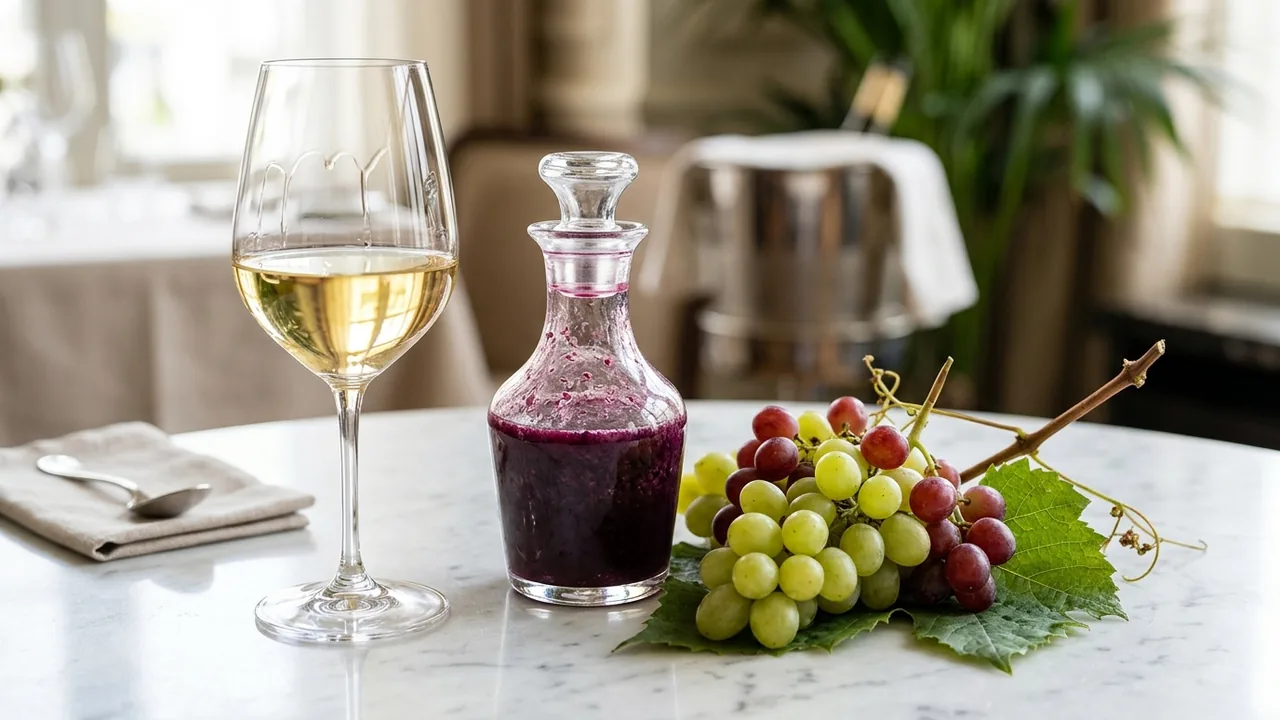
Non-alcoholic wine begins as conventional wine that goes through every stage of traditional vinification: harvesting specific wine grape varietals (such as Chardonnay, Merlot, or Cabernet Sauvignon), crushing, skin maceration to extract tannins and anthocyanin antioxidants, and yeast fermentation ( Saccharomyces cerevisiae ). During fermentation, yeast consumes natural grape sugars and converts them into alcohol and carbon dioxide, while releasing hundreds of new volatile aroma compounds (esters, aldehydes, and organic acids) that never form in fresh grape juice.
Once the wine reaches full maturity with a developed aromatic profile, it undergoes dealcoholization . This specialized step mechanically separates ethanol molecules with precision without destroying the grape’s core character.
| Characteristic Parameter | Standard Conventional Wine | Non-Alcoholic (Dealcoholized) Wine | Plain Pure Grape Juice |
|---|---|---|---|
| Alcohol Content (ABV) | 11.5% to 15.0% ABV | 0.0% to under 0.5% ABV | Strict 0.0% ABV |
| Fermentation Stage | Full yeast fermentation | Full yeast fermentation, then extracted | No fermentation process |
| Natural Sugar Content | 1 to 3 grams per liter (dry wine) | 20 to 45 grams per liter | 140 to 160 grams per liter |
| Acid and Tannin Structure | High tartaric acid and firm tannins | Intact tartaric acid and moderate tannins | Low acid and no skin tannins |
| Palate Texture | Full-bodied, warming finish | Crisp, light-bodied, no alcohol heat | Thick, sweet, sticky on the palate |
| Average Calories per 150ml | 100 to 135 kcal | 25 to 45 kcal | 90 to 110 kcal (high sugar) |
As covered in our guide to wine calories and sugar content , ethanol alcohol contributes 7 calories per gram. When alcohol molecules are removed, calories in dealcoholized wine drop sharply to roughly a quarter of conventional wine.
The Science Behind Dealcoholization: How Alcohol Is Removed from Wine
Removing alcohol from a liquid rich in volatile aromatic compounds like wine is a demanding chemical engineering challenge. Heating wine conventionally to alcohol’s boiling point (78.3 degrees Celsius) destroys delicate fruit esters, oxidizes tannins, and turns fresh wine flavors into a cooked jammy aroma .
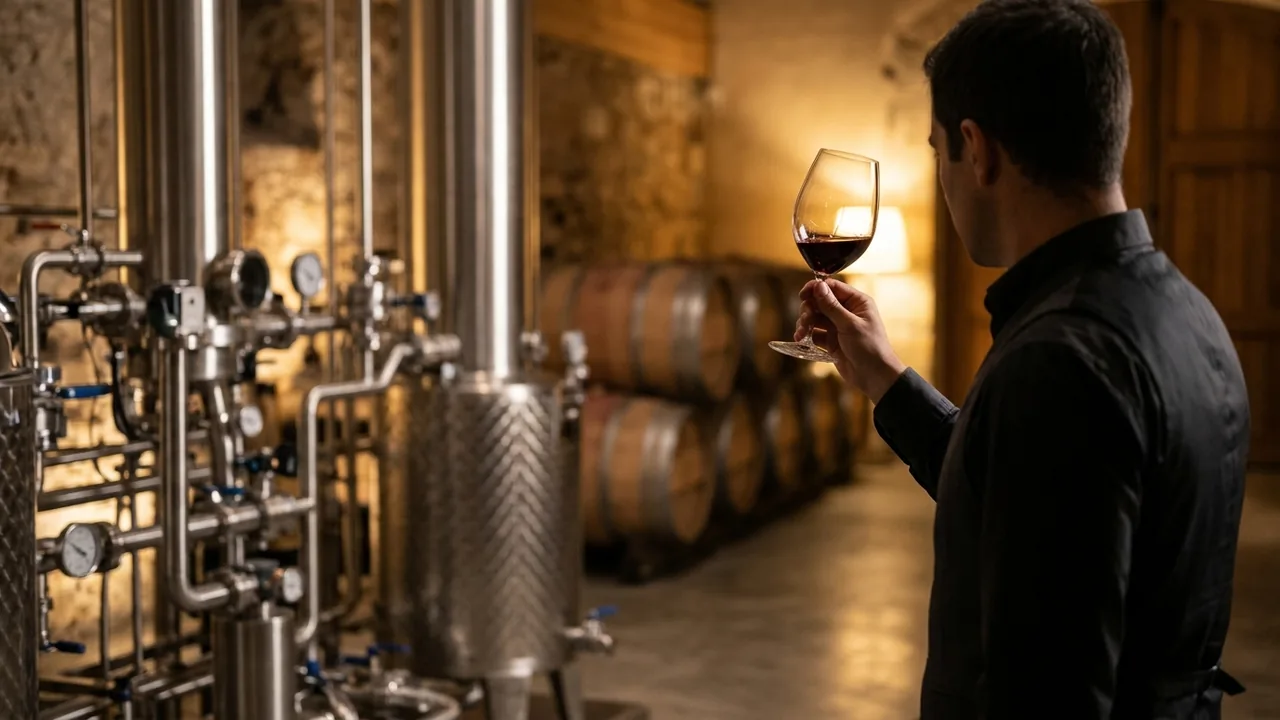
To keep aroma molecules pure and fresh, producers rely on three modern dealcoholization technologies:
1. Vacuum Distillation
Vacuum distillation applies the physics of atmospheric pressure: the lower the air pressure inside a sealed chamber, the lower the temperature required for a liquid to evaporate. Inside a controlled vacuum, alcohol evaporates at a cool 25 to 32 degrees Celsius , roughly room temperature. This gently lifts the alcohol out without triggering thermal damage to the fruit character.
2. Spinning Cone Column (SCC)
The Spinning Cone Column is widely recognized as the gold standard for premium non-alcoholic winemaking. Inside a fast-spinning vertical stainless steel cylinder, centrifugal force spreads the wine into a microscopic liquid film just 0.1 millimeters thick.
- Phase One (Aroma Extraction): A stream of cool nitrogen gas captures 100% of the most delicate volatile aroma compounds and stores them in a separate sterile tank.
- Phase Two (Ethanol Extraction): The dearomatized wine liquid is processed again at low temperature to remove all alcohol molecules.
- Reconstitution Phase: The pure aroma concentrate from phase one is blended back into the alcohol-free wine base so the bottle retains its original bouquet.
3. Reverse Osmosis and Membrane Filtration
Reverse osmosis filters wine under high hydraulic pressure through a microscopic polymer membrane (under 0.001 microns). This membrane lets only water and small alcohol molecules pass through, while anthocyanin pigments, organic acids, and tannins remain as a concentrated base. Natural grape water separated from alcohol via secondary distillation is then recombined with the flavor concentrate, all without heat.
How Does Non-Alcoholic Wine Taste? A Sommelier’s Sensory Expectations
Understanding the role of wine alcohol levels is essential before tasting a non-alcoholic bottle. In conventional wine, ethanol performs three key sensory functions: it adds weight ( body ), carries aromatic vapors to the nose, and provides a sweet warmth that softens natural acidity.
When alcohol is completely removed, the liquid undergoes physical changes:
- Lighter Texture: Without alcohol viscosity, the mouthfeel is thinner, closer to chilled fruit tea or fresh herbal infusion.
- More Prominent Acidity: Tartaric and malic acids, normally buffered by alcohol warmth, taste sharper and crisper.
- No Warming Sensation: You will not feel any warming alcohol burn in the throat.
To restore balance, winemakers add fine carbonation (CO2 bubbles) or a touch of natural oak tannin extract. Non-Alcoholic Sparkling Wine (such as Dealcoholized Brut) is widely regarded by international sommeliers as the most successful style because active effervescence naturally replaces the physical mouthfeel left behind by alcohol.
Regulatory Status in Indonesia: BPOM Guidelines and MUI Halal Fatwa
The most common question consumers ask is: Is non-alcoholic wine halal and legal to consume in Indonesia? To answer clearly, we must look at two official regulatory pillars:
1. BPOM RI Regulatory Perspective (Legality of Non-Alcoholic Beverages)
Under Indonesia’s Food and Drug Authority (BPOM RI), alcoholic beverages are classified into Category A (1-5% ABV), Category B (5-20% ABV), and Category C (20-55% ABV). Fermented beverages containing under 0.5% v/v alcohol are legally recognized under food law as Non-Alcoholic Beverages ( Non-Alcoholic Beverages ). These products are exempt from alcoholic beverage excise duties and can be legally distributed with an official BPOM distribution permit.
2. MUI Fatwa Commission Ruling (Halal Certification Status)
Even though ethanol levels can reach 0.0% or under 0.5%, non-alcoholic (dealcoholized) wine CANNOT obtain halal certification from BPJPH or the Indonesian Ulema Council (MUI) .
This ruling is based on MUI Fatwa No. 44 of 2020 and the Halal Product Assurance System Criteria (HAS 23000):
- Origin in Khamr Fermentation: Beverages produced by the alcoholic beverage industry and later stripped of alcohol remain non-halal because their base material underwent khamr formation, which is considered najis under Islamic jurisprudence.
- Principle of Resemblance (Tasyabbuh): Halal standards prohibit food and drink products that imitate the name, shape, sensory characteristics, packaging, or traditions associated with prohibited alcoholic drinks. Using terms such as “wine” , “non-alcoholic beer” , or “0% whisky” automatically disqualifies a product from halal certification in Indonesia.
Consumer Note: For Muslims who strictly observe sharia guidelines, dealcoholized wine does not meet official halal criteria. However, for general consumers, expats, sober-curious drinkers, designated drivers, and diners avoiding alcohol for medical or fitness reasons, non-alcoholic wine offers a safe, refined lifestyle alternative.
How to Serve Non-Alcoholic Wine and Best Food Pairings
To get the most out of dining with dealcoholized wine, follow these serving and etiquette guidelines:
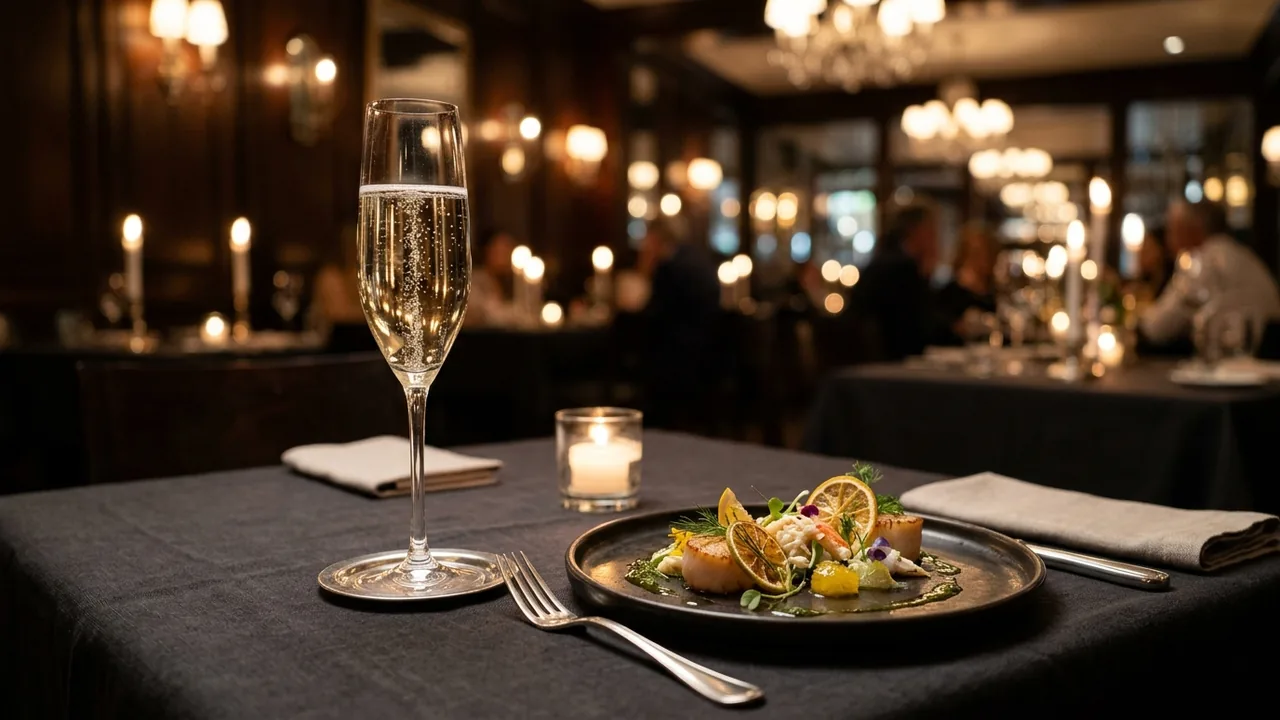
1. Serve at a Controlled Cold Temperature
Because there is no alcohol to soften acidity, serve white and sparkling styles at 6 to 8 degrees Celsius (fully chilled). Cold temperatures lock in the crispness of the acidity so it tastes refreshing on the palate. For non-alcoholic red wine, serve at 12 to 14 degrees Celsius (slightly chilled) to highlight berry aromatics.
2. Use Stemmed Crystal Wine Glasses
Following proper wine drinking etiquette , always pour into a stemmed glass. The crystal bowl concentrates floral and fruit vapors toward your nose, while the stem prevents hand warmth from raising the drink’s temperature.
3. Gastronomic Food Pairings
- Non-Alcoholic Sparkling: Pairs well with soft Brie canapés, salmon sushi, fresh oysters, and tropical fruit salads.
- Non-Alcoholic White: A natural match for creamy pasta dishes, herb-roasted chicken, or steamed snapper with ginger.
- Non-Alcoholic Red: Works well alongside portobello mushroom burgers, grilled steak, or stir-fried black pepper beef.
Recommended Low-Alcohol, Refreshing Wines at Peakwine
If you want natural grape freshness with a beginner-friendly sweet profile and a very light alcohol level (Low ABV 5.5%) for relaxed occasions, Peakwine recommends two popular bottles:
Sababay Moscarosa Sparkling Indonesia 750ml
A Bali-crafted sparkling wine made from Muscat Saint Vallier grapes. It shows blush-pink bubbles with fragrant rose petal, fresh lychee, and ripe strawberry aromas. Best served chilled for casual celebrations.
Lindemans Bin 90 Moscato Australia 750ml
A classic release from Australian winery Lindemans, Bin 90 pairs crisp pear and white peach with a balanced touch of sweet citrus. It is an ideal choice if you are looking for sweet wine recommendations that feel light and easygoing.
Find Your Ideal Wine Collection at Peakwine
From light, aromatic sweet wines to prestigious bottles from around the world, Peakwine guarantees 100% authenticity, temperature-controlled delivery, and professional sommelier guidance for your special occasions.
Explore Peakwine’s Full CatalogFrequently Asked Questions About Non-Alcoholic Wine (FAQ)
Is non-alcoholic wine truly 0.0% alcohol-free?
It depends on the label. Products labeled 0.0% Alcohol-Free undergo precision double distillation so that residual ethanol is no longer detectable in lab testing (0.00%). By contrast, products labeled Dealcoholized Wine typically retain natural trace amounts between 0.1% and 0.49% ABV, comparable to the natural alcohol found in very ripe bananas or fermented sourdough bread.
Is non-alcoholic wine halal to consume in Indonesia?
Under MUI Fatwa No. 44 of 2020, non-alcoholic wine cannot receive halal certification in Indonesia. Beverages produced by fermenting khamr and then extracting the alcohol remain non-halal for Muslims, and their name and characteristics resemble prohibited alcoholic drinks (the principle of tasyabbuh).
Can pregnant women drink dealcoholized wine?
Pregnant women are advised to choose only products strictly labeled 0.0% ABV (Zero Alcohol) and should still consult their obstetrician. Avoid dealcoholized products that retain trace amounts of alcohol (under 0.5% ABV) to ensure complete safety for fetal development.
What is the most noticeable taste difference between non-alcoholic wine and regular wine?
The most noticeable difference is the absence of alcohol warmth in the throat and a lighter body that feels closer to chilled fruit tea. Grape acidity also comes across more prominently than in standard wine.
Explore an Eco-Friendly Lifestyle: If you value a healthy lifestyle and want to enjoy wine with minimal synthetic chemical intervention, read our sommelier guide on the differences between organic, biodynamic, and natural wine , from the science of sulfites to the best bottle selections.
Explore Curated Selections for Your Cellar
Authentic wines, spirits, and sake personally curated by our sommelier team with verified provenance and climate-controlled delivery.
Wine Guide Collection
Over 1,300+ red, white, and sparkling wines from acclaimed global producers.
Explore Wine Catalog → Premium SpiritsWhisky, Gin, and Vodka
Rare single malts, blended Scotch, artisan gin, and 100% agave tequila.
Explore Spirits Catalog → Cold-Chain GuaranteedSake and Asian Drinks
Authentic Japanese Daiginjo, Ginjo, Junmai sake and chilled Korean soju.
Explore Sake Collection → Instant Delivery22+ Official Outlets
Find the nearest Peakwine cellar outlet in Bandung and Jakarta for direct pickup.
Find Store Locations →

 By Wine Style
 Red Wine
 White Wine
 Sparkling Wine & Champagne
 Rosé Wine
 Dessert & Sweet Wine
 Fortified & Port Wine
 By Grape Variety
 Cabernet Sauvignon
 Shiraz
 Chardonnay
 Merlot
 Sauvignon Blanc
 Pinot Noir
 Tempranillo
 Sangiovese
 Malbec
 Grenache
 Semillon
 Primitivo
 Moscato
 Carmenere
 Riesling
 Pinot Grigio
 By Country & Region
 Australia
 France
 Chile
 Indonesia
 Italy
 Argentina
 Spain
 United States
 Portugal
 South Africa
 New Zealand
 Japan
 Germany
 By Taste & Sweetness
 Full-Bodied Wine
 Medium-Bodied Wine
 Light-Bodied Wine
 Sweet & Fruity Wine
 Dry Wine
 Curated Collections
 Best Sellers
 Everyday Value (< 500k)
 Reserve & Cellar

 Whisky & Whiskey
 Single Malt Scotch
 Blended Scotch
 Bourbon & Tennessee
 Japanese Whisky
 Irish Whiskey
 Gin
 London Dry Gin
 Dry Gin
 Tequila & Mezcal
 Vodka
 Premium & Craft Vodka
 Indonesian Vodka
 Rum
 White Rum
 Dark Rum
 Brandy Cognac
 Armagnac
 Liqueur
 Traditional Spirit


