

Proper Wine Etiquette: How to Hold a Glass, Swirl, Toast, and Dine Formally


📖 Table of Contents ▼
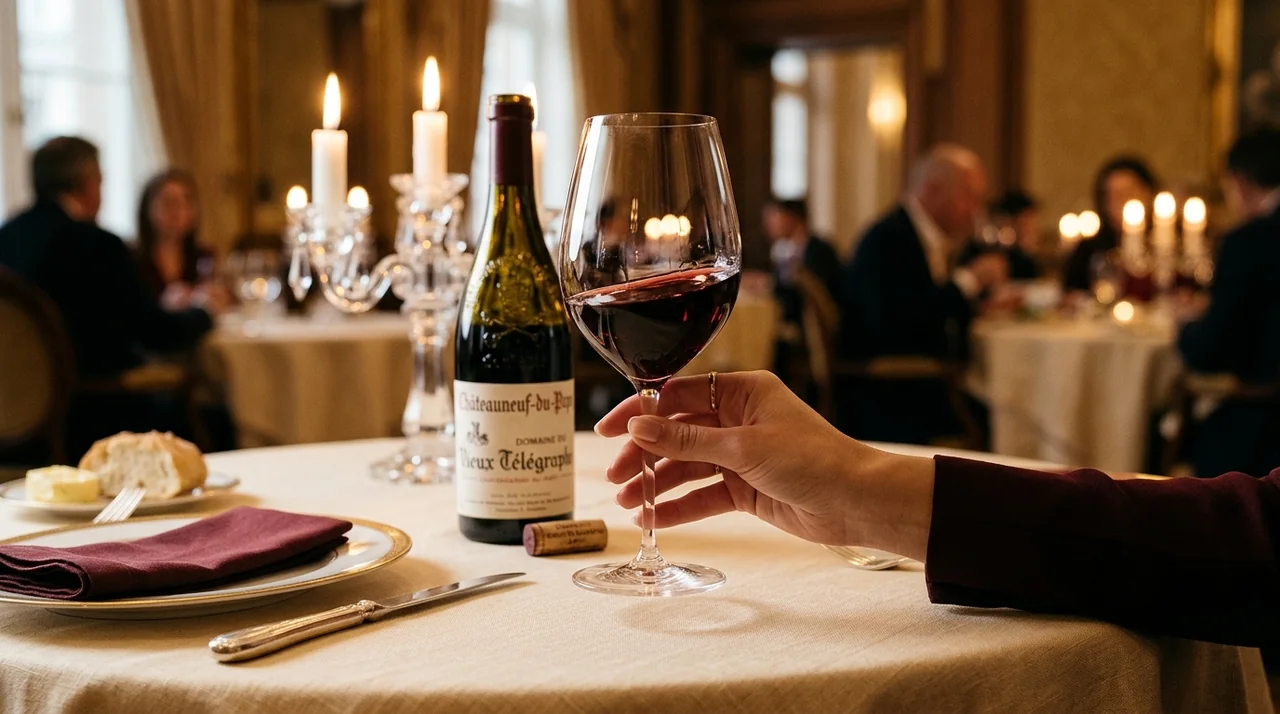
The proper way to hold a wine glass is by the stem or the base , never by the bowl . Cupping the bowl transfers human body heat (roughly 36°C to 37°C) directly into the wine, raising its serving temperature within minutes. That warmth volatilizes alcohol prematurely, masks delicate fruit aromas, and leaves oily fingerprints that cloud the crystal when you inspect the wine’s color.
Sommelier Summary: The stem is not just a decorative flourish. It acts as a thermal barrier between your hand and the wine. Holding the stem gives you full control for swirling , preserves freshness from the first sip to the last drop, and projects confidence at any formal table.
Why You Must Hold a Wine Glass by the Stem: Temperature Science and Bowl Clarity
Stemmed wine glasses ( stemware ) were refined in Europe over centuries to protect the sensory profile of wine. Two scientific principles explain why your fingers belong on the stem:
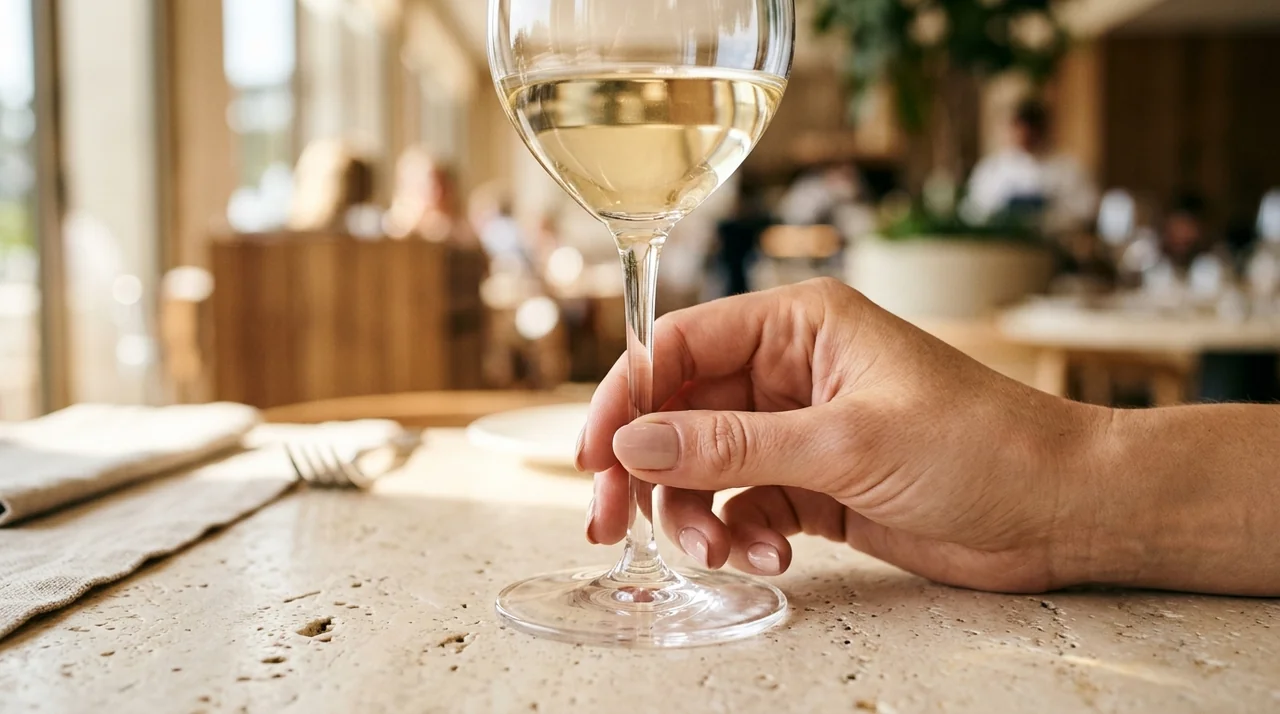
1. Maintaining Ideal Serving Temperature (Temperature Control)
Every wine style requires a narrow serving temperature range so its aromatic compounds and acidity stay in balance:
- White Wine and Rosé: Served chilled at 7°C to 12°C to keep acidity crisp and refreshing.
- Sparkling Wine (Champagne, Prosecco, Cava): Best served at 6°C to 8°C so the fine carbonation ( mousse ) stays lively.
- Red Wine: Served cool at 15°C to 18°C, well below the average ambient room temperature in Indonesian cities, which ranges from 28°C to 32°C.
When your palm or fingers wrap around the bowl, the liquid inside can warm by 3°C to 4°C in under five minutes. That heat makes alcohol sting the nose, pushes fruit flavors toward jamminess, and dulls the wine’s acid structure. Holding the stem keeps the wine cool throughout dinner.
2. Keeping the Crystal Bowl Free of Fingerprints and Oil Smudges
Wine appreciation begins with sight. Natural skin oils transfer immediately onto thin crystal, leaving cloudy smudges that obscure the wine’s hue when you tilt the glass toward the light. During a meal, food oils on your fingertips can also interfere with the pure bouquet rising from the rim.
3 Correct Hand Positions for Holding Stemware
In international formal dining, you can choose whichever of these three standard grips feels most natural:
1. The Stem Pinch (Thumb and Index Finger)
This is the most natural grip and the one most widely used by wine drinkers worldwide:
- Pinch the stem between your thumb and index finger around the middle or lower third.
- Curl your middle, ring, and pinky fingers gently beneath the pinch point for light support.
- This position gives you clean mechanical control when lifting the glass and swirling without spilling.
2. The Tripod Grip (Three Fingers Near the Base)
For beginners who find thin crystal stems slippery or fragile, the tripod grip offers solid stability:
- Use your thumb, index finger, and middle finger to pinch the stem right where it meets the base .
- Fold your ring and pinky fingers inward toward your palm.
- Because your anchor point sits close to the center of gravity, the glass feels steady in motion.
3. The Base Pinch
A formal technique often used by master sommeliers and competition judges:
- Pinch the edge of the base disc with your thumb on top and the side of your index finger underneath.
- No finger touches the stem or the bowl.
- This grip gives an unobstructed view of the wine when tilting the glass to judge age, though it requires steady finger strength.
Grip to Avoid (The Bowling Ball Grip): Never cup the bowl in your palm or thread the stem between your fingers while cradling the bottom of the bowl. That hold is meant for brandy or cognac snifters, where hand warmth is intentional to release dense spirit vapors.
The Sommelier 4S Ritual: See, Swirl, Smell, and Sip
Once you are comfortable holding the stem, you can practice the 4S ritual used by professionals to evaluate every pour:
1. See (Observe Color and Clarity)
Tilt your glass at roughly 45 degrees over a clean white surface, such as a linen napkin or a restaurant menu:
- Clarity: Check whether the wine looks bright and clear. Well-made wines show crisp clarity without haze or sediment (apart from unfiltered natural wine ).
- Rim Variation: Young red wines typically show deep purple-ruby hues. As a bottle ages, the color at the rim shifts toward brick brown ( garnet or tawny ). You can review bowl shapes in our guide to wine glass types and names .
2. Swirl (Aerate the Glass)
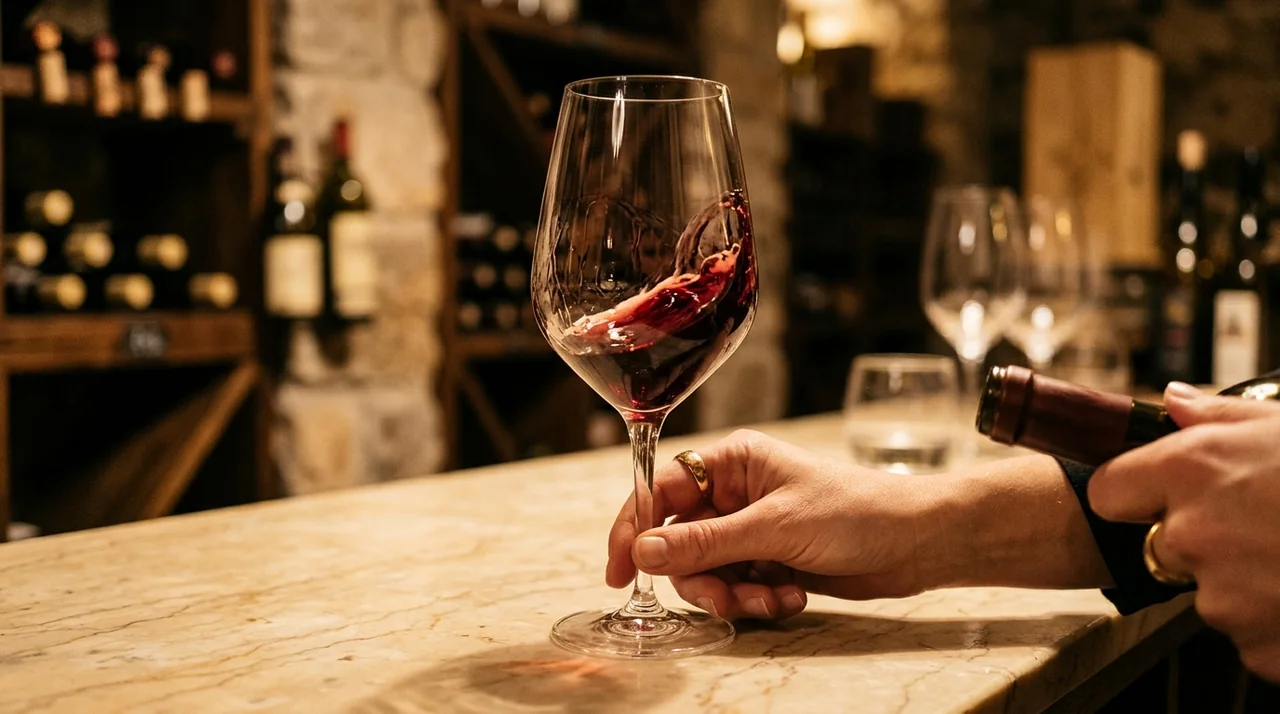
Swirling introduces oxygen ( aeration ) rapidly. Oxygen encourages volatile aromatic compounds to evaporate and gather inside the bowl before you nose the wine:
- The Tabletop Trick for Beginners: If you are not yet confident swirling in midair, rest the base flat on the table. Hold the stem with your thumb and index finger and trace small circles on the table for 5 to 10 seconds. This keeps the wine safely inside the glass.
- Understanding Wine Tears or Legs: Watch the droplets that slide slowly down the inside of the glass after swirling. Known as tears or legs , they are driven by the Marangoni effect and indicate higher wine alcohol content or residual sugar, not overall wine quality.
3. Smell (Nose the Aromatic Layers)
Bring your nose close to the rim and inhale slowly with your mouth slightly open. Breathing in with a relaxed jaw helps you register a wider range of aromas:
- Primary Aromas: Fresh fruit (blackberry, peach, citrus) and floral notes that come directly from the grape variety.
- Secondary Aromas: Notes from fermentation and oak aging , such as butter, toast, vanilla, or clove.
- Tertiary Aromas: Complex notes developed over years in bottle, such as tobacco leaf, leather, forest mushroom, or damp earth ( earthy ).
4. Sip (Taste and Assess Structure)
Take a small sip and let the wine coat your entire palate before swallowing. You can draw in a gentle breath through your lips (a soft slurp ) to aerate the wine in your mouth:
- Assess five structural elements: sweetness at the tip of the tongue, acidity along the sides, tannin grip on your gums and cheeks, weight or body , and how many seconds the flavors linger after swallowing (the finish ).
Toasting Etiquette and Formal Restaurant Table Manners
At business dinners and formal celebrations, how you toast and interact with the sommelier reflects your command of table manners:
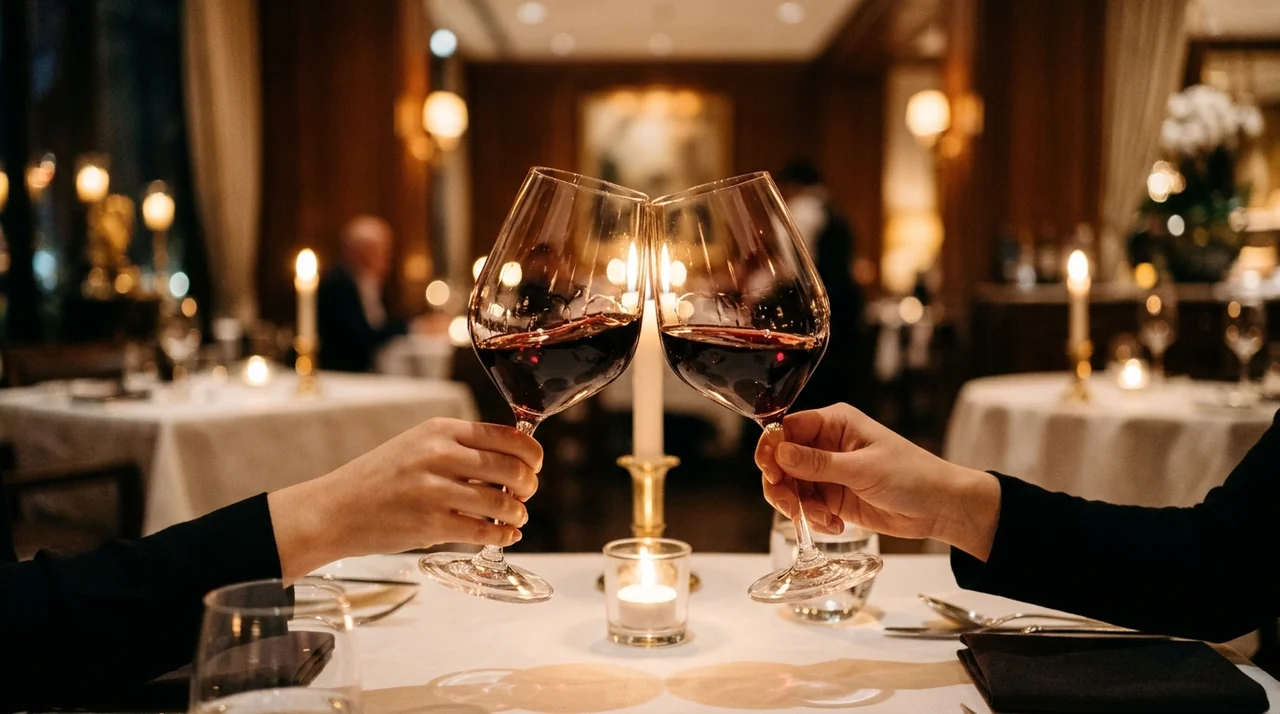
1. Safe Toasting Technique: Bell-to-Bell, Never Rim-to-Rim
Fine crystal glasses have an ultra-thin rim that can chip or shatter if struck:
- Best Contact Point: Always touch the widest, curved midsection of the glass ( the belly or bell of the bowl ). This curve is the thickest, structurally strongest part of a crystal glass.
- Gentle Clink: A light tap produces a clean crystal ring. Never swing wine glasses forcefully as you might with heavy beer mugs.
- Eye Contact: Look at the person you are toasting as a sign of sincerity and respect in international dining etiquette.
2. Sommelier Service Protocol in Fine Dining Restaurants
When you order a bottle of wine at a formal restaurant, the sommelier follows a classic service sequence:
- Bottle Presentation: The sommelier presents the bottle before opening it. Check the producer, wine name, grape variety, and vintage to confirm it matches your order.
- Inspecting the Cork: You do not need to smell the cork placed on the small dish. A quick glance tells you whether it is appropriately moist or dried and crumbling.
- The Tasting Pour (30 ml Sample): The sommelier pours a small sample for the host. This moment is not to decide whether you like the style, but to verify that the bottle is in sound condition and free of faults.
- When You Can Reject a Bottle: You should only reject a bottle and request a replacement if the wine is clearly flawed: a strong smell of wet cardboard from cork taint ( corked / TCA ), sharp vinegar notes from severe oxidation, or unwanted fizz in a still wine. For bottles opened at home, check our guide on how long wine lasts after opening .
- Approval: If the wine smells and tastes clean, give a polite nod or say, “That is lovely, thank you.” The sommelier will then pour for your guests first and fill your glass last.
Serving Temperature and Glassware Guide by Wine Style
Use the reference table below to serve each wine style at the right temperature and in the right glass:
| Wine Category | Ideal Serving Temp | Best Glassware Characteristics | Functional Science Reason |
|---|---|---|---|
| Sparkling Wine (Champagne, Prosecco) | 6-8°C | Slender flute or crystal tulip | Keeps carbonation bubbles active and directs delicate aromas straight to the nose. |
| Light White Wine (Sauvignon Blanc) | 7-10°C | Small, slender U-shaped bowl | Maintains a chilled temperature longer and concentrates fresh fruit aromas alongside crisp acidity. |
| Full-Bodied White (Oaked Chardonnay) | 10-13°C | Moderately wide bowl with a medium opening | Opens up layers of butter, oak vanilla, and a creamy texture that benefits from gentle air circulation. |
| Light to Medium Red (Pinot Noir) | 12-15°C | Wide, rounded bowl (Burgundy glass) | Captures delicate floral and red fruit aromas while guiding the wine toward the front of the palate. |
| Full-Bodied Red (Cabernet Sauvignon) | 16-18°C | Tall, high-volume bowl (Bordeaux glass) | Provides maximum aeration to soften dense tannins and allow alcohol vapors to dissipate. |
Curated Bottle Recommendations for Your Formal Dinner
To practice proper stem holding, swirling, and tasting with distinguished bottles, explore these authentic selections officially available at Peakwine Indonesia:
A classic selection from a renowned Australian producer. Its firm tannin structure and concentrated dark fruit bouquet make it ideal for practicing swirling technique in a tall-stemmed glass.
Shop This BottleAn organic white wine from Spain’s Rueda region. Because it is highly sensitive to hand warmth, it clearly demonstrates why holding the stem matters.
Shop This BottleA graceful Pinot Noir from California. Its translucent ruby color rewards careful evaluation using the See and Smell steps in a wide-bowled glass.
Shop This BottleFrequently Asked Questions About Wine Etiquette
Complete Your Wine and Glassware Collection with Peakwine
From 100 percent authentic, world-class bottles to premium crystal glassware, the Peakwine sommelier team is ready to help you prepare for formal dinners and special celebrations with fast delivery across Indonesia.
Contact a Peakwine Sommelier
Explore Curated Selections for Your Cellar
Authentic wines, spirits, and sake personally curated by our sommelier team with verified provenance and climate-controlled delivery.
Wine Guide Collection
Over 1,300+ red, white, and sparkling wines from acclaimed global producers.
Explore Wine Catalog → Premium SpiritsWhisky, Gin, and Vodka
Rare single malts, blended Scotch, artisan gin, and 100% agave tequila.
Explore Spirits Catalog → Cold-Chain GuaranteedSake and Asian Drinks
Authentic Japanese Daiginjo, Ginjo, Junmai sake and chilled Korean soju.
Explore Sake Collection → Instant Delivery22+ Official Outlets
Find the nearest Peakwine cellar outlet in Bandung and Jakarta for direct pickup.
Find Store Locations →

 By Wine Style
 Red Wine
 White Wine
 Sparkling Wine & Champagne
 Rosé Wine
 Dessert & Sweet Wine
 Fortified & Port Wine
 By Grape Variety
 Cabernet Sauvignon
 Shiraz
 Chardonnay
 Merlot
 Sauvignon Blanc
 Pinot Noir
 Tempranillo
 Sangiovese
 Malbec
 Grenache
 Semillon
 Primitivo
 Moscato
 Carmenere
 Riesling
 Pinot Grigio
 By Country & Region
 Australia
 France
 Chile
 Indonesia
 Italy
 Argentina
 Spain
 United States
 Portugal
 South Africa
 New Zealand
 Japan
 Germany
 By Taste & Sweetness
 Full-Bodied Wine
 Medium-Bodied Wine
 Light-Bodied Wine
 Sweet & Fruity Wine
 Dry Wine
 Curated Collections
 Best Sellers
 Everyday Value (< 500k)
 Reserve & Cellar

 Whisky & Whiskey
 Single Malt Scotch
 Blended Scotch
 Bourbon & Tennessee
 Japanese Whisky
 Irish Whiskey
 Gin
 London Dry Gin
 Dry Gin
 Tequila & Mezcal
 Vodka
 Premium & Craft Vodka
 Indonesian Vodka
 Rum
 White Rum
 Dark Rum
 Brandy Cognac
 Armagnac
 Liqueur
 Traditional Spirit


