

Wine Calories and Sugar Content: Does Wine Make You Gain Weight? (Guide for Diet, Keto, and Healthy Living)


📖 Table of Contents ▼
Wine calories and sugar content per standard 150 ml serving average between 100 and 125 calories for dry wine , and can climb to 160 to 200+ calories in sweet dessert wine . Wine does not automatically cause weight gain as long as your total daily energy intake stays out of a calorie surplus. However, alcohol provides 7 calories per gram and is prioritized by liver metabolism before fat burning. For those on a keto or low-carb diet, dry wine with 1 to 3.5 grams of net carbs can still be enjoyed in moderation.
Sommelier Functional Summary: Enjoying wine while maintaining your physique is entirely possible. The key lies in understanding residual sugar and alcohol by volume (ABV) on the label. Choosing dry bottles with moderate alcohol lets you enjoy fine wine without derailing your diet or triggering insulin spikes.
Why Does Wine Contain Calories? The Science of Ethanol vs. Natural Residual Sugar
Most wine drinkers assume that calories in wine come purely from the sweetness of grapes. In reality, a bottle’s calorie profile is shaped by two biochemical components with very different metabolic properties:

1. Ethanol (Pure Alcohol)
Alcohol is the largest contributor of calories in wine, with an energy density of 7 calories per gram . This figure is nearly equal to pure fat (9 kcal/gram) and far exceeds carbohydrates or protein (4 kcal/gram). This means the higher the wine alcohol content (ABV) listed on the bottle label, the more liquid calories enter your body, even in a bottle that tastes completely dry.
2. Residual Sugar
Residual sugar contributes 4 calories per gram in the form of natural carbohydrates (grape glucose and fructose). In quality winemaking, sweetness does not come from added cane sugar, but from natural fruit sugar intentionally left behind when fermentation is stopped. In dry wine , yeast ferments thoroughly until residual sugar sits below 4 grams per liter (less than 0.6 grams of sugar per serving glass).
Mathematical Formula to Calculate Calories in a Glass of Wine
To determine the real energy count in your glass, use the following alcohol density formula:
Alcohol Calories = Serving Volume (ml) x ABV (%) x 0.8 (ethanol density) x 7 calories
As a practical example: A 150 ml glass of Sauvignon Blanc at 12% ABV yields 150 x 0.12 x 0.8 x 7 = 100.8 calories from alcohol alone. Adding about 1 gram of natural carbohydrates (~4 calories) brings the total energy to roughly 105 calories. Conversely, a high-alcohol red wine like Shiraz at 15% ABV contributes at least 126 alcohol calories before counting its remaining carbohydrates.
Calorie and Sugar Matrix by Wine Type
Below is a comparison table of average wine nutrition values based on a standard 150 ml pour and a full 750 ml bottle to help plan your daily diet:
| Wine Type | Flavor Profile | ABV Range | Residual Sugar (g/L) | Carbohydrates (150ml) | Calories (150ml) | Calories per Bottle (750ml) |
|---|---|---|---|---|---|---|
| Sparkling Wine Brut (Champagne, Cava, Prosecco Brut) | Bone dry, crisp, lively bubbles | 11.5% to 12.5% | less than 12 g/L | 1.0 to 2.0 grams | 95 to 110 kcal | 480 to 550 kcal |
| Dry White Wine (Sauvignon Blanc, Pinot Grigio) | Crisp, bright acidity, aromatic | 11.5% to 13.0% | less than 4 g/L | 1.5 to 2.5 grams | 105 to 120 kcal | 530 to 600 kcal |
| Full-Bodied Dry White (Oaked Chardonnay) | Creamy, buttery texture, ripe fruit | 13.0% to 14.5% | less than 4 g/L | 2.5 to 3.5 grams | 120 to 135 kcal | 600 to 680 kcal |
| Light-Bodied Dry Red (Pinot Noir) | Silky, fresh cherry, soft tannins | 12.5% to 13.5% | less than 4 g/L | 2.0 to 3.0 grams | 115 to 125 kcal | 580 to 630 kcal |
| Full-Bodied Dry Red (Cabernet Sauvignon, Shiraz) | Bold, firm tannins, blackcurrant notes | 13.5% to 15.0% | less than 5 g/L | 3.0 to 4.0 grams | 125 to 145 kcal | 630 to 725 kcal |
| Semi-Sweet Wine (Pink Moscato, Sweet Riesling) | Fruity sweetness, floral, easy drinking | 8.5% to 10.5% | 20 to 45 g/L | 6.0 to 12.0 grams | 120 to 140 kcal | 600 to 700 kcal |
| Sweet Dessert Wine (Moscato d’Asti, Sauternes) | Very sweet, rich honeyed nectar | 5.5% to 9.0% | 50 to 120 g/L | 14.0 to 20.0 grams | 160 to 210 kcal | 800 to 1,050 kcal |
| Fortified Wine (Port, Sweet Sherry)* | Concentrated, warming, rich caramel | 18.0% to 20.0% | 80 to 150 g/L | 12.0 to 18.0 grams | 165 to 200 kcal | 1,300 to 1,650 kcal |
*Fortified Wine servings are calculated at a standard 90 ml pour due to high alcohol and sugar concentration. Beginner-friendly sweet options can be found in our sweet wine recommendations article.
Does Drinking Wine Make You Gain Weight? Debunking Myths and Body Metabolism
The most common concern is: Does wine turn directly into belly fat? Biologically, the answer is not directly . Alcohol-related weight gain is driven by two primary metabolic mechanisms:
1. The Liver Prioritizes Alcohol Breakdown (Metabolic Halting)
The human body has no capacity to store alcohol as reserve energy. Because ethanol is treated as a foreign substance that must be cleared quickly, the liver prioritizes breaking it down using the enzyme alcohol dehydrogenase (ADH). Alcohol is converted into acetaldehyde, then into acetate, which is burned directly as cellular fuel.
The immediate effect of this process is a temporary pause in fat oxidation . While your liver burns alcohol acetate, your body’s fat-burning rate drops by up to 70 percent. As a result, fats and carbohydrates from food eaten during a drinking session are more readily stored as body fat.
2. AgRP Neuron Stimulation and the “Wine Munchies” Effect
Modern neuroscience research shows that alcohol stimulates specific brain circuits known as AgRP neurons (agouti-related peptide) agouti-related peptide in the hypothalamus. These are the same neurons that trigger extreme hunger signals when the body lacks nutrients. After two to three glasses of wine, these neurons activate artificially, sparking sudden cravings for calorie-dense, savory, greasy, or sweet foods late at night. The calorie surplus from late-night snacking is the main driver of waistline expansion, not the glass of wine itself.
Wine Guide for Keto and Low-Carb Diets
On a ketogenic diet or strict carbohydrate restriction (typically under 20 to 50 grams of carbs per day), keeping the body in ketosis is the top priority. You can still enjoy wine by following these 3 sommelier selection rules:
- Always Choose Bone Dry or Brut: Make sure the bottle carries a dry designation. These wines leave less than 2 grams of carbohydrates per serving, so they will not trigger significant insulin spikes.
- Avoid Dessert Wines and Bottled Sangria: Skip sweet Moscato, Port, Sauternes, or canned sangria loaded with added fructose syrup.
- Limit Yourself to 1 Glass per Session: Keto dieters metabolize alcohol much faster due to depleted liver glycogen stores, which lowers alcohol tolerance compared to normal. You can learn proper serving manners in our proper wine etiquette guide.
Low-Sugar and Low-Carb Bottle Curation in the Peakwine Catalog
Marqués de Riscal Rueda Sauvignon Blanc 2022 Spain 750ml
A classic Spanish white wine from Rueda with a bone-dry profile and crisp citrus acidity. With minimal residual sugar, it pairs cleanly with fresh salads or grilled fish without disrupting ketosis.
Lindemans Bin 45 Cabernet Sauvignon 2023 Australia 750ml
A classic full-bodied Australian red with firm tannins, dark plum aromas, and a subtle touch of vanilla. Complete fermentation yields a naturally dry profile that pairs well with a protein-rich grilled tenderloin steak.
Codorníu Cava Clásico Brut Spain 750ml
A traditional-method Spanish sparkling wine with fine, refreshing bubbles. The Brut label indicates very low residual sugar. That keeps it a light celebratory pour at under 100 kcal per flute.
5 Smart Sipping Strategies: Enjoying Wine Without Weight Gain
Practicing mindful drinking ( smart sipping ) lets you enjoy social occasions without derailing your health goals:
1. The 1:1 Water Rule
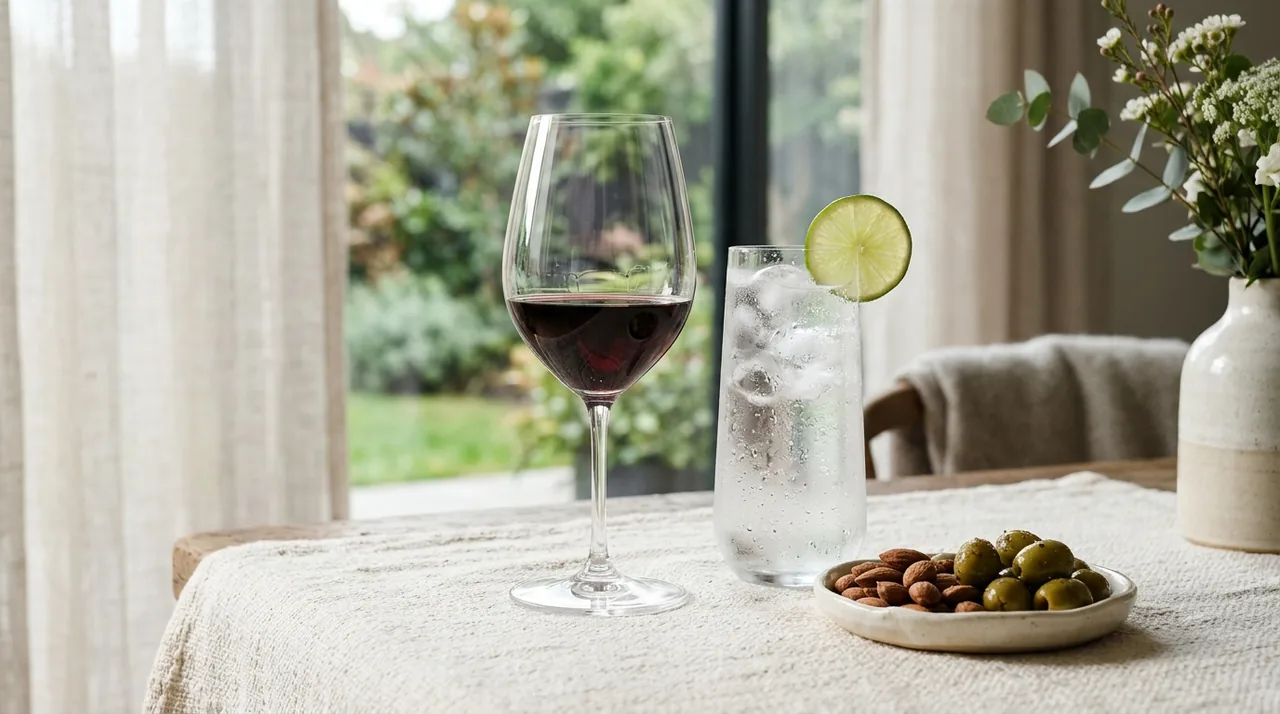
For every glass of wine you drink, finish a full glass of cold mineral water. This habit slows your drinking pace, prevents cellular dehydration from alcohol’s diuretic effect, and eases the liver’s workload as it processes acetate.
2. Start with Quality Protein and Fiber
Avoid drinking wine on an empty stomach. Eating a meal rich in protein and healthy fats (such as chicken breast, salmon, eggs, or avocado) before your first glass slows alcohol absorption through the stomach lining. This stability prevents sudden blood sugar drops that trigger intense cravings.
3. Stick to a Standard 150 ml Pour
Many drinkers fill a large wine glass two-thirds full, which easily equals 250 to 300 ml (two servings of calories in a single pour). Make a habit of pouring only to the widest point of the bowl (around 120 to 150 ml) to keep your calorie count accurate.
4. Stop Drinking 2 Hours Before Bedtime
Although alcohol can make you feel drowsy at first, ethanol disrupts deep sleep ( REM sleep ). Poor sleep quality triggers an imbalance in leptin and ghrelin the next morning, which drives your body to crave excess carbohydrates and simple sugars.
5. Avoid Bottled Wine Coolers and Sweet Cocktails
Skip ready-to-drink bottled sangria and canned wine coolers. Producers often add heavy amounts of refined sugar syrup and artificial flavorings to mask low-grade base wine. The result is a small bottle packing over 250 kcal.
Frequently Asked Questions About Wine Calories
Explore Low-Sugar Dry Wines at Peakwine
Want to enjoy world-class wine without compromising your fitness goals or healthy diet? Peakwine’s sommelier team is ready to help you select curated dry wines from France, Spain, Italy, and Australia, with guaranteed authenticity and fast delivery to your door.
Consult on Dry Wines via WhatsApp
Explore Curated Selections for Your Cellar
Authentic wines, spirits, and sake personally curated by our sommelier team with verified provenance and climate-controlled delivery.
Wine Guide Collection
Over 1,300+ red, white, and sparkling wines from acclaimed global producers.
Explore Wine Catalog → Premium SpiritsWhisky, Gin, and Vodka
Rare single malts, blended Scotch, artisan gin, and 100% agave tequila.
Explore Spirits Catalog → Cold-Chain GuaranteedSake and Asian Drinks
Authentic Japanese Daiginjo, Ginjo, Junmai sake and chilled Korean soju.
Explore Sake Collection → Instant Delivery22+ Official Outlets
Find the nearest Peakwine cellar outlet in Bandung and Jakarta for direct pickup.
Find Store Locations →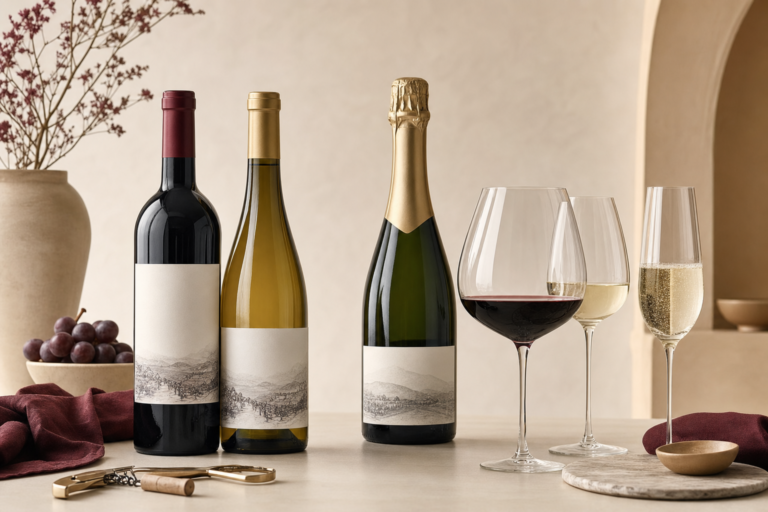


 By Wine Style
 Red Wine
 White Wine
 Sparkling Wine & Champagne
 Rosé Wine
 Dessert & Sweet Wine
 Fortified & Port Wine
 By Grape Variety
 Cabernet Sauvignon
 Shiraz
 Chardonnay
 Merlot
 Sauvignon Blanc
 Pinot Noir
 Tempranillo
 Sangiovese
 Malbec
 Grenache
 Semillon
 Primitivo
 Moscato
 Carmenere
 Riesling
 Pinot Grigio
 By Country & Region
 Australia
 France
 Chile
 Indonesia
 Italy
 Argentina
 Spain
 United States
 Portugal
 South Africa
 New Zealand
 Japan
 Germany
 By Taste & Sweetness
 Full-Bodied Wine
 Medium-Bodied Wine
 Light-Bodied Wine
 Sweet & Fruity Wine
 Dry Wine
 Curated Collections
 Best Sellers
 Everyday Value (< 500k)
 Reserve & Cellar

 Whisky & Whiskey
 Single Malt Scotch
 Blended Scotch
 Bourbon & Tennessee
 Japanese Whisky
 Irish Whiskey
 Gin
 London Dry Gin
 Dry Gin
 Tequila & Mezcal
 Vodka
 Premium & Craft Vodka
 Indonesian Vodka
 Rum
 White Rum
 Dark Rum
 Brandy Cognac
 Armagnac
 Liqueur
 Traditional Spirit


