

Understanding Malbec Wine: Argentina’s Inky Red, BBQ and Steak Pairings, and Top Bottle Picks


📖 Table of Contents ▼
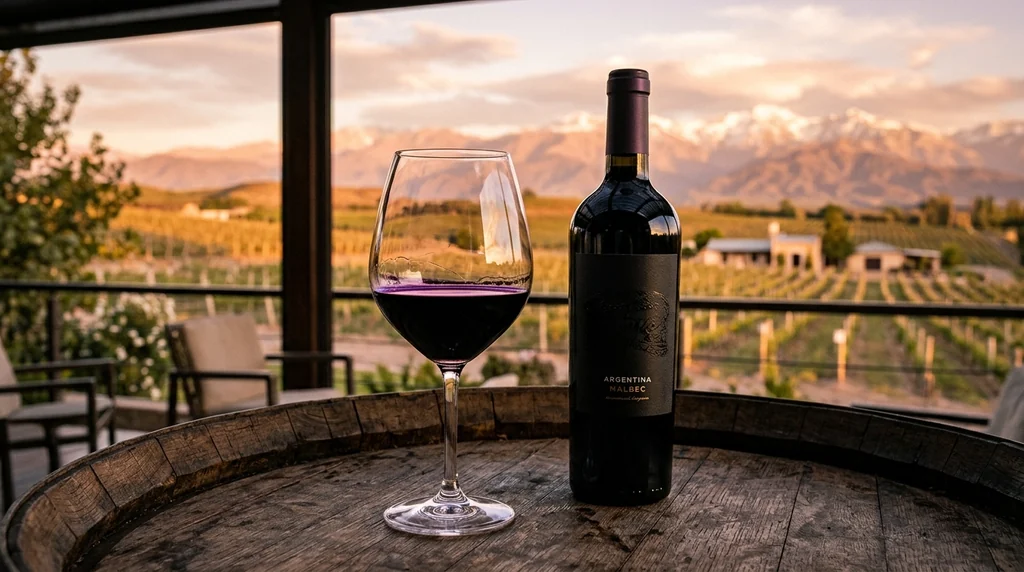
Malbec is a legendary thick-skinned red wine grape that produces full-bodied wines with a deep, inky purple color and velvety tannins. Although its roots lie in Cahors in southwestern France, Malbec found its spiritual home and peak expression in the Andean valleys of Mendoza, Argentina. As a cornerstone of any complete wine guide and a sommelier favorite for grilled red meats and steak, Malbec delivers generous flavors of black plum, blackberry jam, fragrant violet, and dark chocolate without harsh astringency.
- Deep Inky Purple with a Magenta Rim: Malbec has a high concentration of anthocyanin pigments, giving it a dark, nearly black-red hue with a striking magenta edge in the glass.
- Velvety, Approachable Tannins: Unlike Cabernet Sauvignon, which often has firm, gripping tannins, Malbec offers round, supple tannins that feel smooth on the palate.
- The High-Altitude Andes Terroir: Mendoza vineyards sit between 900 and 1,500 meters above sea level. Intense UV radiation and cool mountain nights preserve crisp natural acidity alongside ripe fruit.
- Built for BBQ and Grilled Meats: Its concentrated dark fruit and velvety tannins cut cleanly through the rich marbling of tomahawk steak, ribeye, and Minang beef rendang without turning bitter.
- Pre-Phylloxera Heritage: Argentina preserves some of the oldest original Malbec clones in the world, brought over before the 19th-century phylloxera louse devastated European vineyards.
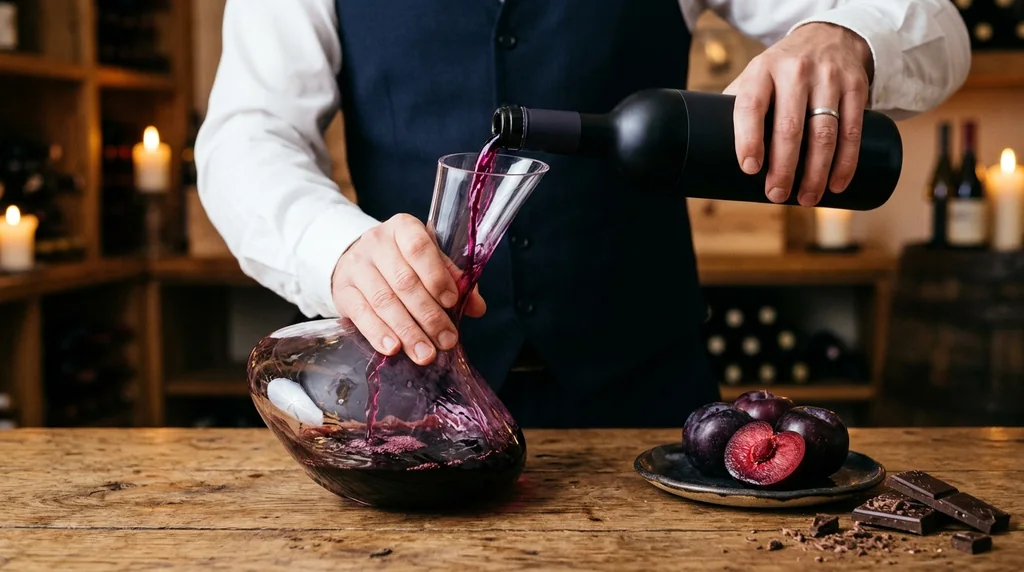
- Serving Temperature and Decanting: Serve Malbec slightly cool at 16-18°C after decanting for 30 to 45 minutes in a crystal decanter.
History and Origins of Malbec: From Cahors, France to Mendoza
Many wine drinkers assume Malbec is native to South America. In fact, the grape originated in southwestern France, particularly around the historic town of Cahors. In its homeland, it is traditionally known as Côt or Auxerrois .
During the Middle Ages, wines from Cahors earned a legendary reputation across Europe as “The Black Wine of Cahors” (Vin Noir). Named for its nearly black color and dense power, it became a prized drink of English royalty and Russian Tsars. Yet Malbec had biological vulnerabilities in France: its thin-set clusters were prone to rot in damp weather and sensitive to spring frost.
A double blow struck European Malbec in the late 19th century when the root louse Phylloxera vastatrix wiped out most French vineyards, followed by the devastating Great Frost of 1956. Fortunately, Malbec had already crossed the Atlantic before disaster struck.
On April 17, 1853, under the direction of Argentine statesman Domingo Faustino Sarmiento, French agronomist Michel Aimé Pouget brought selected Malbec cuttings to Mendoza. Under the bright skies of the Andes, a grape that struggled in France thrived and ripened with remarkable consistency. April 17 is now celebrated globally every year as World Malbec Day .
Mendoza Terroir Science: Why the Andes Produce the Best Malbec
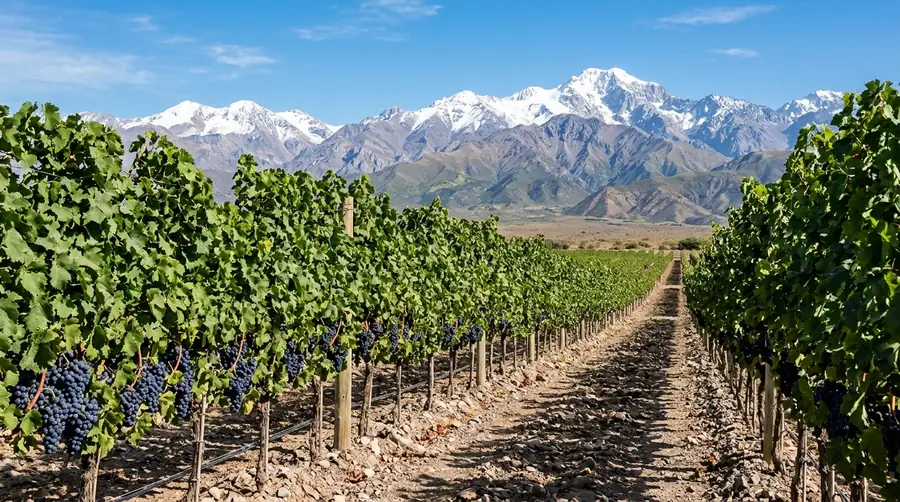
More than 75% of the world’s high-quality Malbec is produced in Mendoza, Argentina. Behind its plush fruit and deep color lies a distinct agro-climatic phenomenon at the foot of the Andes, often called the High-Altitude Miracle.
Three core terroir factors shape Mendoza Malbec’s flavor profile.
- Extreme Elevation (900-1,500 Meters Above Sea Level): Prestigious regions such as Luján de Cuyo and Valle de Uco (including Tupungato, Tunuyán, and San Carlos) place vines at elevations rarely seen elsewhere. The air is thin, clean, and free of excess humidity.
- Wide Diurnal Temperature Swing: During the day, intense mountain sunshine ripens the grapes and builds natural sugars for rich fruit flavors. At night, cold air descending from the snow-capped Andes drops temperatures sharply, with day-to-night swings of 15-20°C. This overnight chill slows acid respiration so the grapes retain bright malic and tartaric acidity.
- Andean Snowmelt Irrigation: Mendoza is a semi-desert receiving less than 250 mm of rain per year, which naturally prevents fungal disease. Vineyards are irrigated through ancient canals built by the indigenous Huarpe people, carrying mineral-rich glacial meltwater from the Andes.
Vivino Sensory Matrix: 5 Pillars of Malbec Flavor
In sommelier tasting standards and Vivino’s flavor profile system, Malbec stands out as a full-bodied red that remains approachable on the palate. Here is the 5-pillar sensory matrix for Malbec.
| Sensory Pillar | Scale Rating | Palate Description |
|---|---|---|
| Body | 4.5 / 5 (Full Body) | Dense, plush, and mouth-coating with a confident, structured weight. |
| Tannin | 3.5 / 5 (Medium to High) | Velvety, ripe, and supple, without the harsh, drying grip of young Cabernet. |
| Acidity | 3.0 / 5 (Medium) | Fresh enough to balance concentrated dark fruit and cut through rich, high-protein dishes. |
| Sweetness | 1.0 / 5 (Dry) | Bone-dry. Any impression of sweetness comes from ripe, fruit-forward flavors rather than residual sugar. |
| Alcohol (ABV) | 13.5% to 15.0% ABV | Falls into the moderate-to-high wine alcohol level range, bringing gentle warmth that integrates smoothly with oak spice. |
Primary Aromas and Tasting Notes
When you swirl a glass of quality Malbec and take in the bouquet, the aromas unfold in three distinct layers.
- Primary Aromas (Fruit and Floral): Ripe black fruits lead the way, including black plum, blackberry, wild blueberry, and black cherry, lifted by the signature violet floral note of high-altitude Malbec.
- Secondary Aromas (Oak Aging): Maturation in French or American oak barrels adds notes of dark cocoa, sweet vanilla, roasted mocha coffee, and cinnamon spice.
- Tertiary Aromas (Aged Complexity): In cellar-aged Reserva bottles, complex notes of cigar tobacco, dried leaves, worn leather, and wet stone minerality emerge.
Head-to-Head Comparison: Malbec vs Cabernet Sauvignon vs Merlot vs Shiraz
To help you pick the right red wine for your palate, compare the traits of four of the world’s most popular red varieties below.
| Characteristic | Malbec | Cabernet Sauvignon | Merlot | Shiraz or Syrah |
|---|---|---|---|---|
| Dominant Profile | Black plum, violet, and velvety cocoa | Blackcurrant, cassis, and cedarwood | Red cherry, soft plum, and milk chocolate | Blackberry jam, black pepper, and smoked meat |
| Tannin Texture | Velvety, dense, and round | Very firm, structured, and gripping | Very soft, smooth, and beginner-friendly | Thick, grainy, and warming |
| Color | Deep black-purple with a magenta rim | Deep dark garnet | Bright translucent ruby | Deep opaque purple-red |
| Finish | Medium to long, smooth without bitterness | Very long with assertive tannins | Short to medium, fresh and round | Long, rich in pepper and spice |
| Ideal Food Pairings | Tomahawk steak, grilled ribs, and beef rendang | Prime ribeye, lamb, and aged cheeses | Roast duck, chicken satay, and tomato pasta | Smoked BBQ, lamb satay, and spiced curry |
Food Pairing Science: Why Malbec Belongs with Steak and Grilled Meats
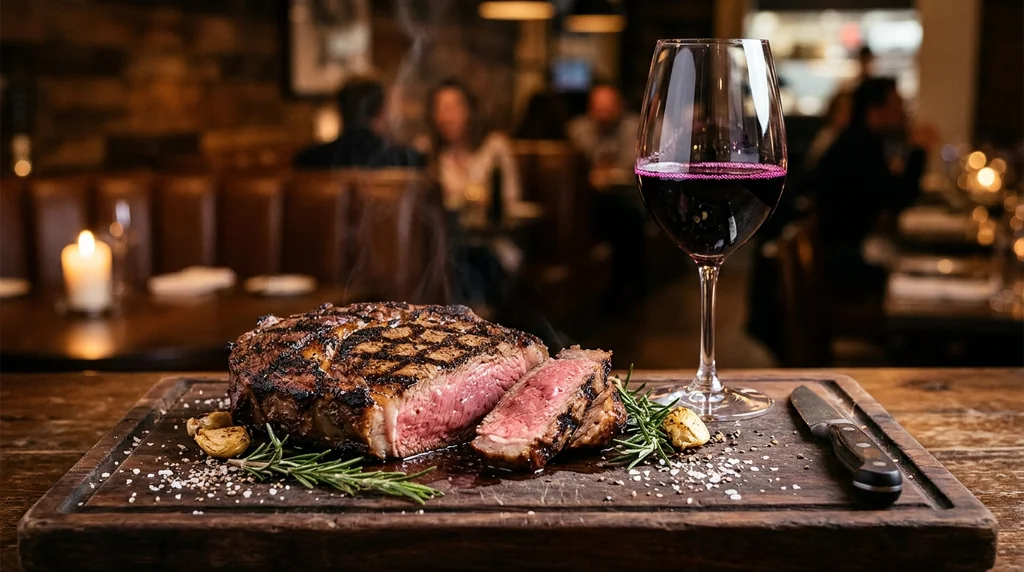
The bond between Malbec and grilled beef goes far beyond Argentina’s Asado barbecue tradition. It rests on precise gastronomic biochemistry. As we cover in our wine for steak and seafood guide, the interaction between tannins and animal protein creates a remarkable balance.
- Protein and Tannin Interaction: When you eat charcoal-grilled marbled beef such as ribeye, tomahawk, or sirloin, myoglobin proteins and fat bind with the polyphenol tannins in the wine. Malbec’s rich yet supple tannins cut through the fat on your palate, while the meat’s fat softens the wine’s grip, making the beef taste juicier and sweeter.
- Maillard Reaction Synergy: The caramelized crust on seared steak (the Maillard reaction) produces savory, smoky compounds that echo the vanilla, tobacco, and roasted cocoa notes from Malbec’s French oak aging.
Malbec Pairings with Indonesian Cuisine
Malbec’s versatility extends well beyond Western steakhouses. At the Indonesian table, it is one of the finest red wines for richly spiced, savory dishes.
- Minang Beef Rendang: Rich coconut oil, nutmeg, clove, and galangal in slow-cooked rendang meld effortlessly with Malbec’s black plum fruit and velvety tannins without feeling heavy.
- Sate Maranggi (Marinated Beef Satay): Tender beef marinated in coriander, palm sugar, and sweet soy sauce before charcoal grilling builds a savory-sweet char that matches Malbec’s fruit-forward core.
- Honey-Spiced Grilled Beef Ribs: The tender fat of caramelized honey-glazed ribs is lifted and refreshed by the balanced acidity of high-altitude Andes Malbec.
Sommelier Service Guide: Temperature, Decanting, and Glassware
To get the most out of every bottle of Malbec, follow three simple service rules.
- Optimal Serving Temperature (16-18°C): Avoid serving Malbec at Indonesian room temperature (28-32°C), as excess heat volatilizes alcohol and makes the wine smell sharp. Chill the bottle in a wine fridge or place it in a regular refrigerator for 20 to 25 minutes before opening.
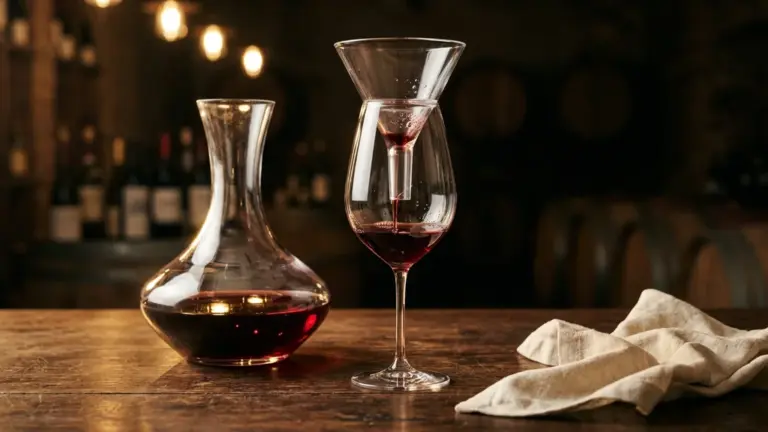
- Decant for 30 to 45 Minutes: Reserva and Icon Malbecs have dense structure. Pouring the wine into a glass or crystal decanter aerates the liquid, softens the tannins, and opens up aromas of violet and dark chocolate.
- Use a Wide-Bowled Bordeaux Glass: A generous bowl gives the wine room to breathe in the glass and directs the flow toward the center and back of the palate for full fruit expression.
6 Best Malbec Bottles at Peakwine
If you are ready to explore Argentina’s finest Malbecs, Peakwine’s sommeliers have curated 6 authentic bottles across every tier.
Frequently Asked Questions About Malbec Wine (FAQ)
Most quality commercial Malbec is produced as a dry red wine, with very low natural residual sugar below 4 grams per liter. The impression of sweetness that beginners often notice comes from its generous, fruit-forward character of black plum, blackberry jam, and vanilla, rather than from added sugar or sweeteners.
The main difference lies in tannin texture and herbal aromatics. Cabernet Sauvignon has firmer, more astringent tannins and often shows herbal notes of bell pepper (pyrazines) and cedar. By contrast, Malbec offers much softer, velvety tannins, a deeper purple color, and rich aromas of violet, black plum, and dark chocolate.
Malbec’s deep, inky purple hue comes from the high concentration of anthocyanin pigments in its grape skins. In Argentina’s Mendoza region, vineyards sit at elevations between 900 and 1,500 meters above sea level. Intense ultraviolet (UV-B) exposure prompts the vines to grow thicker skins rich in polyphenol antioxidants as natural protection.
Yes, decanting is strongly recommended, especially for Reserva, Ultra, or Icon Malbecs aged in French oak barrels. Decanting for 30 to 45 minutes before serving allows residual sulfur compounds to dissipate, softens the tannins, and opens up the full spectrum of plum, spice, and dark chocolate aromas.
Beyond tomahawk and ribeye steaks, Malbec pairs well with sweet-and-spicy grilled beef ribs, rosemary lamb chops, and Wagyu burgers with melted cheddar. It also stands up to richly spiced Indonesian dishes such as Minang beef rendang and grilled beef sate maranggi.
Explore Curated Selections for Your Cellar
Authentic wines, spirits, and sake personally curated by our sommelier team with verified provenance and climate-controlled delivery.
Wine Guide Collection
Over 1,300+ red, white, and sparkling wines from acclaimed global producers.
Explore Wine Catalog → Premium SpiritsWhisky, Gin, and Vodka
Rare single malts, blended Scotch, artisan gin, and 100% agave tequila.
Explore Spirits Catalog → Cold-Chain GuaranteedSake and Asian Drinks
Authentic Japanese Daiginjo, Ginjo, Junmai sake and chilled Korean soju.
Explore Sake Collection → Instant Delivery22+ Official Outlets
Find the nearest Peakwine cellar outlet in Bandung and Jakarta for direct pickup.
Find Store Locations →

 By Wine Style
 Red Wine
 White Wine
 Sparkling Wine & Champagne
 Rosé Wine
 Dessert & Sweet Wine
 Fortified & Port Wine
 By Grape Variety
 Cabernet Sauvignon
 Shiraz
 Chardonnay
 Merlot
 Sauvignon Blanc
 Pinot Noir
 Tempranillo
 Sangiovese
 Malbec
 Grenache
 Semillon
 Primitivo
 Moscato
 Carmenere
 Riesling
 Pinot Grigio
 By Country & Region
 Australia
 France
 Chile
 Indonesia
 Italy
 Argentina
 Spain
 United States
 Portugal
 South Africa
 New Zealand
 Japan
 Germany
 By Taste & Sweetness
 Full-Bodied Wine
 Medium-Bodied Wine
 Light-Bodied Wine
 Sweet & Fruity Wine
 Dry Wine
 Curated Collections
 Best Sellers
 Everyday Value (< 500k)
 Reserve & Cellar

 Whisky & Whiskey
 Single Malt Scotch
 Blended Scotch
 Bourbon & Tennessee
 Japanese Whisky
 Irish Whiskey
 Gin
 London Dry Gin
 Dry Gin
 Tequila & Mezcal
 Vodka
 Premium & Craft Vodka
 Indonesian Vodka
 Rum
 White Rum
 Dark Rum
 Brandy Cognac
 Armagnac
 Liqueur
 Traditional Spirit


