


📖 Table of Contents ▼
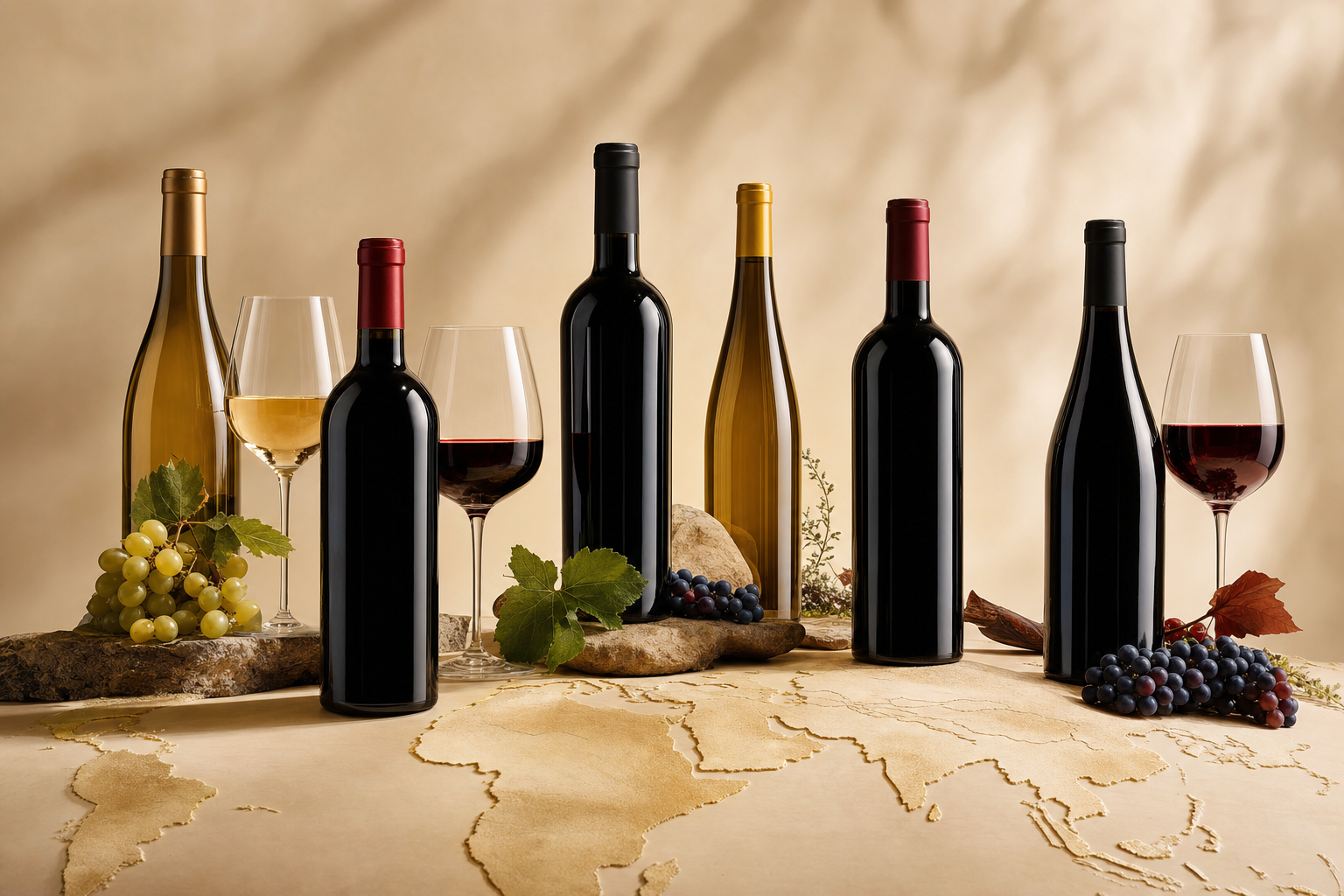
Two factors shape the flavor of wine more than anything else: the grape variety and the region of origin. The grape provides the flavor blueprint, while the region reshapes it through climate, soil, and winemaking tradition. Merlot from France and Merlot from Chile taste different because their regions differ. Understanding both lets you predict how a bottle will taste before you pull the cork.

Grape Variety: The DNA of Wine Flavor
Grape varieties set the baseline flavor profile. Merlot leans soft with red fruit, Cabernet Sauvignon is structured with blackcurrant, and Sauvignon Blanc is crisp with citrus. Many wines feature a single main variety (varietal wine), but winemakers also blend several grapes to balance each variety’s strengths and weaknesses.
Region and Terroir
Terroir is the combination of soil, climate, elevation, and local tradition in a given area. Cooler regions produce lighter, higher-acid wines; warmer regions yield riper fruit, fuller body, and higher ABV. This is why the same grape grown on two different continents produces two distinct wines.
Old World (Europe)
European wines tend to be lighter, higher in acidity, and focused on terroir. Winemaking regulations are strict.
- France. Bordeaux is known for structured Cabernet Sauvignon and Merlot blends; Burgundy for refined Pinot Noir and Chardonnay; and Champagne for sparkling wine.
- Italy. Tuscany produces Chianti from Sangiovese; Veneto is home to Prosecco.
- Spain. Rioja centers on Tempranillo; Cava is Spain’s signature sparkling wine.
New World (Outside Europe)
New World wines are generally fruit-forward, higher in ABV, and more consistent from vintage to vintage.
- Australia. Full-bodied Shiraz with ripe dark fruit.
- Chile. Smooth, value-driven Cabernet Sauvignon and Carmenere.
- Argentina. Plush, plum-driven Malbec built for steak.
- California. Full-bodied Zinfandel and Chardonnay.
- New Zealand. Crisp, intensely aromatic Sauvignon Blanc.
Further Reading: Explore an in-depth comparison of these two flavor philosophies, terroir characteristics, and how to read bottle labels in our complete Old World vs New World wine guide.
Summary of Popular Regions
| Region | Key Grapes | Character |
|---|---|---|
| Bordeaux (France) | Cabernet, Merlot | Structured, tannic |
| Burgundy (France) | Pinot Noir, Chardonnay | Refined, high-acid |
| Tuscany (Italy) | Sangiovese | Cherry, crisp acidity, food-friendly |
| Australia | Shiraz | Full-bodied, dark fruit |
| Argentina | Malbec | Soft, plum |
| Chile | Carmenere, Cabernet | Smooth, good value |
Indonesian Local Wine
Indonesia also has local producers such as Sababay, Hatten, and Barton. Local wines are often crafted for Indonesian palates and a tropical climate, at approachable prices for newcomers. Read more in our guide to Indonesian local wine .
How to Read Wine Origin on a Label
Labels typically list the region or appellation (such as AOC in France or DOCG in Italy), the grape or blend, and the vintage. On Old World bottles, the region name often takes prominence over the grape because the appellation signals both style and terroir. See the full breakdown in how to read a wine bottle label . For the big picture, start with our complete guide to wine .
FAQ
What is the difference between Old World and New World wine?
Old World (European) wines tend to be lighter, higher in acidity, lower in ABV, and focused on terroir. New World (outside Europe) wines are more fruit-forward, fuller-bodied, higher in ABV, and more consistent across vintages.
Why does Merlot from different countries taste different?
Climate and soil (terroir) differ from place to place. Warm climates produce fruitier, fuller-bodied Merlot, while cool climates yield lighter, higher-acid wines from the exact same grape.
Are blended wines worse than varietal wines?
No. Many of the world’s greatest wines are blends. Blending several grapes balances the strengths and weaknesses of each variety.

Explore Curated Selections for Your Cellar
Authentic wines, spirits, and sake personally curated by our sommelier team with verified provenance and climate-controlled delivery.
Wine Guide Collection
Over 1,300+ red, white, and sparkling wines from acclaimed global producers.
Explore Wine Catalog → Premium SpiritsWhisky, Gin, and Vodka
Rare single malts, blended Scotch, artisan gin, and 100% agave tequila.
Explore Spirits Catalog → Cold-Chain GuaranteedSake and Asian Drinks
Authentic Japanese Daiginjo, Ginjo, Junmai sake and chilled Korean soju.
Explore Sake Collection → Instant Delivery22+ Official Outlets
Find the nearest Peakwine cellar outlet in Bandung and Jakarta for direct pickup.
Find Store Locations →

 By Wine Style
 Red Wine
 White Wine
 Sparkling Wine & Champagne
 Rosé Wine
 Dessert & Sweet Wine
 Fortified & Port Wine
 By Grape Variety
 Cabernet Sauvignon
 Shiraz
 Chardonnay
 Merlot
 Sauvignon Blanc
 Pinot Noir
 Tempranillo
 Sangiovese
 Malbec
 Grenache
 Semillon
 Primitivo
 Moscato
 Carmenere
 Riesling
 Pinot Grigio
 By Country & Region
 Australia
 France
 Chile
 Indonesia
 Italy
 Argentina
 Spain
 United States
 Portugal
 South Africa
 New Zealand
 Japan
 Germany
 By Taste & Sweetness
 Full-Bodied Wine
 Medium-Bodied Wine
 Light-Bodied Wine
 Sweet & Fruity Wine
 Dry Wine
 Curated Collections
 Best Sellers
 Everyday Value (< 500k)
 Reserve & Cellar

 Whisky & Whiskey
 Single Malt Scotch
 Blended Scotch
 Bourbon & Tennessee
 Japanese Whisky
 Irish Whiskey
 Gin
 London Dry Gin
 Dry Gin
 Tequila & Mezcal
 Vodka
 Premium & Craft Vodka
 Indonesian Vodka
 Rum
 White Rum
 Dark Rum
 Brandy Cognac
 Armagnac
 Liqueur
 Traditional Spirit


