

Red Wine vs White Wine: Differences and How to Choose for Beginners



📖 Table of Contents ▼
The main difference between red and white wine lies in how they are made: red wine is fermented with red grape skins, which gives it color, tannins, and a fuller body, while white wine is made without the skins, resulting in a lighter, clearer, and crisper style. Choosing between the two is simple once you know their characters and what you are eating.
What Is the Difference Between Red and White Wine?
Both come from grapes, but the winemaking process differs. For red wine , the grape juice ferments with the skins, seeds, and sometimes stems. Those red skins provide color, tannins (the compound that leaves your mouth feeling dry, like strong black tea), and structure. For white wine , the skins are separated before fermentation, leaving the wine pale and nearly free of tannins. This single step drives every difference in flavor, texture, and how you enjoy each style.
That difference extends to the glassware: red wine goes into a larger bowl like a Bordeaux or Burgundy glass so it can breathe, while white wine belongs in a smaller glass with a narrower rim to stay crisp. Learn each shape in our guide to wine glass types and their functions .
Red vs White Wine Comparison Table
| Aspect | Red wine | White wine |
|---|---|---|
| Color | Red to deep purple | Pale yellow to golden |
| Tannins | High, leaves a dry mouthfeel | Virtually none |
| Flavor profile | Red fruit, spice, oak; full-bodied | Citrus, tropical fruit, floral; light-bodied |
| Serving temperature | 16-18°C | 8-12°C |
| Best paired with | Red meat, rendang, aged cheese | Seafood, chicken, salad, spicy dishes |
When to Choose Red Wine
Red wine is the right call when you want something full-bodied and warming. Its tannins cut through fat and pair naturally with steak, rendang, braised meats, or aged cheeses. Red wines also tend to be more complex and suit slow sipping during a relaxed evening or formal dinner. For beginners, Merlot and Pinot Noir offer a smooth entry point before stepping up to heavier Cabernet Sauvignon.
When to Choose White Wine
White wine is your best bet when you want refreshment. Its acidity cuts through richness and brightens the palate, making it ideal for fried seafood, roast chicken, salads, or egg-based dishes. White wine is also more forgiving with spicy food because it generally has lower alcohol and sometimes a touch of residual sugar to tame heat. For beginners, Sauvignon Blanc (crisp, citrusy) or Riesling (aromatic, sweet-tart) is an easy place to start.
Red or White for Beginners?
There is no right or wrong answer. If you prefer rich, warming, and complex flavors, start with a red like Merlot. If you like light, crisp, and easy-drinking styles, start with a white like Sauvignon Blanc. To learn all the wine basics at once, read our complete beginner’s guide to wine . To browse bottles, explore the Peakwine wine collection and ask for recommendations at our store locations .
FAQ
Is red wine always stronger than white wine?
Not always. Both typically range from 9% to 15% ABV. What sets them apart is tannin and body, not alcohol strength. Some white wines can feel just as bold as reds.
Can white wine be made from red grapes?
Yes. White wine can be made from red grapes as long as the skins are separated immediately before any color is extracted. Many white Champagnes are actually made from Pinot Noir grapes.
Red or white wine for spicy food?
White wine is the safer choice. Look for low-alcohol, slightly off-dry styles like Riesling or Moscato. High-alcohol reds actually amplify the heat.
Do you need to chill white wine before drinking?
Yes, around 8-12°C. In Indonesia, white wine almost always needs a few hours in the refrigerator before serving so it stays crisp.
Explore Curated Selections for Your Cellar
Authentic wines, spirits, and sake personally curated by our sommelier team with verified provenance and climate-controlled delivery.
Wine Guide Collection
Over 1,300+ red, white, and sparkling wines from acclaimed global producers.
Explore Wine Catalog → Premium SpiritsWhisky, Gin, and Vodka
Rare single malts, blended Scotch, artisan gin, and 100% agave tequila.
Explore Spirits Catalog → Cold-Chain GuaranteedSake and Asian Drinks
Authentic Japanese Daiginjo, Ginjo, Junmai sake and chilled Korean soju.
Explore Sake Collection → Instant Delivery22+ Official Outlets
Find the nearest Peakwine cellar outlet in Bandung and Jakarta for direct pickup.
Find Store Locations →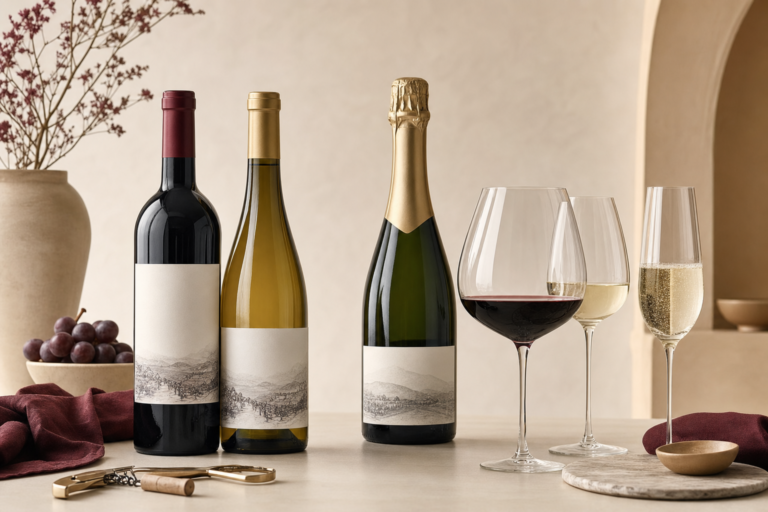


 By Wine Style
 Red Wine
 White Wine
 Sparkling Wine & Champagne
 Rosé Wine
 Dessert & Sweet Wine
 Fortified & Port Wine
 By Grape Variety
 Cabernet Sauvignon
 Shiraz
 Chardonnay
 Merlot
 Sauvignon Blanc
 Pinot Noir
 Tempranillo
 Sangiovese
 Malbec
 Grenache
 Semillon
 Primitivo
 Moscato
 Carmenere
 Riesling
 Pinot Grigio
 By Country & Region
 Australia
 France
 Chile
 Indonesia
 Italy
 Argentina
 Spain
 United States
 Portugal
 South Africa
 New Zealand
 Japan
 Germany
 By Taste & Sweetness
 Full-Bodied Wine
 Medium-Bodied Wine
 Light-Bodied Wine
 Sweet & Fruity Wine
 Dry Wine
 Curated Collections
 Best Sellers
 Everyday Value (< 500k)
 Reserve & Cellar

 Whisky & Whiskey
 Single Malt Scotch
 Blended Scotch
 Bourbon & Tennessee
 Japanese Whisky
 Irish Whiskey
 Gin
 London Dry Gin
 Dry Gin
 Tequila & Mezcal
 Vodka
 Premium & Craft Vodka
 Indonesian Vodka
 Rum
 White Rum
 Dark Rum
 Brandy Cognac
 Armagnac
 Liqueur
 Traditional Spirit


