

A Beginner’s Guide to Whisky: Types, Flavors, How to Choose, and Enjoy


📖 Table of Contents ▼
Seeing rows of golden amber bottles behind a bar or on a spirits shop shelf often sparks curiosity alongside hesitation for newcomers. From technical-sounding labels like Single Malt , Blended Scotch , to Bourbon , the whisky world is often portrayed as complicated, rigid, and reserved for a select few.
In reality, whisky is one of the richest and most approachable distilled spirits in the world. You do not need to drink it neat right away or pick out complex aromas to enjoy it. In this beginner’s guide to whisky, we break down the main styles, flavor profiles, refreshing serves for tropical weather, and top bottle recommendations available in the Peakwine whisky collection .
What Is Whisky? From Grains to Oak Casks
Fundamentally, whisky is an alcoholic spirit distilled from fermented grain mash, such as malted barley , corn, rye , or wheat, which is then aged in oak casks for years. If beer is fermented grain without distillation, whisky is the essence of that fermentation purified by heat and refined by time. You can read a full comparison in our guide to alcoholic beverage classifications and ABV levels .
Four essential stages shape the character of every drop of whisky before it reaches your glass.
- Malting and Mashing: Barley grains are soaked in water until they germinate, activating enzymes that convert starch into sugar, then dried and steeped in hot water to create a sweet liquid called wort .
- Fermentation: Yeast ( yeast ) is added to the wort to convert sugars into a low-alcohol liquid called wash , typically around 7-10% ABV.
- Distillation: The wash is heated in copper pot stills or column stills . Pure alcohol vapor is separated from water and condensed into a clear, high-proof new-make spirit .
- Maturation: This clear spirit is transferred into oak casks. Here, more than 60% of the flavor profile and 100% of whisky’s natural color are developed.

The wooden barrel acts like natural lungs: whisky seeps into the wood pores in warm temperatures and draws back out when it cools. This process extracts vanillin (vanilla aroma), lactones (buttery and coconut notes), and golden amber color. The choice of cask, such as ex-American Bourbon barrels or Spanish Sherry casks, adds distinct layers ranging from soft caramel to rich raisins and dried fruit.
5 Major Whisky Styles Around the World and Their Flavor Profiles
To avoid confusion when choosing, get to know the five most popular whisky styles worldwide based on their ingredients and production regions.
1. Single Malt Scotch: Distinct Character from One Distillery
Single Malt Scotch is whisky produced from 100% malted barley at **a single distillery** in Scotland and aged for at least 3 years in oak casks. The word “single” refers to one production site, not one barrel.
Its character varies widely depending on its region . Speyside and Highland whiskies lean toward fresh apple, honey, and pear blossom. Coastal and island regions like Islay are famous for peat smoke and dense maritime notes. Single malt is often the choice for drinkers who want to explore a distillery’s terroir in depth.
2. Blended Scotch Whisky: Balance and Smoothness
Blended Scotch is the craft of a Master Blender combining several single malt whiskies with grain whisky (made from wheat or corn). The goal is a rounded, balanced, consistent, and highly drinkable spirit.
Its flavor profile is approachable: soft honeyed sweetness, vanilla, gentle orchard spice, and a whisper of smoke in the background. Because of its smoothness, this style dominates global consumption and offers the easiest entry point for beginners.
3. Bourbon Whiskey: Natural American Caramel Sweetness
Originating in the United States (especially Kentucky), Bourbon follows strict rules: its mash bill must contain at least 51% corn, and it must be aged in charred new oak barrels.
Thanks to the high corn content and new charred barrels, Bourbon delivers rich sweetness, thick caramel, sweet vanilla, brown sugar, and toasted oak. For beginners sensitive to barley bitterness, Bourbon’s natural sweetness feels welcoming and never intimidating.
4. Irish Whiskey: Extra Smooth from Triple Distillation
Irish whiskey (traditionally spelled with an “e”) typically undergoes triple distillation , unlike Scotch which is usually distilled twice. The barley is also dried without peat smoke.
The result is an exceptionally smooth, light, and clean spirit on the palate. Aromas center on fresh pear, sweet wheat biscuit, and soft vanilla without a harsh throat burn.
5. Japanese Whisky: Precision and Floral Grace
Inspired by Scottish tradition, Japanese whisky makers pair classic techniques with meticulous precision and balance. They use pure mountain water and sometimes mature the spirit in native Japanese Mizunara oak casks.
The character is graceful and soft, with notes of sandalwood, peach, gentle spice, and a clean finish. It is popular for both casual gatherings and formal occasions.
Whisky Style Comparison Table
This summary helps you compare the core traits of each whisky style before picking your first bottle.
| Whisky Style | Primary Grain | Signature Flavor Profile | Alcohol “Bite” Level | Best For |
|---|---|---|---|---|
| Blended Scotch | Barley and cereal grains | Balanced, honey, vanilla, dried fruit | Low: Medium | Beginners, casual sipping, and Highballs |
| Bourbon | Min. 51% Corn | Sweet caramel, rich vanilla, charred oak | Medium | Fans of sweet and bold on-the-rocks pours |
| Irish Whiskey | Barley (Triple-distilled) | Very smooth, fresh pear, wheat biscuit | Very Low | First-timers who dislike alcohol burn |
| Japanese Whisky | Barley and pure grain | Smooth, floral, soft spice, clean finish | Low | Fans of refined flavors and Highballs |
| Single Malt | 100% Barley, 1 distillery | Complex, ripe fruit, to smoky peat | Medium to High | Deep flavor exploration and tasting sessions |
How to Choose Your First Bottle Without Guessing
Your first bottle does not need to be decades old or cost millions of rupiah. Use these practical tips when shopping.
1. Pick a Beginner-Friendly Flavor Profile: Skip bottles labeled “Peated” (heavy peat smoke) or “Cask Strength” (undiluted proof, often above 55% ABV). Look for tasting notes like vanilla, honey, caramel, apple, or pear. These profiles offer natural sweetness that is easy on the palate.
2. Understand Age Statements: If a bottle lists “12” on the label, the youngest whisky inside was aged in oak for at least 12 years. For beginners, 10- to 12-year-old whiskies hit the sweet spot between cask smoothness and reasonable pricing.
3. Do Not Shy Away from NAS (No Age Statement) Bottles: Many iconic bottles like Jack Daniel’s Old No. 7 or Jameson do not carry an age statement. This does not mean lower quality; master blenders combine casks of varying ages to maintain a consistent house style year after year.
Top Beginner Whisky Recommendations at Peakwine
Here are four officially taxed, legal whisky bottles that are beginner favorites and consistently stocked at Peakwine outlets.
Chivas Regal 12 Year Old
A Scottish classic with a creamy texture. It brings aromas of wild honey, sweet apple, and soft vanilla. Balanced and comfortable to sip without harshness.
View Chivas Regal 12Jack Daniel’s Old No. 7
An American icon filtered through sugar maple charcoal (charcoal mellowing). Sweet caramel, roasted banana, and toasted oak vanilla make it great over ice or with cola.
View Jack Daniel’sGlenfiddich 12 Year Old
A gateway into Single Malt. Unpeated with fresh pear, green apple, and subtle oak, it delivers classic Speyside smoothness.
View Glenfiddich 12Tenjaku Blended Japanese Whisky
A smooth Japanese blend with soft honey, ripe pear, and light oak. Equally enjoyable neat or in a refreshing Highball.
View Tenjaku BlendedIf you want to explore collector bottles or prestigious releases, we also cover them in our luxury spirits roundup .
3 Ways to Enjoy Whisky Without the Burn
A common myth is that whisky must be drunk neat without ice to count as a real drinker. In truth, sommeliers and distillers worldwide encourage you to drink it however you enjoy it most.
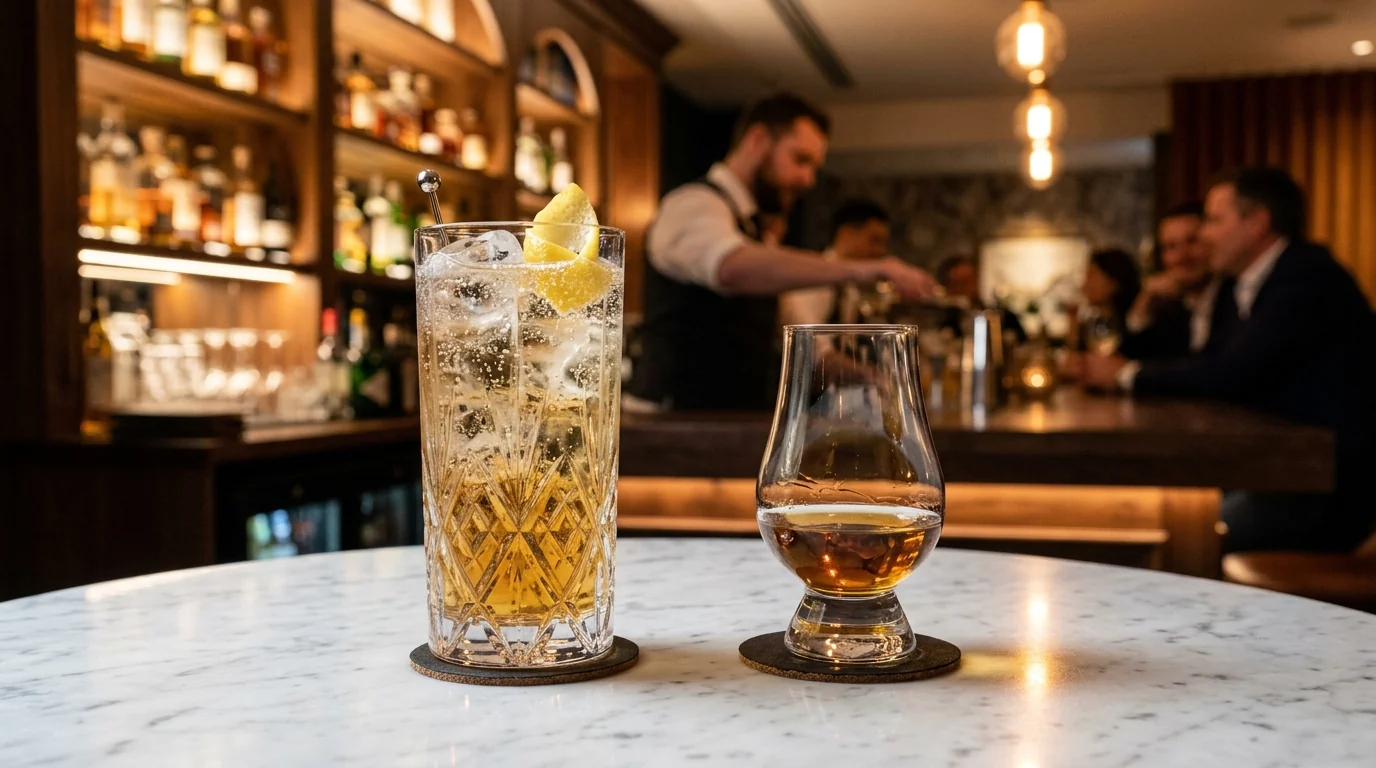
1. Whisky Highball: Maximum Refreshment in Tropical Weather
The Highball is Japan’s most popular serve and is ideal for Indonesia’s tropical climate. Chilled soda and ice tame alcohol vapor while lifting the whisky’s fruit and floral aromas.
How to Make It: Fill a tall highball glass to the brim with solid ice cubes. Pour in 45 ml of your chosen whisky , then gently top with 120-150 ml of chilled club soda ( club soda ). Stir once gently to preserve the carbonation, then express a lemon twist over the top. It is light, crisp, and refreshing.
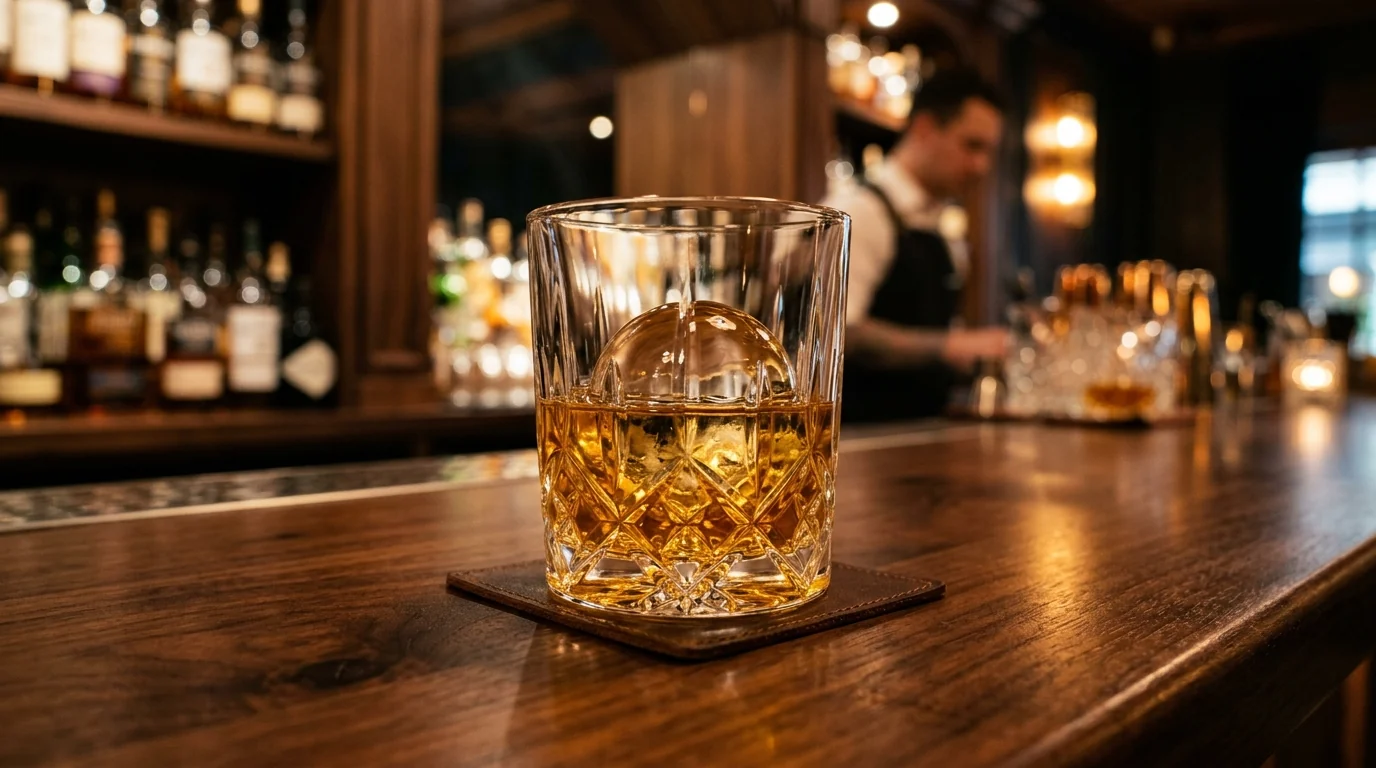
2. On the Rocks: Taming the Heat with a Large Ice Sphere
Enjoying whisky in a short tumbler ( rocks glass ) over ice is a classic approach. The chill gradually softens the alcohol’s bite on the palate.
Pro Tip: Use one large, clear ice sphere instead of small crushed ice. A sphere has less surface area, so it melts much more slowly ( slow-melting ). This keeps your drink cold without quickly watering it down.
3. Neat with a Few Drops of Water (Tasting Like a Pro)
To taste whisky in its purest form, pour 30 ml into a tulip-shaped Glencairn glass. Before taking a sip, nose the spirit with your mouth slightly open so the alcohol vapors do not overwhelm your senses.
Secret Trick: Add 3 to 5 drops of room-temperature spring water to your glass. The water breaks the surface tension, tames the alcohol heat, and releases locked-in aromas of vanilla, floral notes, and toasted oak.
For other classic serves like the Old Fashioned or Whiskey Sour, check out our practical guide to 15 simple cocktail recipes .
Start Your Whisky Discovery with Peakwine
Peakwine carries a complete, 100% authentic whisky selection from official distributors, from favorite Blended Scotches and classic Bourbons to limited-edition Single Malts. Your order can be delivered within 60 minutes by our dedicated courier fleet from 22 Peakwine outlets across Greater Jakarta, Bandung, Surabaya, and Bali.
Explore the Whisky Collection at PeakwineFrequently Asked Questions (FAQ)
What is the main difference between Single Malt and Blended Whisky?
Single Malt is made from 100% malted barley at a single distillery, producing a distinct character that reflects its house style. Blended Whisky combines multiple single malts with grain whiskies from different distilleries to create a balanced, consistent, and smooth profile.
Why are there two spellings: “Whisky” and “Whiskey”?
The extra “e” is purely a matter of regional tradition. Scotland, Japan, Canada, and most other producing countries use Whisky (plural: whiskies ). Producers in Ireland and the United States traditionally use Whiskey (plural: whiskeys ).
Does adding ice to whisky ruin the flavor?
Not at all. Drinking whisky on the rocks or with a splash of water is a widely accepted practice. Ice softens the alcohol burn and opens up the aromas, which makes it especially helpful for beginners.
How long does a bottle of whisky last after opening?
An unopened bottle of whisky can last for decades without losing quality. Once opened, a half-full bottle is best enjoyed within 1 to 2 years. Always store bottles upright in a cool place away from direct sunlight.
Why should whisky bottles be stored upright?
Unlike wine, which is stored on its side to keep the cork moist, whisky must be stored upright. Its high alcohol content (40% ABV or more) can degrade and crumble the cork over time if left in constant contact, letting air in and spoiling the spirit.
Explore Curated Selections for Your Cellar
Authentic wines, spirits, and sake personally curated by our sommelier team with verified provenance and climate-controlled delivery.
Wine Guide Collection
Over 1,300+ red, white, and sparkling wines from acclaimed global producers.
Explore Wine Catalog → Premium SpiritsWhisky, Gin, and Vodka
Rare single malts, blended Scotch, artisan gin, and 100% agave tequila.
Explore Spirits Catalog → Cold-Chain GuaranteedSake and Asian Drinks
Authentic Japanese Daiginjo, Ginjo, Junmai sake and chilled Korean soju.
Explore Sake Collection → Instant Delivery22+ Official Outlets
Find the nearest Peakwine cellar outlet in Bandung and Jakarta for direct pickup.
Find Store Locations →

 By Wine Style
 Red Wine
 White Wine
 Sparkling Wine & Champagne
 Rosé Wine
 Dessert & Sweet Wine
 Fortified & Port Wine
 By Grape Variety
 Cabernet Sauvignon
 Shiraz
 Chardonnay
 Merlot
 Sauvignon Blanc
 Pinot Noir
 Tempranillo
 Sangiovese
 Malbec
 Grenache
 Semillon
 Primitivo
 Moscato
 Carmenere
 Riesling
 Pinot Grigio
 By Country & Region
 Australia
 France
 Chile
 Indonesia
 Italy
 Argentina
 Spain
 United States
 Portugal
 South Africa
 New Zealand
 Japan
 Germany
 By Taste & Sweetness
 Full-Bodied Wine
 Medium-Bodied Wine
 Light-Bodied Wine
 Sweet & Fruity Wine
 Dry Wine
 Curated Collections
 Best Sellers
 Everyday Value (< 500k)
 Reserve & Cellar

 Whisky & Whiskey
 Single Malt Scotch
 Blended Scotch
 Bourbon & Tennessee
 Japanese Whisky
 Irish Whiskey
 Gin
 London Dry Gin
 Dry Gin
 Tequila & Mezcal
 Vodka
 Premium & Craft Vodka
 Indonesian Vodka
 Rum
 White Rum
 Dark Rum
 Brandy Cognac
 Armagnac
 Liqueur
 Traditional Spirit


